Genre Guides
What Is Jungle? Breakbeats, Bass Weight, And The UK Rave Engine
Jungle grew from early '90s UK rave pressure, Black music lineage, breakbeat engineering, and DJs who made chaos sound precise.
Direct answer
Jungle is the early '90s UK rave sound where breakbeats, sub-bass, reggae, rare groove, hip-hop, soul, acid house, funk, hardcore, and Detroit techno pressure became jungle drum'n'bass. Red Bull traces the 1991-1992 split from hardcore toward happy hardcore and darker jungle, naming Goldie, Rufige Kru, Terminator, Timeless, Rage, Kemistry, Storm, Metalheadz, Fabio, Grooverider, and labels such as Ibiza Records, Moving Shadow, 4Hero, and Reinforced Records. For festival fans, jungle means fast breaks that feel wild until the bass reveals the architecture.
Watch this topic
Save the related directory search
Track new events, profiles, and calls matching what is jungle music. The saved watch resolves against the live directory when you open it.
Article-to-directory guide
Keep moving from the article
Use these focused routes to move from the article into live events, talent, and application calls without starting from scratch.
The Sound Is Controlled Collision
Jungle sounds like chaos until the low end explains the contract. The drums chop, tumble, and double back; the bass stays heavy enough to keep the body from flying apart. Red Bull frames jungle and drum and bass as a new early '90s inner-city soundtrack built from 20 years of Black music and youth culture: reggae, rare groove, hip-hop, soul, acid house, funk, hardcore, Detroit techno, and more. That list matters because jungle was never only fast drums. It was memory under pressure. The breakbeat carried nervous energy, the sub carried sound-system authority, and the samples carried a sense that history was being cut up and rebuilt in real time. At a festival, the easiest listening clue is this: if the drums sound reckless but the bass feels like a floor plan, you are probably hearing the jungle logic work. The human thrill is trust: a crowd learns that speed can feel safe when the bass gives everyone somewhere to land.
The Hardcore Split Made The Lane
The early rave soup started to separate. Red Bull places the key movement around 1991 and 1992, when the acid house free-for-all split into clearer sonic camps. One path leaned toward the pitched-up vocals and big pianos of happy hardcore. The other grew heavier, darker, and more future-focused, heading toward what became jungle drum'n'bass. That split was not a tidy genre committee meeting. It was DJs, dancers, producers, labels, and sound systems noticing that faster tempos and breakbeat pressure could carry different emotions. Happy hardcore chased rush and brightness. Jungle leaned into shadow, dread, urban speed, dub weight, and swing. The useful festival lesson is that tempo alone does not define a style. Two fast records can ask the crowd for completely different kinds of courage. Jungle's courage is in staying loose while the rhythm tries to throw you. That courage becomes social when people stop bracing against the drums and start moving with them.
Goldie Gave The Sound A Mythic Face
Goldie is unavoidable because he gave the sound a public drama equal to its pressure. Red Bull names him as the architect behind records such as Terminator, released under the Rufige Kru name, and the era-defining album Timeless. Those titles still explain two poles of jungle mythology. Terminator sounds like a machine learning menace. Timeless suggested that the music could stretch beyond rave utility into widescreen emotional architecture. Goldie also described drum and bass as part of the UK's underground fabric, a useful reminder that jungle was not trying to be respectable first. It was trying to be necessary. Festival fans should hear Goldie's role as both sonic and symbolic: he made the music feel like a city speaking through chrome, dread, orchestration, graffiti memory, and bass bins. His importance is emotional too, because he gave a hard, fast sound room for vulnerability, ambition, and myth.
Rage Was The Pressure Cooker
The club night Rage sits near the center of the story because scenes need rooms before they become histories. Red Bull connects Goldie to Rage through Kemistry and Storm, who invited him to the night and later became one of drum and bass culture's most distinctive duos. Rage's resident DJs Fabio and Grooverider were central because they pushed a new breakbeat language in a regular room where dancers could learn the grammar week by week. That matters more than any clean origin claim. Jungle grew because people returned, listened, adjusted, and rewarded the records that made the room feel different. Kemistry and Storm would later play a major role around Metalheadz, connecting taste, curation, and the seriousness of the music's future. The lesson for festival fans is simple: a style becomes powerful when a room teaches bodies how to respond before the world knows what to call it.
The Labels Made The Map
Red Bull's source map names records and labels that helped turn the breakbeat mutation into a scene: Lennie De Ice's We Are IE, Ibiza Records, Moving Shadow, 4Hero, and Reinforced Records. Those names matter because labels and records gave DJs tools, not slogans. Fabio and Grooverider drew from tougher US house by artists such as Frankie Bones and Masters At Work, then collided that pressure with UK breakbeat records. The result was not a polite fusion. It was a working method: test the break, test the bass, test the crowd, repeat. A festival listener can use the same map today. If a set references jungle properly, it usually respects dubplate tension, chopped breaks, bass patience, and transitions that feel like the DJ is steering a vehicle with too much engine. The labels made that risk portable. They also built community memory, giving dancers and DJs a trail of records to trust before the wider industry understood the room.
The Pioneer List Is A Whole Ecosystem
A scene this dense cannot be reduced to three names. Red Bull points to DJ Hype and Jumpin Jack Frost with soundsystem roots; Bryan Gee, Randall, Fabio, LTJ Bukem, and Ray Keith coming through rare groove or acid house paths; plus Doc Scott, Nicky Blackmarket, Micky Finn, DJ SS, Kenny Ken, Simon Bassline Smith, DJ Rap, and the Full Cycle Bristol collective of Krust, Roni Size, Die, and Suv. That roll call is not trivia. It shows how jungle became a working ecosystem: selectors, producers, shops, labels, dubplates, club nights, regional crews, and dancers pushing each other toward sharper forms. Some figures favored darkness, some soul, some rollage, some technical force, some Bristol weight. The style survived because it had multiple engines. When a festival lineup books jungle as one nostalgic slot, it misses the point. The music was always a network. Respecting that network is a form of care, especially when a modern stage borrows the sound for one loud hour.
How DJs Use Jungle At Festivals
A smart festival DJ uses jungle for voltage control. It can lift a crowd out of midtempo fog, darken a bass set, wake up a tent that has been fed too many predictable drops, or give older rave heads the pleasure of hearing pressure treated with respect. The risk is speed without story. Jungle needs pacing because the drums are already busy. A strong DJ gives the crowd a rope: a dub siren, a vocal scrap, a bass phrase, an MC call, a half-time fakeout, or a breakdown that lets people reset before the next break snaps open. Listen for whether the set has shape. Does it move from hardcore roots to rolling jungle to drum and bass, or does it simply throw breaks like loose change? The former builds trust. The latter is aerobic confusion with a famous sample. A good jungle DJ also knows when to let the sub breathe, because nonstop edits can exhaust the very people the set is trying to liberate.
Where It Belongs On A Festival Day
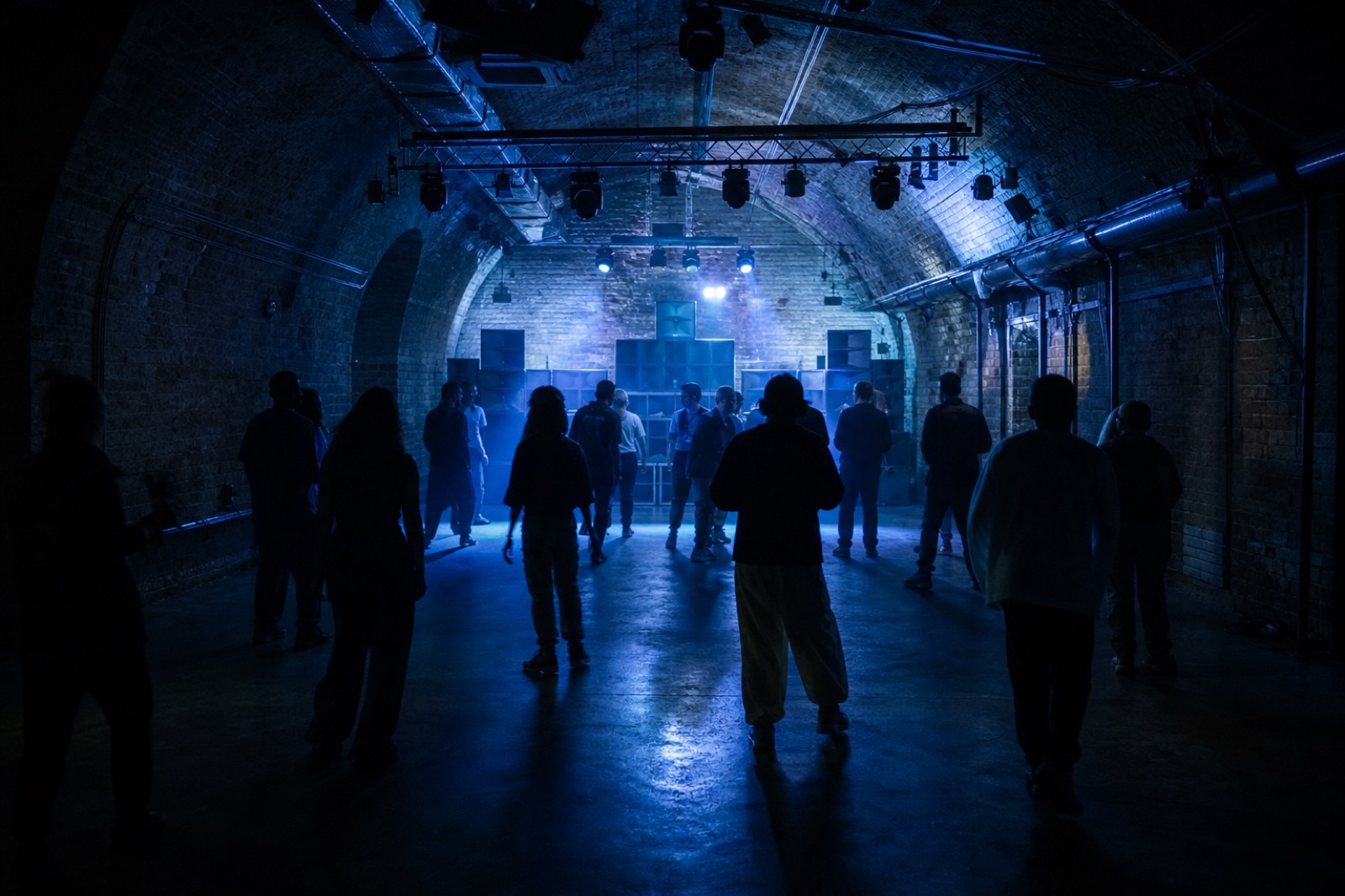
Jungle placement is a scheduling problem with feelings. Put it too early on a bright mainstage and the detail can evaporate before the crowd has learned how to listen. Give it a serious tent, a late slot, or a stage with enough sub-bass control, and the same records become physical education. It can also work as a bridge between bass music, UK garage, breaks, dubstep, and drum and bass if the DJ respects the tempo jump. The key is pressure management. A jungle set should give people room at the back, commitment at the front, and enough MC or vocal punctuation that newcomers do not feel abandoned in a drum maze. The best festival placement treats jungle as a living room language, not a heritage exhibit. Put water nearby, protect exits, and give the stage enough darkness for the break edits to feel dramatic rather than frantic. The crowd will do the rest if the sound system lets the bass speak clearly.
How To Hear The Difference From Drum And Bass
Jungle and drum and bass overlap so much that arguing about the border can become a hobby with poor hydration. A practical distinction helps. Jungle often foregrounds chopped breaks, reggae and ragga memory, dubwise bass weight, MC energy, and a rougher sense of collage. Drum and bass can be broader and cleaner, ranging from liquid smoothness to neuro precision, jump-up impact, and stadium-scale aggression. Historically, Red Bull treats jungle drum'n'bass as a shared emergence before the family diversified. At a festival, do not police the term first. Listen for the mix of ingredients. Are the breaks edited like living things? Does the bass carry sound-system authority? Do the vocals and samples feel rooted in rave, reggae, hip-hop, or soul memory? The answer matters more than winning a campsite debate. The better move is to check the DJ's choices, then let the crowd teach you which word fits. That humility keeps the conversation musical instead of turning it into taxonomy with louder shoes.
The Festival Listening Test
Use three checks. First, follow the break. If the drums are fast but flat, the set may be borrowing jungle clothing without the nervous system. Second, follow the sub. Jungle needs bass you feel as architecture, not a vague low rumble. Third, follow the DJ's patience. The best jungle sets create pressure in layers: a break teased, a bassline delayed, a vocal dropped, a rewind earned, an MC pushing without smothering the groove. Bring ear protection, because this music makes the most sense when the system is serious and your ears survive to remember it. Jungle's gift is precision disguised as disorder. Once you hear that, the style stops being a fast genre tag and becomes a way of organizing energy, history, and crowd trust at high speed. That trust is the reward: a room moving faster than comfort usually allows, yet somehow feeling held together.
Quick FAQ
What is jungle music?
Jungle is an early 1990s UK rave style built from chopped breakbeats, heavy sub-bass, reggae and sound-system influence, hip-hop attitude, hardcore speed, and the roots that fed drum and bass.
How did jungle relate to drum and bass?
The terms overlap historically; Red Bull frames the early emergence as jungle drum'n'bass before the wider drum and bass family diversified into many substyles.
How should festival fans listen for jungle?
Listen for edited breakbeats, sub-bass authority, reggae or ragga memory, MC pressure, dubplate tension, and whether the DJ builds a fast set with shape instead of speed alone.