Genre Guides
Chicago House: The Warehouse, The Beat, And The Room That Went Global
Chicago house grew from The Warehouse at 206 S. Jefferson St., Frankie Knuckles' room logic, and a sound built from disco, R&B, gospel, techno pressure, and community need.
Direct answer
Chicago house is the dance-music language that grew around The Warehouse, the Near West Side loft club at 206 S. Jefferson St. that operated from 1977 to 1982 with Frankie Knuckles as resident DJ. The City of Chicago's June 21, 2023 landmark notice says the style drew from disco, R&B, gospel, and techno, with a driving beat, emotive lyrics, and lush orchestration embraced by Black and Latinx LGBTQ communities before becoming internationally popular by the end of the '80s. Festival fans should hear Chicago house as room care made rhythmic.
Watch this topic
Save the related directory search
Track new events, profiles, and calls matching Chicago house history. The saved watch resolves against the live directory when you open it.
Article-to-directory guide
Keep moving from the article
Use these focused routes to move from the article into live events, talent, and application calls without starting from scratch.
The Address Matters
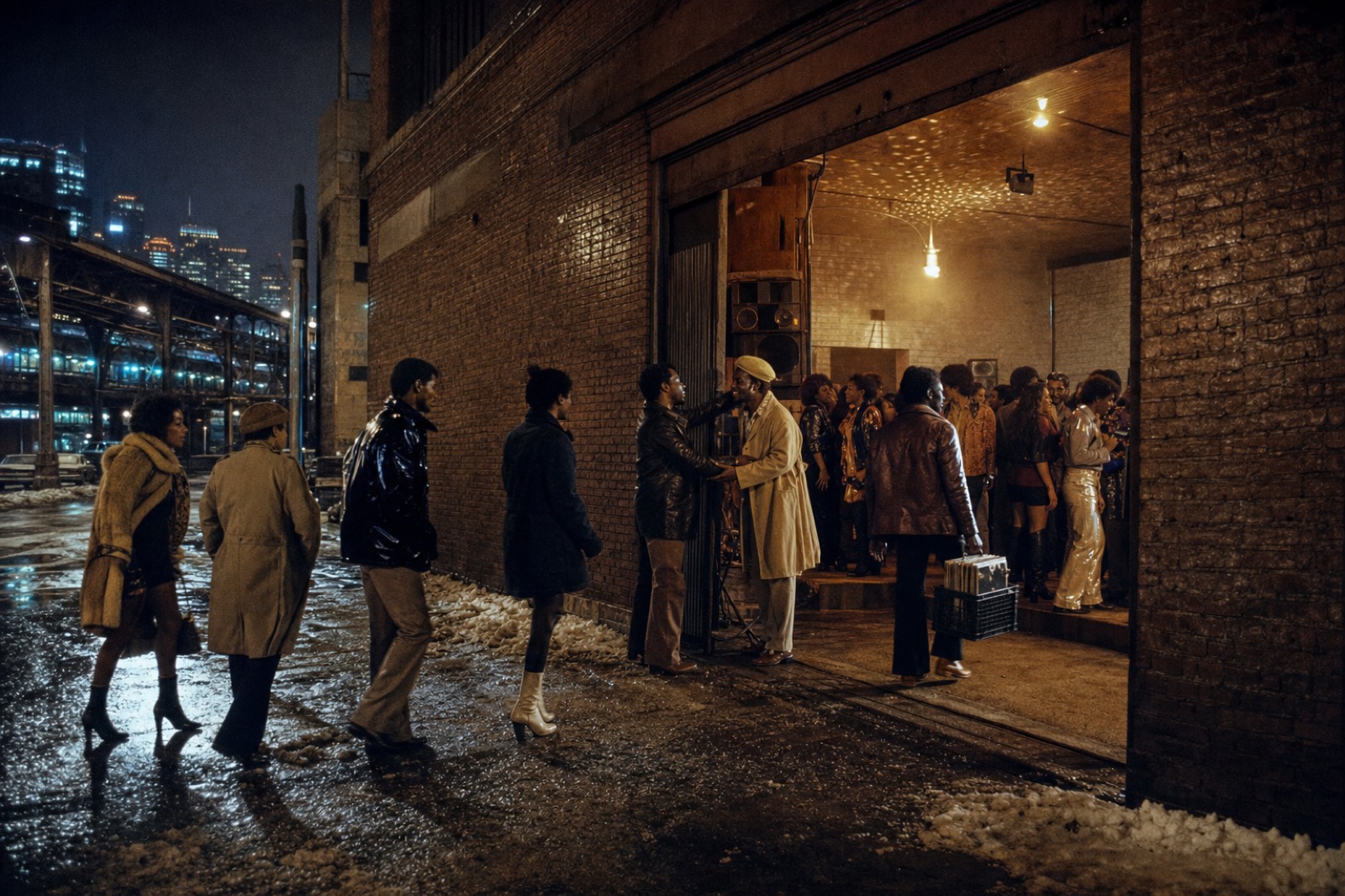
Chicago house is not an abstract mood floating over a playlist. It has an address. The City of Chicago landmark notice names the Near West Side loft building at 206 S. Jefferson St. as the birthplace of house music and says City Council designated it an official Chicago landmark on June 21, 2023. That civic sentence carries a lot of nightlife inside it. A room that once had to prove its value through dancers, sound, trust, and after-dark survival was later protected as public history. The Warehouse operated there from 1977 to 1982, which means the sound's myth begins in a specific building before it becomes a global word. For festival fans, the lesson is simple: every huge genre once depended on a door, a floor, and people who knew why that room mattered. When a festival set claims Chicago lineage, it should make that address feel audible through warmth, patience, and crowd care.
Frankie Knuckles Was The Room's Translator
Frankie Knuckles is central because a resident DJ does more than play records. The City source identifies him as The Warehouse's resident DJ and says he originated and popularized the style that came to be known as house. That phrasing matters. A resident learns bodies over time: who arrives early, who needs a vocal, who trusts a long blend, when the room can handle a stranger record, and when the night needs tenderness instead of impact. Knuckles' legend is relational as well as technical. He translated disco's warmth, R&B feeling, gospel lift, and electronic pulse into a room that needed continuity. A good festival DJ can learn from that: the set is not a pile of tracks. It is a series of decisions about care, pressure, memory, and release. The practical test is whether the DJ seems to serve the floor or merely display taste at it.
The Sound Was Built From Familiar Feeling
The City notice describes house music as drawing inspiration from disco, R&B, gospel, and techno. That combination explains why Chicago house can feel both direct and emotionally loaded. Disco gives it glide and communal shine. R&B gives it body language and ache. Gospel gives it lift, call, response, and the sense that a room can rise together. Techno pressure gives the machine edge that keeps the groove from becoming nostalgia with a kick drum. The same source characterizes the sound through a driving beat, emotive lyrics, and lush orchestration. Those are useful listening terms. The beat keeps the room moving. The lyric gives dancers something human to hold. The orchestration adds color around the rhythm so the track can feel generous without losing force. Listen for that generosity at festivals: strings, keys, and claps should widen the room instead of cluttering the drop. Check whether the arrangement makes space for singing instead of only jumping.
Community Was Not Decoration
The City of Chicago notice states that the sound was embraced by members of Chicago's Black and Latinx LGBTQ communities. That line should not be treated as background color. It is part of the engine. House music offered a room where people pushed outside mainstream respectability could build joy, identity, flirtation, grief relief, and social safety through rhythm. The floor was not utopia, because no real room is. But it made a kind of practical freedom audible. A kick drum can become a boundary. A vocal can become recognition. A long groove can give people time to stop performing defense and start moving. Modern festivals borrow house music constantly, but the music's deeper meaning comes from the communities that needed it before it became a global festival utility. A respectful set keeps that need visible by making room for tenderness as well as release. The crowd should feel invited, not harvested for atmosphere.
The Beat Did Social Work
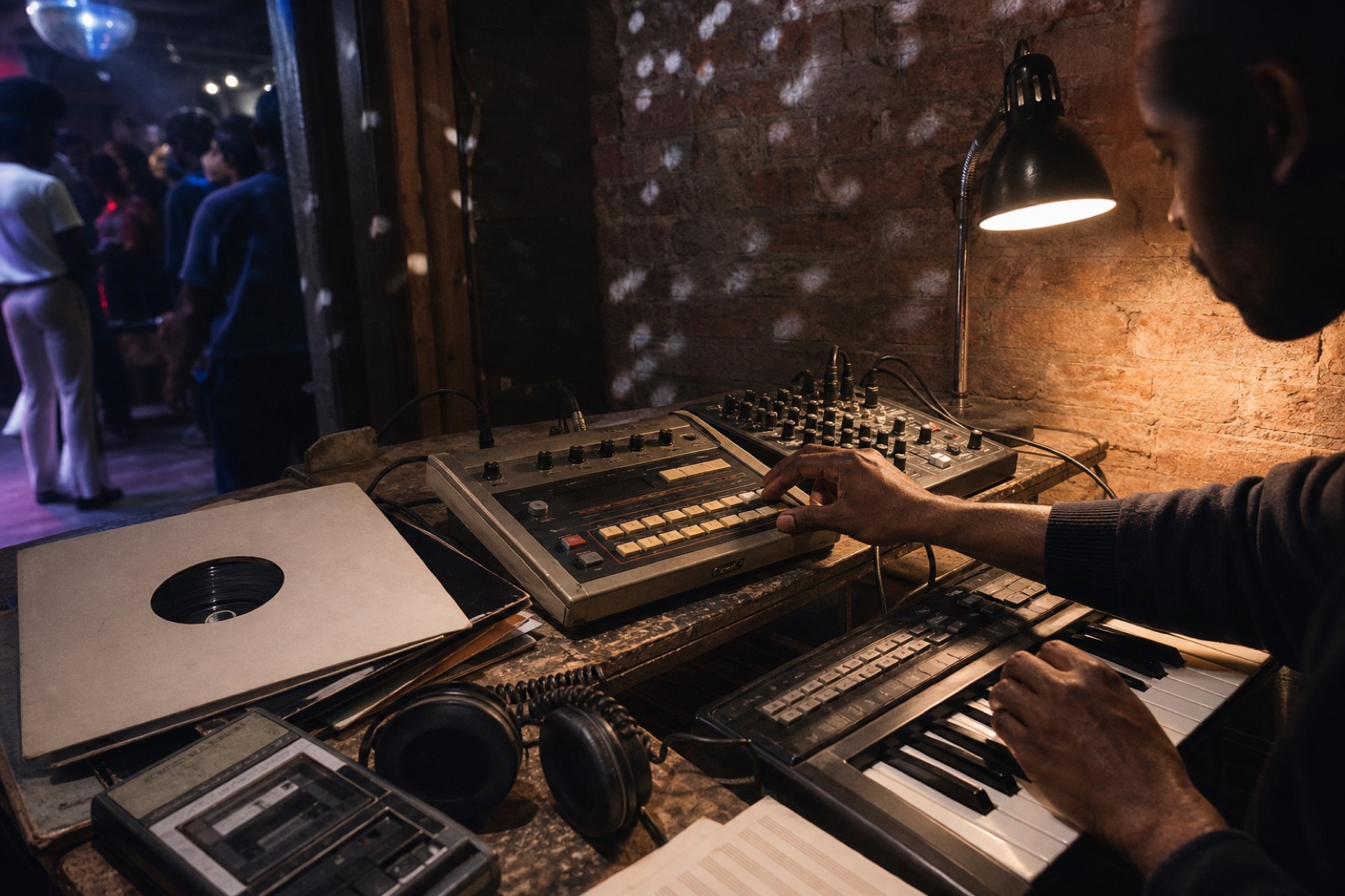
Chicago house is often described through four-on-the-floor drums, but the kick is only the front door. The deeper craft is how repetition becomes welcome. A strong house track gives dancers enough predictability to trust their feet and enough change to keep attention alive. Piano stabs, handclaps, bass movement, strings, gospel-flavored vocals, and drum-machine pressure can all serve that purpose. The beat is driving, but it should not feel cruel. It should feel like a room being held open. That is why sloppy festival house can sound empty even when the production is expensive. It borrows the grid and forgets the hospitality. Real Chicago house logic asks whether the groove lets people enter, stay, sweat, and feel more like themselves by the end of the record. Watch the crowd: the best house records make strangers behave like temporary neighbors. That is a safety feature as much as a vibe.
International By The End Of The Eighties
The City source notes that by the end of the '80s, house music had become popular internationally. That spread did not make the Chicago origin less important. It made the origin easier to exploit and easier to forget. Once a sound travels, it changes shape through new rooms, labels, DJs, radio, imports, edits, and local needs. UK acid house, European club culture, New York and New Jersey garage conversations, and later global EDM all touched house language in different ways. The practical fan move is to keep both truths active: house became international because it was flexible, but it had a room logic before it had a passport. When a festival set plays Chicago house, listen for whether it honors that room logic or merely uses the word house as a mood setting. A global stage should still make the groove feel local to the bodies standing there.
The Landmark Notice Is A Warning
The 2023 landmark designation protects the 113-year-old building's facade and roofline elevations from alteration or demolition. That is preservation language, but it also reads like a warning to music culture. Buildings that create nightlife history are often vulnerable after the scene moves on, especially when their value is easier to feel than to monetize. Protecting The Warehouse's exterior does not recreate the room, the people, the sound system, or the exact risk of the nights inside. It does, however, force the city to admit that club culture is history, not a disposable phase. Festival culture should hear that clearly. The stages people dance on now will become memory later. The question is whether anyone leaves enough evidence, respect, and care for the story to survive redevelopment. Save the flyer, credit the crew, and do not treat nightlife as weightless just because it happens after office hours.
How DJs Carry Chicago House At Festivals
A festival DJ carrying Chicago house has a job: make a large outdoor or tented room feel temporarily intimate. That does not mean playing softly. It means pacing vocals, drums, and melodic lift so the crowd feels gathered instead of sprayed with disposable hype. A strong Chicago-house-informed set might use disco edits, gospel-house vocals, piano pressure, warm bass, and patient blends to turn strangers toward each other. The danger is flattening the music into generic sunny house. Chicago house has sweetness, but it also has backbone. The rhythm should work. The vocal should matter. The set should leave space for dancers to answer rather than simply obey. If the crowd starts facing friends instead of worshiping the screen, the DJ is probably doing something right. For planning, choose stages where sound is warm, sightlines are relaxed, and the set has enough time to breathe. Check the schedule before committing the group.
A Festival Listening Test
Use four checks. First, find the kick: is it steady enough to build trust without becoming stiff? Second, find the vocal or melodic hook: does it carry feeling, or is it just decoration between drops? Third, listen for orchestration: strings, keys, pads, claps, and bass should make the groove warmer, not busier. Fourth, watch the crowd. Chicago house should create social permission. People loosen, smile, sing, and find a shared pulse that does not require pyrotechnics to justify itself. Bring ear protection, stay hydrated, and choose the right stage. This music often works best where the sound system can be warm and the crowd can move without being crushed into one direction. House is about the room, even when the room is a field. After the set, check one Frankie Knuckles mix or Chicago house classic while the feeling is still in your legs. Save the track ID before the signal disappears.
How To Plan Around A House Set
Treat a serious Chicago house slot differently from a mainstage sprint. Check the stage location, sound system reputation, set length, and whether the surrounding acts give the DJ enough emotional runway. Bring water before the set starts, because leaving during the first proper vocal lift is a small personal tragedy. Pick a meeting point where friends can regroup without blocking dancers. If the schedule forces a conflict, choose the set where the room will be warmest rather than the name with the biggest font. Chicago house rewards patience, and patience is easier when the plan is simple. A good crew enters with loose knees, protected ears, and enough trust to let the groove work before demanding proof. Stand far enough back to hear the bass and vocal together, not so far that the crowd disappears into snack-line sociology. Mark the next route before the set ends, because the best house glow can turn an obvious exit into a soft maze.
What The Warehouse Still Teaches
The Warehouse story matters because it keeps house music human. A city landmark notice can name the building, the dates, the DJ, the communities, and the sound traits, but the living lesson is smaller and harder: people need rooms where feeling can move safely. Chicago house turned that need into rhythm. The beat drove forward, the lyrics reached for emotion, and the orchestration made the room feel bigger than its walls. That is why the genre still belongs at festivals. It can scale without surrendering intimacy if the DJ respects the source. The best Chicago house moments do not shout that history is important. They make the crowd feel, for a few minutes, why a room at 206 S. Jefferson St. could become a language the world wanted to speak. Carry that standard into the next lineup: warmth, service, history, and a groove that lets people recognize themselves. Then do something practical with the memory: check the credits, save the source mix, protect your hearing, thank the crew member keeping the route clear, and notice whether the next DJ treats the floor as a community or a target. That small test is how history stays alive after the wristband comes off.
Quick FAQ
Where did Chicago house begin?
The City of Chicago landmark notice identifies The Warehouse, a Near West Side loft building at 206 S. Jefferson St., as the birthplace of house music.
Who was the key DJ at The Warehouse?
Frankie Knuckles was The Warehouse's resident DJ from the club's 1977 to 1982 period and is credited by the City notice with originating and popularizing the style known as house.
What does Chicago house sound like?
The City notice describes house as drawing from disco, R&B, gospel, and techno, with a driving beat, emotive lyrics, and lush orchestration.