Culture
Chillout Rooms: The Soft Room That Kept Rave Culture From Eating Itself
A sourced story of rave chillout rooms, from acid-house-era beanbags and ambient records to The KLF, Café Del Mar, kwia, and modern festival decompression spaces.
Direct answer
Chillout rooms mattered because rave culture needed a second speed. DJ Mag's 17 August 2023 feature describes them as spaces for downtime away from main-room pressure, with beanbags, softer music, and room to sit or lie down. The history connects acid house, A Man Called Adam, Chris Coco, Land Of Oz, The Orb, Café Del Mar, The KLF's 1990 Chill Out, and modern ambient rooms such as kwia. For festivals, the lesson is practical: rest is infrastructure.
Watch this topic
Save the related directory search
Track new events, profiles, and calls matching chillout room rave history. The saved watch resolves against the live directory when you open it.
Article-to-directory guide
Keep moving from the article
Use these focused routes to move from the article into live events, talent, and application calls without starting from scratch.
The Room Beside The Racket
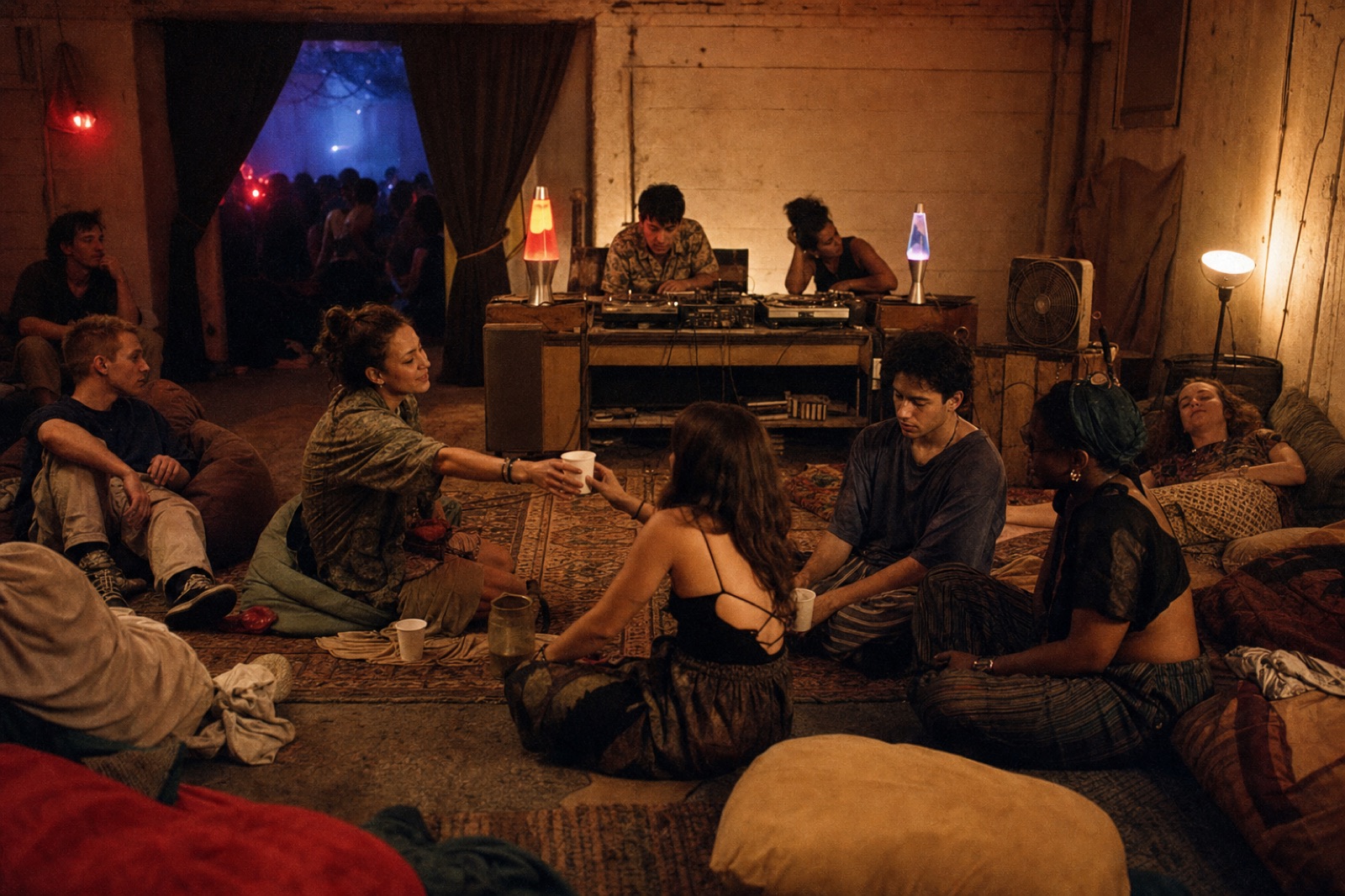
The chillout room was the soft room beside the racket. That sounds cute until you remember what a full-force rave or EDM festival does to a body: heat, volume, lights, crowd pressure, dehydration, emotional whiplash, and the strange moment when a bassline has been excellent for so long that your knees file a complaint. DJ Mag's 17 August 2023 feature by Manu Ekanayake frames the classic chillout room as a break from main-room madness, a place with more mellow music, seating, and sometimes beanbags. That setup was not luxury decoration. It was a pressure valve. A good dance floor needs intensity, but intensity without contrast turns into a blender with wristbands. Chillout rooms saved dance floors by making it possible to leave the peak without leaving the night. They let people recover, talk, hydrate, regroup, and return as humans rather than overheated confetti with opinions. The room's genius was humble: it solved the boring problems that decide whether the fun survives another hour.
Acid House Needed A Back Room
DJ Mag traces chillout rooms back to the start of acid house through Sally Rodgers of A Man Called Adam, who says they were part of club offerings from when she started going out properly in 1989 or so. That date matters because acid house was not a tidy genre seminar. It was a cultural surge with speed, sweat, illegal parties, new drugs, Balearic openness, and a main room that could feel like a friendly industrial accident. A back room made the night survivable. DJ Mag's description is wonderfully physical: a place to sit, maybe lie down, hear Brian Eno or classic soul, and let the main-room shock leave the nervous system. For EDM festivals now, the equivalent might be a shaded tent, ambient stage, tea area, hammock village, or quiet corner that people pretend they do not need until their eyes start vibrating. The room worked because it admitted a truth dance culture sometimes dodges: bodies are part of the lineup.
Beanbags Were A Safety Feature
The funny objects mattered. DJ Mag mentions beanbags and lava lamps, and those details are more than costume history. A beanbag says the room expects people to stop performing stamina. A lava lamp says the visual tempo can come down. The free water Sally Rodgers connects to the old chillout-room model says recovery is part of the event rather than an embarrassing errand. That is scene design at a human scale. Compare that with a festival that offers nowhere to sit except dirt, curb, or the psychological hostage situation of a vendor queue. The difference shows up after midnight. People with somewhere to decompress make better decisions, find friends faster, and return to the music with actual attention. People without a rest plan become lost, irritable, or bravely stupid. Chillout rooms did not save dance floors by being soft. They saved them by making softness legitimate inside a culture addicted to harder, faster, louder. The best version gave exhausted people permission before exhaustion became a problem.
The Music Had Its Own Plot
The chillout room also had its own soundtrack, and that is where bad histories often go wrong: the music mattered. DJ Mag's Chris Coco points to Land Of Oz, run by Alex Paterson from The Orb in an upstairs room at Heaven, as an early chillout-room encounter. He says they were playing the strange music that fed into The KLF's Chill Out. Pitchfork's review identifies The KLF's Chill Out as a 1990 KLF Communications release, reviewed by Philip Sherburne on February 16, 2020, and calls it one of the most influential records in ambient house music. That matters because the chillout room helped make room for music that did not have to obey the main-room command to move bodies immediately. Samples, field-drift, pads, radio ghosts, dub space, and slow-motion weirdness could become the main event for a while. The back room taught ears to stretch horizontally.
Café Del Mar Was The Sunset Version
DJ Mag also brings Chris Coco through Ibiza and Café Del Mar, where a sunset encounter pushed him toward slower, more specialized chillout sounds. That thread is important because chillout culture was never only a spare room with tired people in it. It also became a way to hear time differently: sunset instead of peak hour, horizon instead of strobe, conversation instead of command. Café Del Mar helped turn down-tempo selection into its own ritual, one that festivals still borrow whenever they program sunrise ambient sets, lakefront yoga-adjacent DJ slots, or the suspiciously necessary stage where everyone suddenly remembers they have a spine. The lesson is not that every festival needs lifestyle wallpaper. The lesson is that a day of electronic music needs arcs. A weekend cannot live on drops alone. Somewhere in the schedule, the crowd needs music that lets the body land without making the night feel over.
Why They Faded
DJ Mag's reporting gives the decline a few practical culprits: economics, commercialization, safety anxiety, smoking-law shifts, and the promoter temptation to replace a room full of resting people with another room full of paying, drinking, dancing bodies. Chris Coco puts the arithmetic bluntly: why keep people sitting when another full-on room can pack them in? That is the chilly business logic under a lot of lost nightlife comfort. Chillout rooms did not vanish because nobody needed them. They faded because rest can be hard to monetize and easy to misunderstand. A quiet room can look like wasted square footage to someone reading a spreadsheet. To a tired dancer, it can look like mercy. Festivals should study that tradeoff carefully. If the only available recovery zones are medical tents, VIP lounges, or a patch of grass behind a generator, the event has confused crisis response with care. A rest space is cheaper than a preventable spiral, even when the spreadsheet pretends otherwise.
The Modern Equivalents
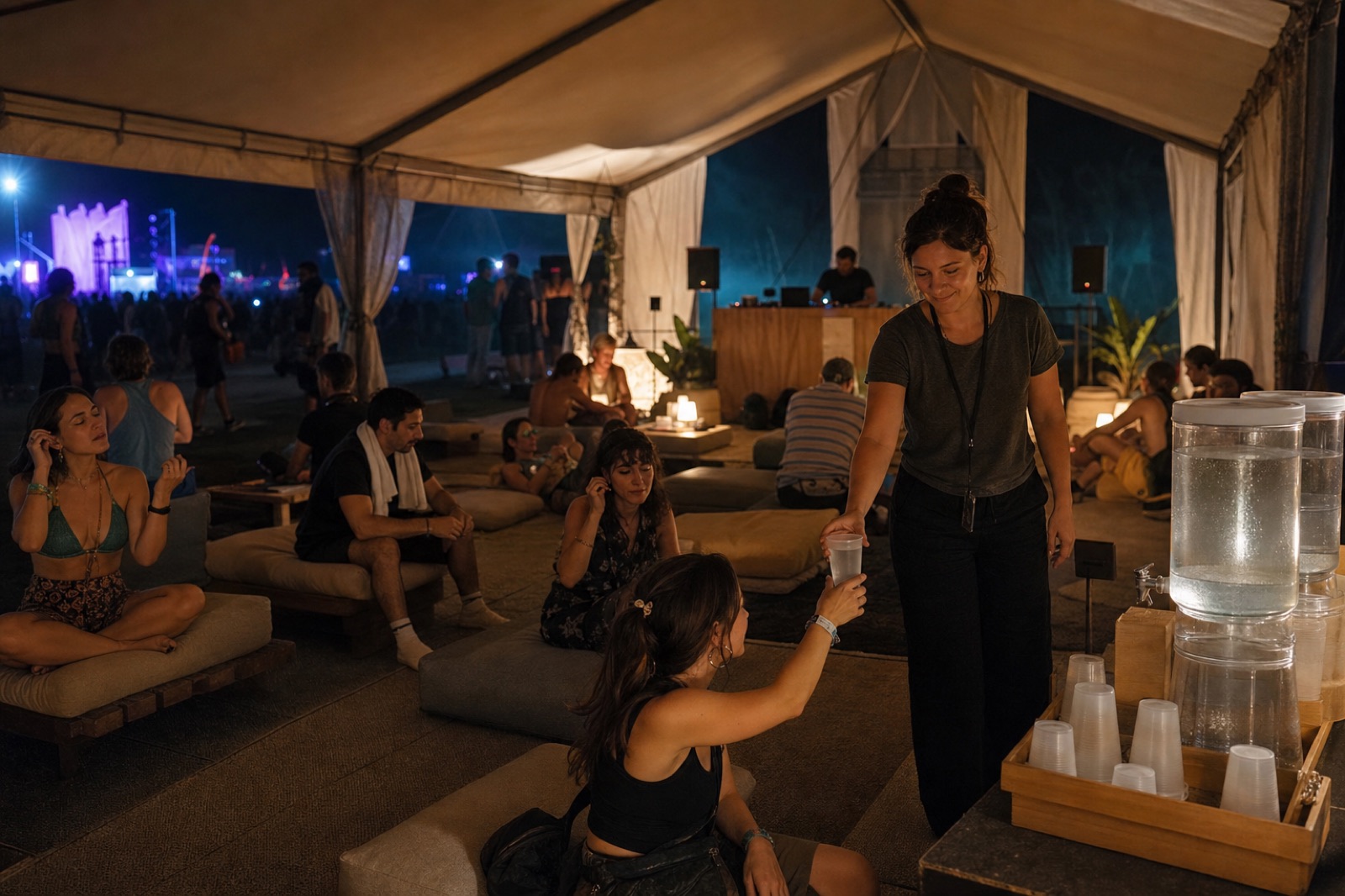
The DJ Mag piece is useful because it does not treat chillout rooms as a dead antique. It follows modern equivalents through The Chill Out Tent, audiophile listening bars such as Brilliant Corners and Spiritland, Sybil's experience with ambient sets at Waking Life Festival, and Berlin's kwia, a sound-treated venue that prizes detail over power. That phrase should be printed on a few festival production binders. Detail over power is not weakness. It is a different kind of attention. Sybil's point about sustainable energy also lands hard: parties last longer when people can sit, talk, sink into music, and stop proving they are made of chrome. Modern festivals already understand this in fragments through shade structures, wellness tents, hammock zones, and ambient programming. The better version connects those fragments into a real plan: rest spaces with decent sound, visible water, soft light, clear exits, and enough dignity that people actually use them. A decompression area should feel programmed, not abandoned: someone should choose the music, protect the volume, keep the route obvious, and make rest feel like part of the festival rather than a side quest.
What Festivals Get Wrong
Festivals often mistake chill for absence. They build a tiny quiet corner and then program it like an apology. That misses the point. A real decompression area still has taste, sound, texture, and intention. It should not feel like timeout for people who failed the rave exam. It should feel like another valid mode of the weekend. Put it near enough to be findable and far enough from the main sub-bass to let the nervous system unclench. Give it seating that does not collapse into dust. Keep water visible. Use low light. Staff it without turning it into a lecture zone. Let ambient, dub, downtempo, experimental, and slow house DJs treat the space with respect. Then tell people where it is before they need it. The practical failure is predictable: if the map hides the recovery area, tired people will not search for it. They will sit behind a trash fence and call that planning.
A Festival Fan's Chillout Plan
Use the chillout-room lesson as personal logistics. Before the first big set, find the nearest water point, shaded seating, medical tent, bathrooms, and lower-volume zone. Choose a meeting point that still works when phones fail. Bring earplugs that reduce volume without turning music into soup. Eat before the dramatic conflict between hunger and bass begins. If a festival has an ambient stage, visit it before you are desperate. Learn how long it takes to walk there from the main stage. Give yourself one scheduled decompression break instead of pretending heroism is a hydration strategy. The best part is that a real break improves the music. After twenty minutes of softer sound, the main room can feel sharper rather than merely louder. That is what the old chillout room understood: contrast is not the enemy of intensity. It is how intensity survives the night. Tell your group the plan while everyone is still cheerful, hydrated, and capable of understanding maps.
The Soft Room Still Wins
Chillout rooms saved dance floors because they respected the full cycle of a night. Arrival, lift, overload, rest, conversation, return, sunrise, memory: all of it belongs to rave culture. The main room gets the dramatic photos, but the side room often keeps the story from breaking. DJ Mag's old beanbags and lava lamps may sound quaint now, yet the underlying job is modern as ever. The KLF's Chill Out still matters because it proved electronic music could travel without sprinting. kwia matters because detail over power is still a radical sentence in a loud industry. For festivals, the takeaway is simple and operational: build rest into the event as seriously as sound, lights, and ticketing. A crowd that can recover can dance longer, listen better, panic less, and come home with a story instead of only a bruise. The soft room was never an extra. It was infrastructure with a nicer lamp.
Quick FAQ
What was a rave chillout room?
A chillout room was a lower-intensity space beside the main dance floor where ravers could sit, cool down, hear ambient or slower music, drink water, talk, and recover before returning to the party.
Why did chillout rooms matter?
They gave high-energy dance events a recovery system, helping people manage heat, volume, sensory overload, fatigue, and social stress without leaving the night entirely.
What is the modern festival equivalent of a chillout room?
Modern equivalents include ambient stages, shaded rest tents, decompression areas, hammock zones, audiophile listening spaces, and well-designed low-volume lounges with water and seating.