Culture
Why Camp Becomes A Temporary City: EDM Culture on the Ground
A story-led field report on why EDM campgrounds behave like temporary cities, and how fans can build better ones without turning the weekend into homework.
Direct answer
An EDM festival camp becomes a temporary city because thousands of people build a short-lived system for sleeping, eating, moving, sharing sound, handling weather, solving conflict, and caring for each other. The tents are only the skyline. The real city is the route to water, the neighbor treaty, the shade plan, the trash system, the sound etiquette, and the small choices that keep joy from turning into logistics failure.
Watch this topic
Save the related directory search
Track new events, profiles, and calls matching EDM festival camp temporary city. The saved watch resolves against the live directory when you open it.
Article-to-directory guide
Keep moving from the article
Use these focused routes to move from the article into live events, talent, and application calls without starting from scratch.
The Moment Camp Stops Being A Campsite
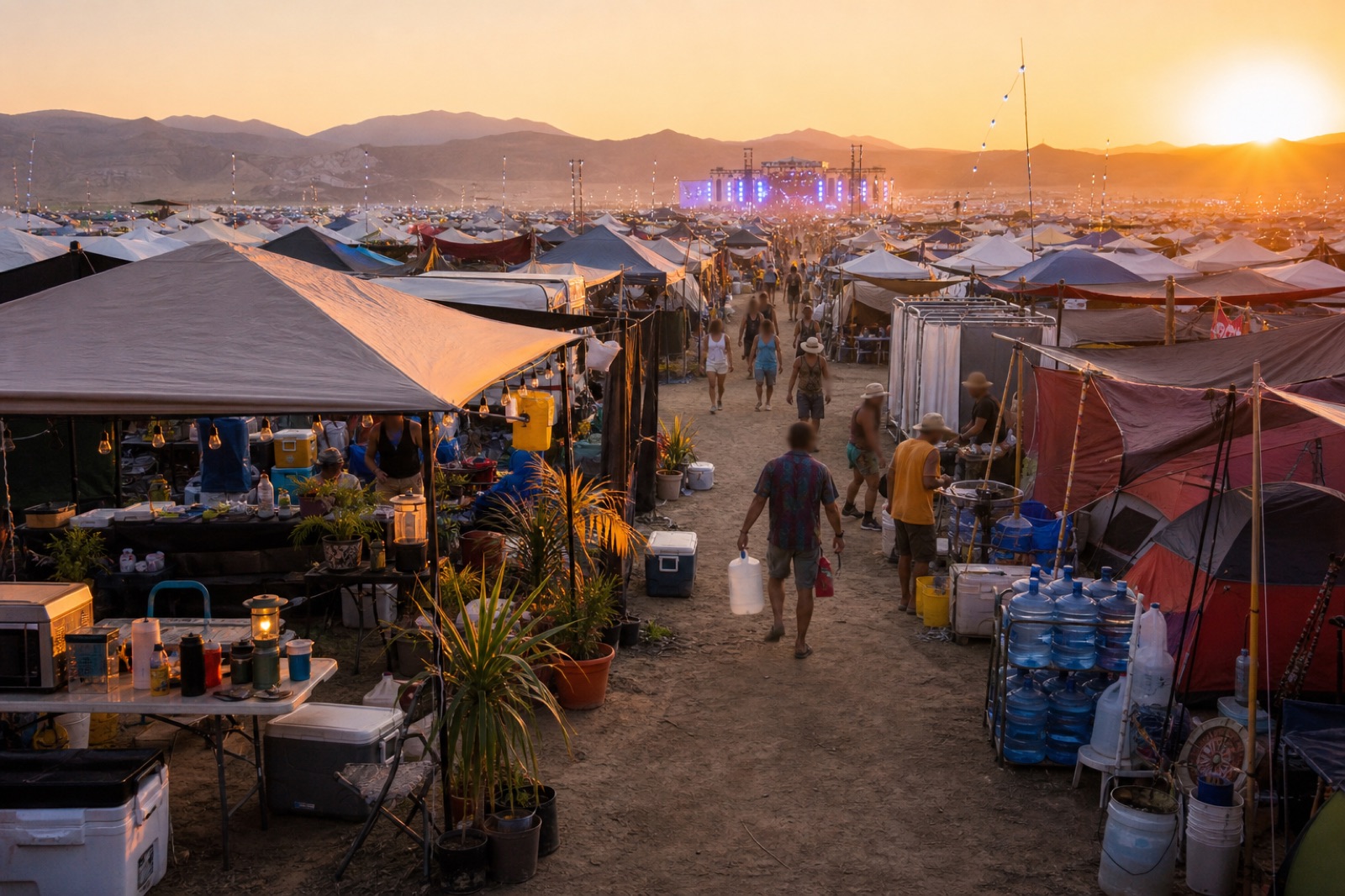
A campsite is a place where a few people sleep. A festival camp becomes a city the second enough strangers start depending on one another's choices. One canopy casts shade across another crew's walkway. One cooler leak becomes a small mud district. One speaker left blasting at sunrise becomes a public policy debate conducted by exhausted people in glitter. That is the funny, serious magic of EDM camping culture: everyone arrives for music, then immediately starts building roads, kitchens, social rules, waste systems, and emotional infrastructure with tarps and zip ties. The temporary city does not announce itself with a mayor. It appears when someone says, "Where is the water?" and twelve people point in different directions. From there, culture becomes practical. The weekend needs routes, trust, warnings, shared tools, and enough patience for people to remain kind after the bass and the heat have edited their personalities.
Roads, Paths, And The First Law Of Movement
Every campground invents transportation. The main road is official, but the useful paths are made by feet: a shortcut to the bathroom, the shady route to a friend's camp, the narrow line between two canopies that becomes a boulevard because everyone silently agrees it is better than walking through dust. Good camps respect those paths. Bad camps block them with guy lines, coolers, chairs, and one heroic wagon parked like it has diplomatic immunity. The layout shapes the culture. A clear walkway makes neighbors feel welcome. A dangerous walkway creates ankle traps and irritation. A marked camp flag helps friends return after dark. A lantern near the entrance can prevent ten minutes of confused wandering. None of this is glamorous, but city life rarely begins with glamour. It begins with people needing to move without stepping on someone's breakfast or tripping into a tent at 3 a.m.
Kitchens Are Tiny Governments
The camp kitchen is where ideology becomes snacks. Who brought the stove? Who knows where the lighter went? Who decided chips counted as dinner? Who left the cooler open long enough to turn ice into a rumor? A good kitchen creates order without becoming a command center. Water stays visible. Trash has a bag before trash exists. Breakfast is simple enough to happen while people are still speaking in bass damage and half-sentences. The crew that eats real food becomes kinder, and kindness is underrated infrastructure. Ready.gov-style preparedness advice sounds dry until a campground proves why batteries, first aid, light, and simple supplies matter. A festival kitchen is not about perfection. It is about reducing the number of avoidable dramas between sets. Feed people, label the cooler, keep raw chaos away from clean hands, and the city becomes easier to live in. Even instant coffee can become civic policy when it keeps three tired friends from starting a constitutional crisis over granola.
Sound Bleed Is Urban Planning With Subwoofers
At a camping festival, sound is zoning. The official stages have production managers, directional systems, and schedules. The campground has Bluetooth confidence and people who believe their camp playlist is a public service. Some sound is joyful. A little renegade energy can make a lane feel alive. Too much sound turns the campground into a municipal dispute with better outfits. The trick is to know when your camp is hosting and when it is colonizing the air. Volume etiquette is not anti-fun; it protects the possibility of tomorrow's fun. People need sleep, decompression, medical rest, and a chance to hear themselves think. CDC hearing guidance belongs in this conversation because the weekend is already loud enough before someone puts a speaker beside a tent wall. A good temporary city treats sound like fire: powerful, communal, and capable of ruining everything if nobody respects the wind.
The Neighbor Treaty
Every camp signs an invisible treaty with the people around it. The terms are simple: do not steal shade, do not weaponize dust, do not turn a shared path into storage, do not assume everyone loves your sunrise playlist, and help when something obvious goes wrong. The best neighbors offer a mallet, remember a name, point someone toward water, and laugh at small failures before they become territorial. The worst neighbors treat the campground like a hotel room with worse walls. EDM culture talks a lot about community, and the campground tests whether that word can survive a real inconvenience. Community is easy during a perfect set. It is harder when someone needs a battery, a ride plan, a quiet hour, or a trash bag. That is why camp culture matters. It turns slogans into behavior, and behavior is where the scene tells the truth about itself.
Water, Shade, Sleep, Trash
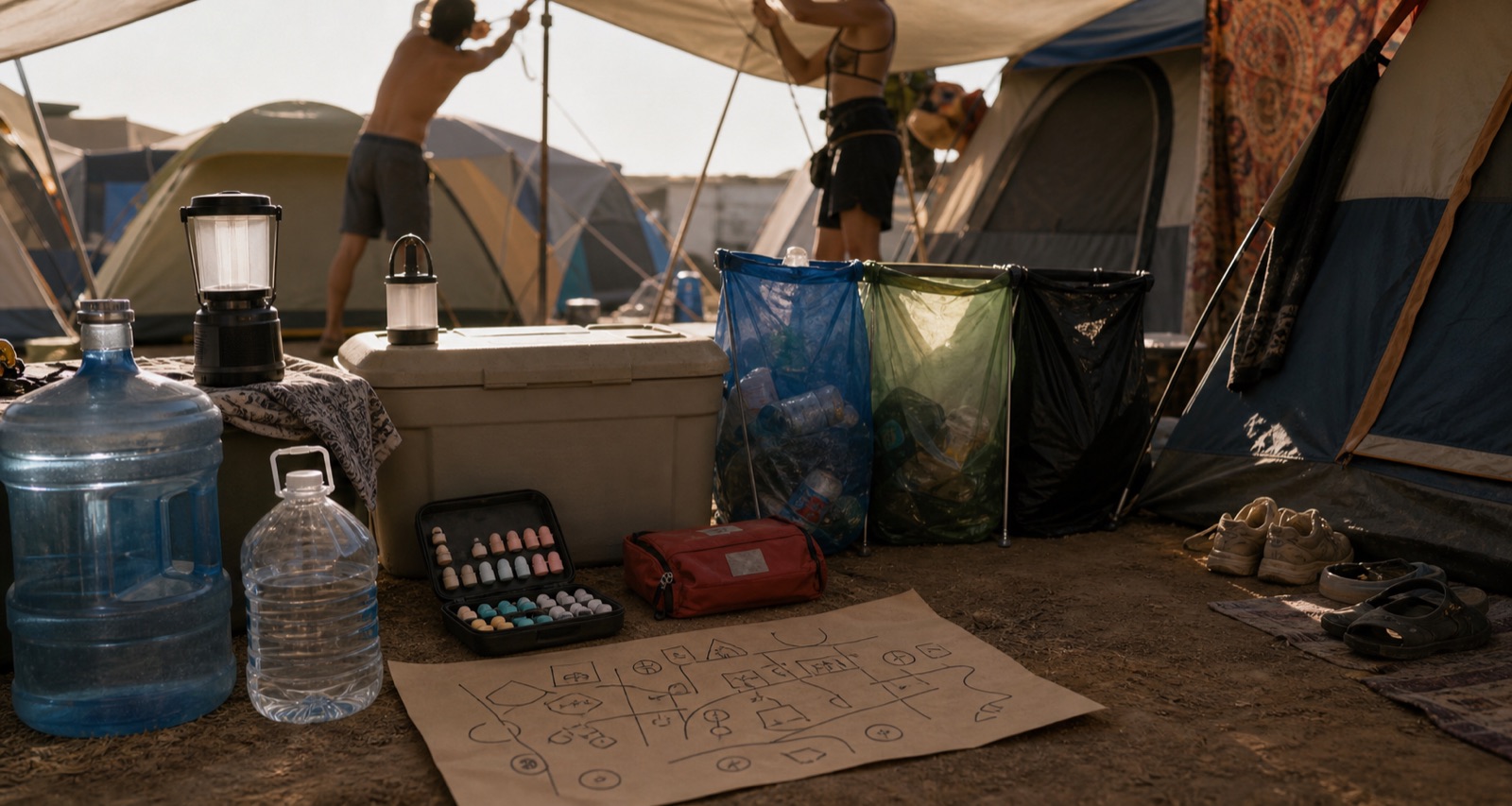
These four nouns decide more weekends than headliners do. Water is the civic utility. Shade is public health. Sleep is conflict prevention. Trash is the city's moral audit. Weather.gov heat and cold guidance may sound far from the dance floor, but camp life makes it immediate: sun exposure, temperature drops, wind, rain, dust, dehydration, and the strange optimism of people who packed three outfits and no warm layer. Good camps put water where tired people can find it. They create shade before noon turns cruel. They make a sleep plan that respects bodies rather than pretending adrenaline is a mattress. They make trash easy because hard trash systems become ground trash. A campground that handles these basics feels relaxed because people are not spending all day solving preventable problems. That relaxation becomes culture too. It is the sound of a city that works. The best crews treat these chores as shared care, not punishment for being organized.
The Economy Of Borrowed Stuff
Temporary cities run on a shadow economy of borrowed objects. Mallets, tape, sunscreen, salt packets, batteries, earplugs, bungee cords, trash bags, phone cables, electrolyte powder, and one mysteriously useful folding table move through camp like small acts of diplomacy. Nobody remembers every item they should have packed. The healthier city is not the one where everyone packs perfectly; it is the one where people share without becoming doormats and borrow without becoming freeloaders. Label what matters. Return tools quickly. Offer something back. Do not make another camp fund your lack of planning all weekend. The exchange builds trust because it proves the neighborhood has a nervous system. In EDM culture, that nervous system is as real as the stage. A crew that can borrow a mallet without drama is already practicing the social skill festivals claim to celebrate. The tiny economy also teaches boundaries, which are community care with a spine.
More Than Logistics
Calling camp a temporary city does not drain the romance from the weekend. It explains why the romance survives. The sunrise hug feels better because someone kept water full. The secret set is easier to reach because the route home makes sense. The art car feels magical because the trash pile did not become a landmark. The afterglow lasts longer because people slept enough to remember it. EDM has always linked technology, bodies, pleasure, and systems. A campground makes that link visible. Power strips, shade cloth, LED toys, med tents, earplugs, dust masks, wristbands, and neighbors all become part of the arrangement. The drop may be the emotional peak, but the city around the drop decides whether people can receive it. Culture lives in the small systems that let the big moments happen without eating the humans who came for them. Logistics are the unglamorous frame that lets the strange picture stay beautiful.
Where The City Breaks
The city breaks when fantasy outruns maintenance. A crew assumes vibes will handle food. A canopy is not anchored. A camp blocks a path. Nobody knows where the meeting point is. Speakers run past the point of joy. Trash has no home. A tired person gets treated like a problem instead of a neighbor. These failures are ordinary, which is why they deserve attention before the gates open. The fix is rarely dramatic. Walk the camp once in daylight and once after dark. Move the trip hazards. Put a light on the entrance. Agree on quiet hours inside the crew even if the festival has its own rules. Keep a small first-aid and battery zone. Check on the person who disappeared into the tent early. The healthiest temporary cities do not avoid chaos completely. They make chaos less expensive. That is a better goal than perfection, and much easier to pack.
How To Build A Better Temporary City
Build from the boring needs outward. Mark the entrance. Keep paths open. Put water in a place everyone can find. Separate trash and recycling early. Anchor shade. Protect ears. Choose a meeting spot that still makes sense when cell service gives up. Keep shoes available for the bathroom walk. Make food easy enough for tired people. Talk to neighbors before there is a problem. Share tools with boundaries. Pack a weather layer that matches the worst hour, not the cutest photo. None of this makes the weekend less wild. It gives the wildness somewhere safe to land. A better temporary city is not a sterile one. It still has jokes, glitter, dust, bass, bad coffee, and someone doing an ambitious outfit repair with tape. It simply has enough care built in that people can stay open to the music. The point is not control; the point is more room for joy.
The Walk Back
The walk back to camp is where the city reveals itself. If the path is clear, the lights are findable, the neighbors wave, water is waiting, and the crew knows where to land, the night keeps glowing. If the route is confusing, the camp is trashed, the speaker war is still raging, and nobody has eaten since noon, the magic gets a bill. That is why camp becoming a temporary city belongs in EDM culture. The scene lives under lasers and in the shared work that makes those lasers feel like liberation instead of survival training. The best campgrounds teach a simple civic lesson with a bassline in the distance: take care of the place, take care of the people, and the weekend has room to become stranger, kinder, and more memorable than anyone planned. A good camp gives tired people comfort, a clear route, enough safety to rest, and the trust to wake up ready for another day.
Quick FAQ
Why do EDM festival camps feel like temporary cities?
They concentrate thousands of people who need routes, water, shade, food, sound etiquette, sleep, waste systems, safety habits, and neighbor cooperation for a short period of time.
What makes a better festival camp?
Clear paths, visible water, anchored shade, simple meals, trash systems, hearing protection, meeting points, weather layers, neighbor respect, and a plan that still works after dark.
Is campground culture part of EDM culture?
Yes. EDM camp culture turns community language into behavior: sharing tools, respecting sound, protecting rest, solving logistics, and making room for strange joy without sacrificing care.