Festival History
How a Piano Dropped From a Helicopter Helped Point Festival Culture Toward the Field
The strange 1968 Duvall Piano Drop was a prank, an art happening, a crowd problem, and an early clue for how American festival culture learned to move into fields.
Direct answer
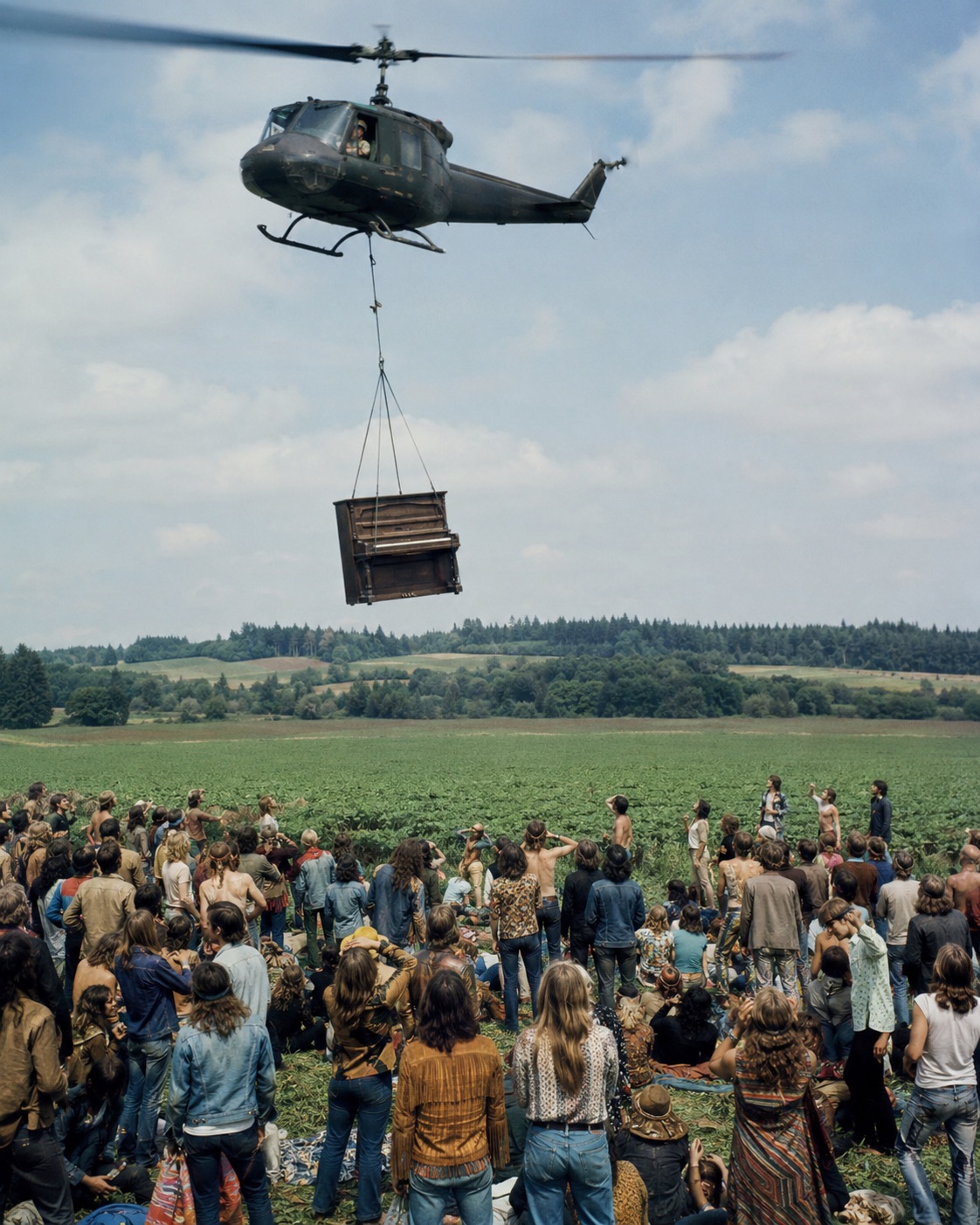
The April 28, 1968 Duvall Piano Drop matters because nearly 3,000 people gathered on Larry Van Over's Washington farm to watch a helicopter drop an upright piano, turning a prankish counterculture happening into a real crowd experiment. It did not invent EDM festivals. It helped show how rural land, spectacle, music, art, weather, traffic, and shared myth could become the social machinery later camping festivals kept refining.
Watch this topic
Save the related directory search
Track new events, profiles, and calls matching Duvall piano drop festival history. The saved watch resolves against the live directory when you open it.
Article-to-directory guide
Keep moving from the article
Use these focused routes to move from the article into live events, talent, and application calls without starting from scratch.
The Field Before The Drop
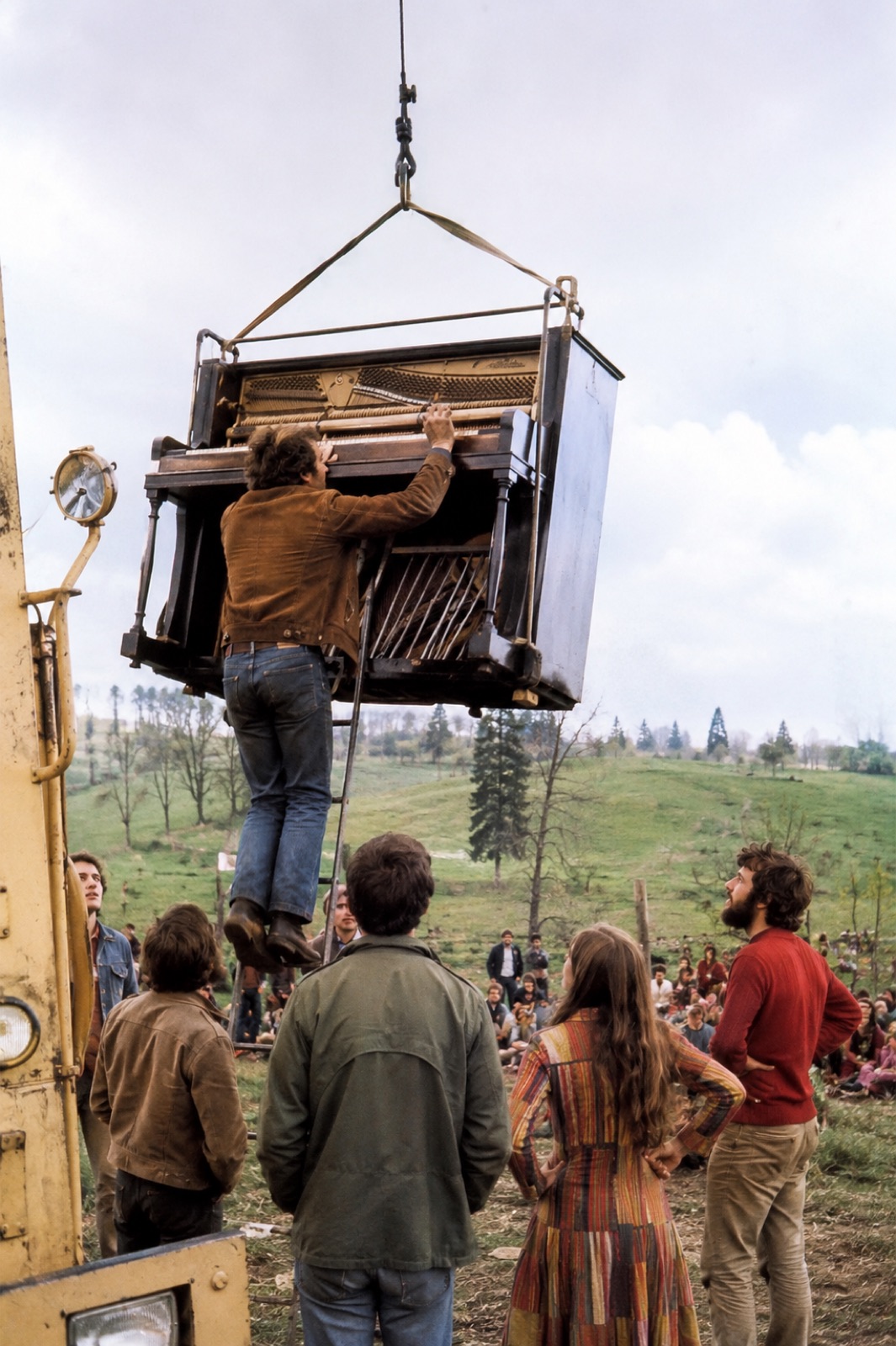
Start with the field, because the field is the whole trick. Larry Van Over's farm in Duvall, Washington was not a polished venue on April 28, 1968. It was rural land with grass, mud, roads, neighbors, cars, and enough open sky to make a bad idea look theatrical. Nearly 3,000 people showed up to watch an upright piano fall from a helicopter, which is the sort of sentence that sounds fake until the paperwork of history taps you on the shoulder. KIRO's HistoryLink-backed account anchors the basics: Duvall, Van Over's farm, the date, the helicopter, the piano, and the startling size of the crowd. That crowd is the important part. A prank can happen in a room. A festival problem begins when thousands of people decide the room is too small and drive toward a field. Carry the lesson forward: before anyone can feel transformed, someone has to plan the route, watch the weather, mark the entrance, and decide where a crowd can safely stand. The farm setting also strips away the later glamour. There is no velvet rope in this origin scene, only pasture logic and the social charge of everybody knowing the same strange thing is about to happen.
A Northwest Joke Became Infrastructure
The Piano Drop came from a Northwest counterculture that liked its art with mud on its shoes. KRAB-FM, Helix-era promotion, Paul Dorpat's circle, and the broader Seattle arts underground gave the event the right mix of radio imagination, print attitude, and absurd confidence. The idea had the logic of a joke: take a respectable object, lift it into the sky, and let gravity deliver the punchline. But the moment people travel, park, wait, buy food, tell friends, and carry the story home, the joke becomes infrastructure. That is where the event starts pointing toward later festival culture. It needed a host site, promotion, a reason to gather, a spectacle with a countdown, and a crowd willing to treat inconvenience as part of the ticket. Modern EDM campouts dress that formula in LEDs and better credentialing, but the nervous system is familiar. Check any strong campout and the same bones appear under the costume: a reason to go, a place to gather, a route home, and enough shared oddness to make strangers cooperate. The prank worked because promotion gave it a public clock. People were not stumbling across chaos; they were choosing to arrive for it together.
The Sound Was Not The Main Character
A piano falling from a helicopter is technically sound culture, although the instrument gets only one very committed note. The event is funny because the piano, an object associated with recitals, parlors, lessons, and parental optimism, was turned into airborne percussion. The reported drop missed its intended target and hit the earth with what Dorpat later remembered as a piano flop. That detail matters because the sound was not a polished performance. It was anticipation, rotor noise, crowd chatter, impact, and the weird silence after everyone confirms gravity still works. Festival culture loves that kind of collective pause. EDM fans know it from a riser, a blackout, a bass drop, or a sudden moment when the whole field inhales together. The tools changed. The human appetite for timed impact did not. Listen for the same structure now: build pressure, hold the crowd, delay release, then let one physical event make the whole field react at once. The piano was destroyed, but the timing was the instrument people remembered.
Souvenirs, Myth, And The First Crowd Lesson
After the piano hit the ground, people reportedly took fragments as souvenirs. That is a wonderfully human detail, because a crowd never wants only the event; it wants proof it was there. Wristbands, kandi, flyers, phone videos, rail dust, set-list rumors, broken props, and camp jokes all do the same work. The Piano Drop created relics before anyone had a merch tent ready. It also revealed a festival truth promoters still learn in expensive ways: attention has weight. If enough people believe something strange will happen in one place at one time, the place becomes responsible for them. Roads matter. Parking matters. Weather matters. Someone has to think about what happens after the moment everyone came to see. The piano was the spectacle, but the crowd was the prototype. A modern planner can mark the same warning in red: the object people came to see is never the whole event once bodies, cars, water, and exits enter the scene. Memory creates demand for tokens, and tokens quietly create trash, traffic, resale lore, photo rituals, and the need for a cleanup plan.
Why Sky River Was Waiting Nearby
The Duvall happening sits near another Washington landmark: Sky River Rock Festival and Lighter Than Air Fair, which arrived later in 1968 and pushed the rural counterculture gathering closer to the shape people now recognize as a music festival. HistoryLink's Sky River essay makes the Northwest chronology harder to ignore. Before Woodstock became the shorthand, Washington had already been testing farms, hand-built systems, loose art energy, and the strange faith that enough people could improvise a temporary community outside normal venue walls. The Piano Drop was smaller and sillier than Sky River, but that is why it is useful. It shows the moment before the blueprint firms up. A crowd drives out for art, sound, risk, and rumor. A field stops being empty. The next step is obvious only afterward. Track the sequence and the bridge gets sturdier: spectacle gathers people, people demand systems, systems make longer festivals possible. Washington did not merely host a curiosity; it helped rehearse the grammar of the rural weekend.
What Modern EDM Campouts Borrow
Modern EDM camping festivals borrow the field lesson every weekend they turn a remote site into a temporary city. The headliners get the poster glory, but the real machine is roads, wristbands, water, med tents, trash, campsites, sound rules, shade, security, volunteer lanes, art installations, food, and the psychological miracle of convincing tired people that walking another half mile is normal. The Piano Drop did not solve those systems. It revealed why they would be needed. A field can hold freedom, but freedom immediately asks where the bathrooms are. That tension is the festival story in miniature. The counterculture wanted openness; the crowd required logistics. EDM inherited both impulses: the romance of escape and the spreadsheet that keeps escape from becoming a headline nobody wants. Pack the romance, sure, but verify the map, the water plan, the meeting spot, the weather layer, and the route back to camp. If the bass is the invitation, infrastructure is the handshake that lets the invitation mean anything after midnight.
What This Story Does Not Prove
This is where caution matters. The Piano Drop did not create rave culture, did not invent electronic dance music, and did not secretly contain a bass stage waiting inside the crater. Chicago house, Detroit techno, UK rave, Jamaican sound-system influence, disco, hip-hop, club culture, queer nightlife, Black musical innovation, European electronics, and countless local scenes all have their own histories. The Duvall story belongs to a different but related lineage: American counterculture learning that outdoor gatherings could mix art, music, spectacle, camping energy, and social experiment. That lineage later meets EDM through festival infrastructure rather than sound alone. The honest claim is strong enough without exaggeration. A falling piano helped point festival culture toward the field. It did not write the whole map. That caveat protects the better story, because every source, route, room, and record deserves its own place in the timeline. It also keeps the punchline from swallowing the people whose clubs, studios, and sound systems built EDM itself.
How To Hear The Legacy Now
To hear the legacy, ignore the obvious metaphor for a second. The piano is hilarious, yes. A helicopter carrying an upright over a Washington farm field has the visual subtlety of a marching band falling down stairs. But the lasting sound is the crowd's decision to be there. Listen for that at a modern campout: cars arriving in dust, canopy poles clanking, a distant kick drum during setup, neighbors negotiating shade, someone laughing because the map is already wrong, a crew making a home for three nights beside strangers. That is the same social instrument, tuned differently. The field becomes a speaker before the speakers turn on. The weekend starts when people accept the inconvenience as part of the story. Watch who shares tools, who checks on the tired friend, who brings earplugs, and who remembers the route after dark; those people keep the myth livable. They are the quiet difference between a memory and a mess.
The Useful Joke
The Piano Drop endures because it is both ridiculous and practical. Ridiculous things travel well through memory, and practical things travel well through culture. Duvall gave festival history a scene almost too strange to forget: a farm, a helicopter, a doomed piano, thousands of curious people, and a crater full of souvenirs. It also gave later organizers a quiet warning. A gathering built around wonder still has to manage bodies, roads, weather, sound, safety, and the exit. That is the bridge to EDM. Every great festival promises transformation; every real festival is also a civic engineering exam with louder drums. The best ones respect both truths. They leave room for absurdity, then make sure somebody knows where the water is. So check the source, plan the route, pack the layer, protect your hearing, mark the meeting point, and leave enough room in the schedule for the weird thing that becomes the story. If a helicopter piano can teach anything useful, it is that wonder needs logistics if it wants to survive the drive home. That is still the funniest serious rule in festival culture: make room for the impossible, then bring enough tape, water, real patience, maps, food, shade, lights, and kindness for the possible.
Quick FAQ
When did the Duvall Piano Drop happen?
The Piano Drop happened on April 28, 1968, at Larry Van Over's farm in Duvall, Washington.
How many people attended the Piano Drop?
KIRO's HistoryLink-backed account describes nearly 3,000 people gathering for the event.
Did the Piano Drop invent modern EDM festivals?
No. It belongs to the Northwest counterculture and festival-history lineage. Its relevance to EDM campouts is logistical and cultural: rural land, spectacle, crowds, art, myth, and the temporary-city problems modern festivals still manage.