Festival History
From Hippie Fields To EDM Campgrounds: The Long Road To The Modern Festival Weekend
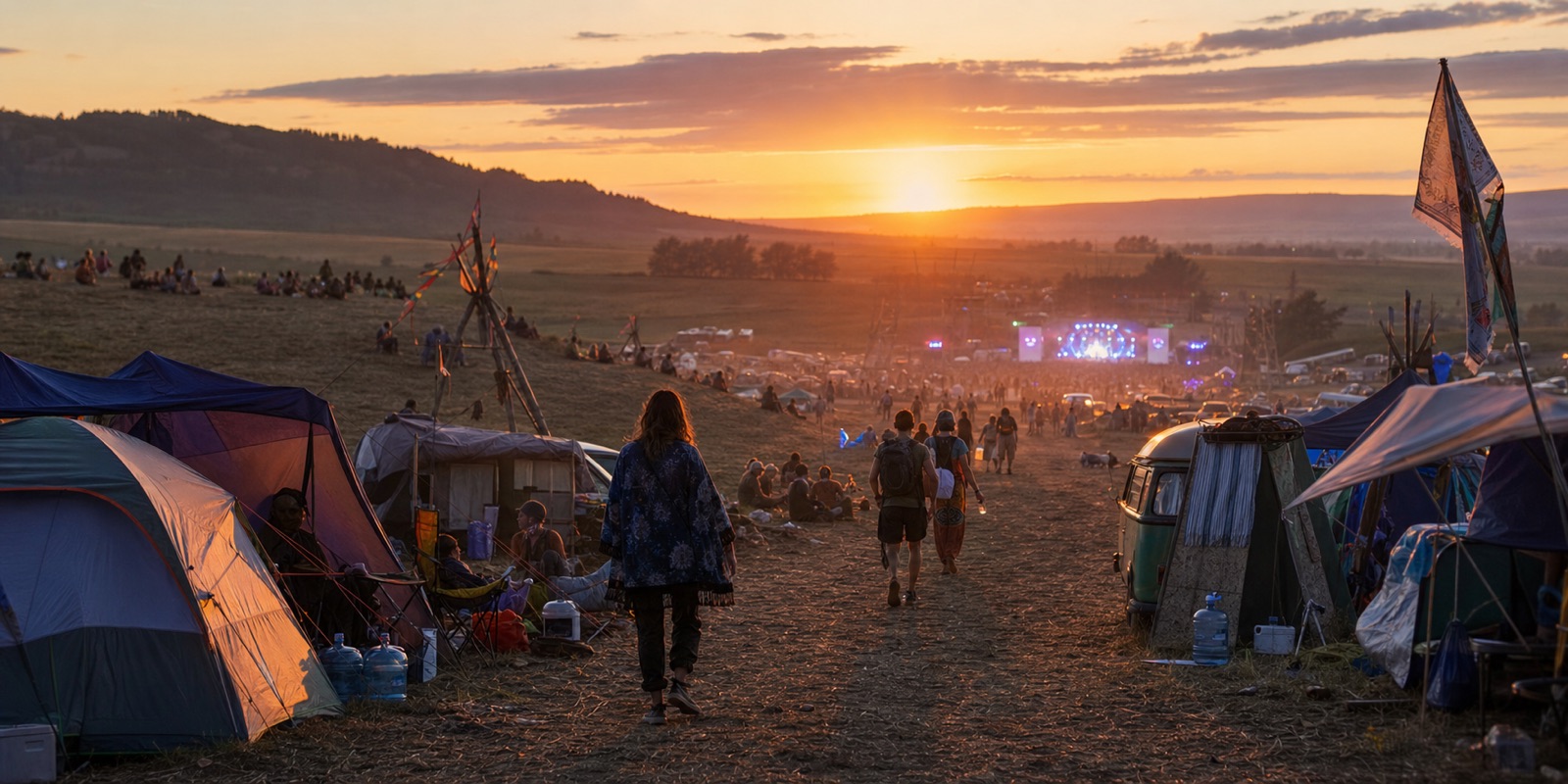
Modern EDM campouts did not appear from nowhere; they grew from rural counterculture fields, rock-festival logistics, rave infrastructure, and the old problem of keeping a temporary city alive.
Direct answer
Modern EDM camping festivals grew from American experiments in rural gathering: 1960s counterculture happenings, Washington's Piano Drop and Sky River era, rock-festival fields, underground rave logistics, and later professional campout infrastructure. The through-line is practical as much as musical: roads, water, toilets, sound, art, safety, weather, neighbor trust, and the strange joy of building a temporary city around a shared weekend.
Watch this topic
Save the related directory search
Track new events, profiles, and calls matching EDM camping festival history. The saved watch resolves against the live directory when you open it.
Article-to-directory guide
Keep moving from the article
Use these focused routes to move from the article into live events, talent, and application calls without starting from scratch.
The Field Came Before The Brand
The modern EDM campground did not arrive fully formed with wristbands, hydration packs, LED totems, and a friend named Kyle explaining the schedule with the confidence of an air-traffic controller. It came from older American experiments in gathering outside normal venue rules. A rural field could become a stage. A farm road could become an arrival ritual. A crowd could become a small city before anyone had enough trash bags to admit it. Washington's 1968 Piano Drop and Sky River stories matter because they show the Northwest testing that idea early: counterculture art, music, local land, curiosity, risk, and a crowd willing to travel for something that sounded too strange to explain politely. The brand came later. The field came first, and the field brought homework. That detail matters because the rural festival was never an empty backdrop. The field shaped arrival time, sound travel, food planning, police attention, neighbor patience, and the little rituals people used to make the place feel briefly theirs. Modern campgrounds still begin with that bargain between land and imagination.
Washington Was A Useful Test Kitchen
Washington state deserves more credit in the American festival imagination. The Piano Drop in Duvall turned a farm into a public art happening with nearly three thousand spectators, a helicopter, and the kind of logistical optimism that makes future permit officers wake up sweating. Sky River Rock Festival and Lighter Than Air Fair followed later in 1968 near Sultan, before Woodstock became the shorthand everyone remembers. HistoryLink's Sky River account gives the story a practical spine: land, roads, ticket prices, portable toilets, townspeople, musicians, and cleanup. That is why these stories fit an EDM site. They are not quaint prehistory. They are early field tests for the question every campout still asks: can a crowd live inside the event without the event eating the crowd? Sky River's value is not that it gives EDM a neat ancestor. Its value is that it shows the format being stress-tested before the industry knew how to package it: a rural site, young crowds, local skepticism, ambitious music, handmade systems, and a cleanup bill waiting after the myth got tired.
The Hippie Field Taught The First Lessons
The hippie-era field gave festival culture its romantic vocabulary: freedom, art, improvisation, shared food, handmade signs, long hair, loose schedules, and the belief that a weekend could briefly improve the species. It also taught the less photogenic curriculum: traffic, sanitation, weather, water, noise, medical care, lost friends, and the terrifying confidence of people who think vibes can replace breakfast. Modern EDM campouts inherited both sides. The best ones still want the field to feel open, playful, and self-invented. The smart ones also know freedom gets sturdier when someone planned shade, exits, refill points, radio channels, medical access, and enough toilets to prevent the mythology from becoming a smell-based memory. The funniest part is also the most useful: every utopian field eventually becomes a municipal question. Where does the water come from? Who knows the exit? Who can hear the medical call? Which road can handle traffic? Festival culture becomes adult the minute those questions stop being optional.
Rock Festivals Built The Scale Problem
Rock festivals turned rural gathering into a national appetite. They proved that crowds would travel, camp, wait, suffer mud, swap rumors, and attach life meaning to a temporary site. They also proved that scale changes every moral equation. A hundred people can improvise a meal. Ten thousand people need a system, or the system becomes the headline. EDM camping festivals sit directly inside that inheritance. The genre changed, the staging changed, the sound pressure changed, but the old scale problem stayed: how do you let people feel free while quietly solving thousands of body-level needs? The answer is never glamorous. It is water, maps, staff, medical plans, roads, sound curfews, campsites, and a crowd culture that treats care as part of the ticket. That is the scale lesson modern promoters cannot escape. The more beautiful the invitation, the more invisible labor it requires. A campout has to make freedom feel spontaneous while staff, volunteers, maps, radios, medics, sanitation teams, and stage crews quietly keep the weekend from becoming folklore for the wrong reason.
Rave Culture Added The Night Machine
Rave culture brought a different kind of infrastructure. The field was no longer only a place to watch bands. It became a machine for time distortion: late-night stages, sunrise sets, sound-system pressure, visual art, chill spaces, harm-reduction tents, secret sets, and the belief that the best part of the weekend might happen when a sensible person would be asleep. That shift changed camping festivals. A campout could become a 24-hour ecology, not a concert with tents nearby. DJ scheduling mattered because energy had to be managed across darkness, fatigue, and recovery. The modern EDM weekend borrows the counterculture field, then wires it for continuous movement. Beautiful? Yes. Also a scheduling spreadsheet wearing glitter. Rave practice also added a different attitude toward time. A rock set usually points toward a stage moment; a DJ weekend can treat midnight, 3 a.m., sunrise, and the slow afternoon recovery as separate emotional rooms. That programming logic is one reason EDM campouts feel like worlds rather than schedules.
Art Turned Camp Into A Moving City
Modern EDM campgrounds owe plenty to art fairs, happenings, parade culture, DIY theater, psychedelic visual design, and the old counterculture instinct that a site should be transformed, not merely used. Art cars, projection rigs, strange gateways, flags, shade structures, and handmade camps make a field legible. They tell people where they are, where friends might be, and what kind of behavior the place invites. That art is not decoration when it works. It becomes wayfinding, memory, identity, and comic relief. The trick is generosity. An art object that helps people gather or wonder belongs to the city. An art object that blocks a path and demands worship is furniture with ambition. The best art in this lineage helps people navigate and remember. A strange vehicle, light tower, gateway, or camp sign can become a landmark when phones die and everyone suddenly realizes "meet by the weird thing" was actually urban planning wearing sequins.
Care Became Infrastructure
The biggest difference between old festival romance and strong modern campouts is visible care. Medical tents, water teams, harm-reduction groups, consent culture, accessible routes, quiet areas, charging stations, shade, and weather alerts are not side quests. They are what let the myth survive contact with bodies. Early rural festivals often learned these lessons by accident. Modern EDM events have fewer excuses. They know heat, cold, dehydration, hearing damage, anxiety, mud, dust, and sleep debt can turn a beautiful weekend mean. A good campout treats care as infrastructure, not as scolding. The point is not to make the weekend sterile. The point is to let weirdness last without making people pay for it with avoidable harm. Care infrastructure is also cultural memory. The older field stories are romantic because people survived them, then edited out the miserable parts. A better modern version keeps the romance and removes avoidable harm, which is less poetic until someone needs help quickly.
What Modern Fans Actually Inherited
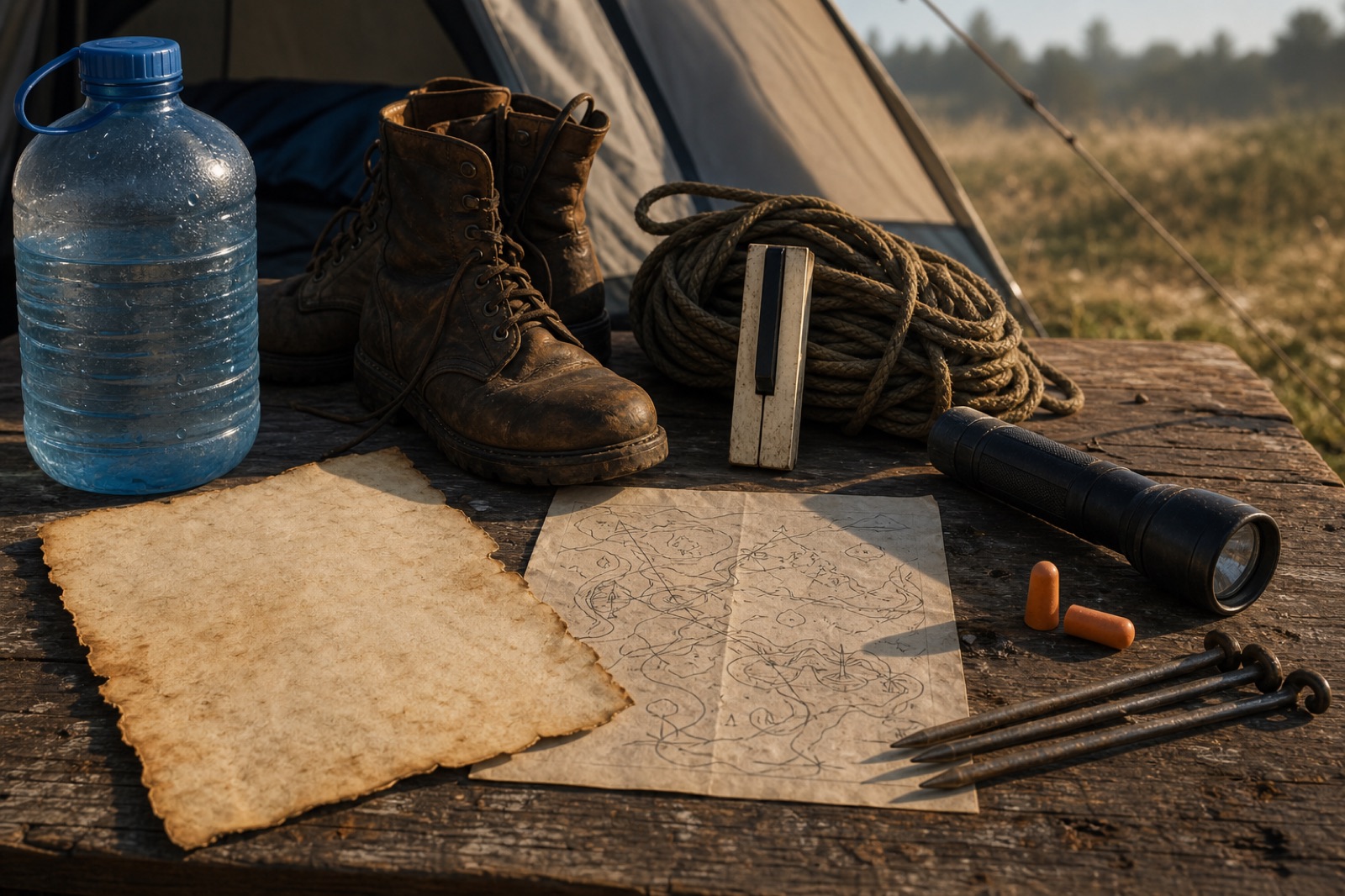
Modern EDM campers inherited the field as theater, the road as ritual, the campground as neighborhood, the stage as magnet, and the crowd as co-author. They also inherited chores. Bring water. Mark the camp. Know the route home. Protect your ears. Keep trash under control. Check on the friend who got too quiet. Respect the local community outside the gate. The long road from hippie fields to EDM campgrounds is not a straight line from peace signs to lasers. It is a chain of practical discoveries about how people gather when music asks them to leave ordinary time for a while. The romance is real, but it stands on tent stakes. For fans, the inherited responsibility is modest but real. Do not treat the campground as hotel space that happens to have bass. Learn the map, pack for weather, respect quiet zones, share information, and leave the place easier for the next crew to trust.
The Weekend Still Needs A Civic Imagination
The useful takeaway is simple: a camping festival is a temporary city with a soundtrack. The best EDM campouts remember that city has citizens, workers, neighbors, guests, infrastructure, rituals, jokes, and consequences. Washington's oddball field experiments, the rock-festival boom, underground rave practice, and modern production culture all point toward the same lesson. Freedom feels better when the systems underneath it are humane. A sunrise set can feel transcendent because somebody kept the paths lit, the water moving, the med tent staffed, and the camp from turning into a landfill with speakers. That is not less magical. It is the engineering that lets the magic make it to Monday. That is why the long road still matters. Hippie fields, Sky River, Piano Drop weirdness, rock festivals, rave warehouses, and EDM campgrounds all keep returning to the same experiment: can strangers build a temporary world that feels freer because it is cared for?
Quick FAQ
How did hippie festivals influence EDM camping festivals?
They helped prove that rural land, art, music, camping, and temporary community could become a festival format, while also exposing the logistics modern EDM campouts still have to solve.
Why does Washington state matter in camping festival history?
Washington's 1968 Piano Drop and Sky River stories show early rural counterculture gatherings where art, music, land, crowd travel, and improvised logistics helped shape later festival culture.
What is the practical lesson for modern EDM fans?
Treat the campout like a temporary city: plan water, routes, hearing protection, shade, sleep, trash, and group care so the music can stay joyful.