EDM News
King Gizzard's Alien Metal EDM Album Turns A Rock Band Into A Rave Problem
The Melbourne sextet's July 8, 2026 announcement turns on Alien Metal, Level 5, New York rave dates, and a six-person modular synth called Nathan.
Direct answer
Pitchfork's Jazz Monroe reported on July 8, 2026 that King Gizzard & the Lizard Wizard, the Melbourne sextet, announced Alien Metal, an EDM-focused album due later in summer through P(Doom). The first signal is Level 5, a Hayden Somerville-directed video, plus New York rave-show plans at Forest Hills Stadium and Under the K Bridge Park. The report matters because the band built the record around Nathan, a giant modular synth operated by all six members.
Watch this topic
Save the related directory search
Track new events, profiles, and calls matching King Gizzard EDM album Alien Metal. The saved watch resolves against the live directory when you open it.
Article-to-directory guide
Keep moving from the article
Use these focused routes to move from the article into live events, talent, and application calls without starting from scratch.
The Announcement Has A Machine In The Middle
A normal rock rollout asks fans to notice a cover, a tracklist, maybe a single, then behave calmly until the next pre-save link appears. King Gizzard & the Lizard Wizard made the stranger choice: put the machine at the center of the story. Pitchfork's Jazz Monroe reported on July 8, 2026 that the Melbourne sextet announced Alien Metal, an EDM-focused record due later in summer on the band's P(Doom) label after Phantom Island. The first public test is Level 5, with a Hayden Somerville-directed video that turns the electronic pivot into body-horror theater rather than a tasteful keyboard press photo. That detail is useful because King Gizzard announcements can feel like a weather system: fast, overpopulated, and somehow wearing six hats. This one has a cleaner question. Can a band famous for stylistic whiplash make dance music that feels engineered for bodies, not merely decorated with electronics? The answer starts with verifiable names, dates, and tools rather than vibes. That is how a weird announcement becomes a real music story.
Nathan Is The Main Character
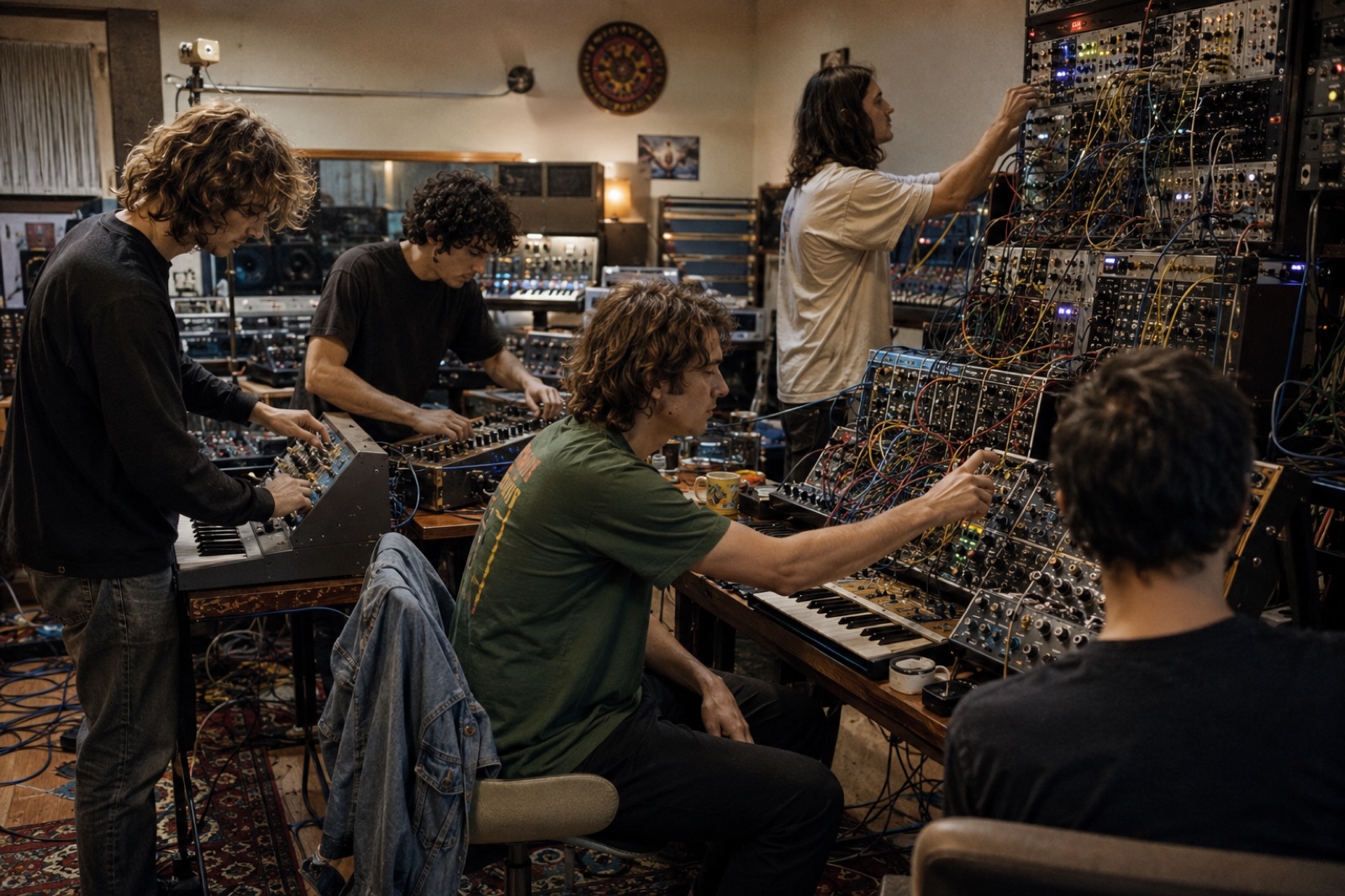
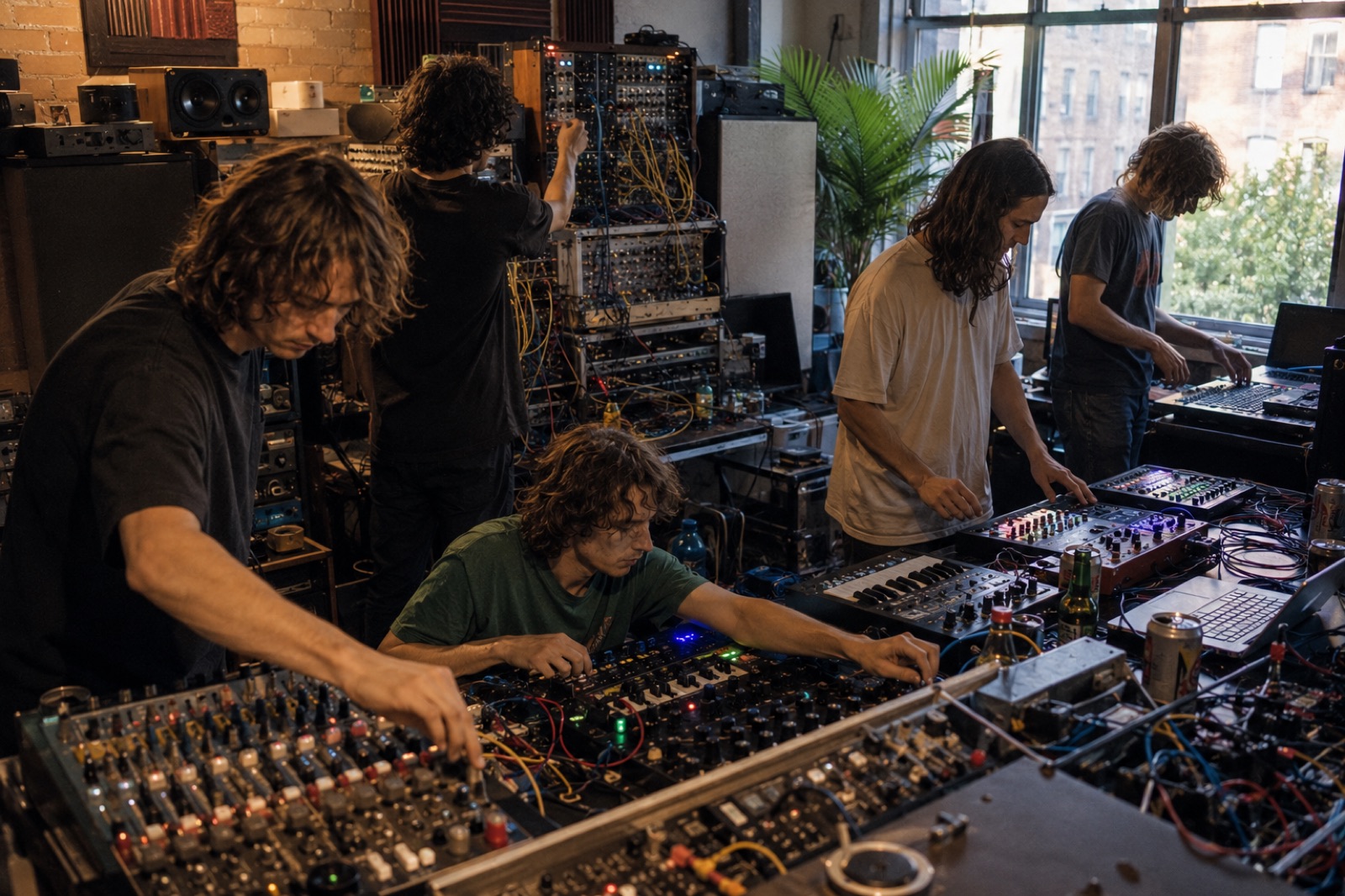
The most important name in the report is not a guest vocalist or a producer with a mysterious hard drive. It is Nathan, the giant modular synth the band operates with all six members during live shows. That instrument choice changes the meaning of the EDM pivot. A modular synth does not behave like a guitar with a friendlier haircut. It asks for voltage, routing, small decisions, and patience with a machine that can reward curiosity or punish haste. Stu Mackenzie told Pitchfork the instrument "completely rewired my brain," a compact way to say the band had to rethink cause and effect. In guitar music, a player can feel a string, a pick, and a fret under the hand. In modular music, one module may shape a tiny part of the event while another changes pressure, timing, or movement. The drama is the system. For a six-person band, that system also becomes social choreography: who changes the pulse, who opens the filter, who trusts the pattern long enough for a crowd to enter it.
Joey Walker Makes The Pivot Less Random
The lazy take is that a restless rock band looked at rave culture and saw a shiny costume. Joey Walker makes that read too small. The Pitchfork report notes his background in electronic music, including the frustration of wanting to go deeper while the main band kept eating the calendar. That matters because dance music can smell tourism from across the campsite. The genre does not reject outsiders; it rejects homework skipped with confidence. Walker gives Alien Metal a more credible doorway. He is not treating EDM as a novelty aisle between psych-rock and metal. He is returning to a language he already cared about, this time with a six-person band and a machine big enough to make collaboration messy. Messy can be good here. The best group dance records often sound as if control and accident are negotiating under the kick drum. Walker's presence also gives the album a human stake: a member trying to finish old musical business in public, with every fan ready to grade the experiment by the first bassline.
Level 5 Gives The Claim A Pulse
Level 5 matters because it is the first item fans can actually check before the album lands. An announcement can promise anything. A single has to move air, even through laptop speakers. The song title also sits well inside King Gizzard's laboratory humor: a little game-like, a little dangerous, a little too delighted with escalation. For EDM listeners, the test is straightforward. Does the track understand repetition as a physical pleasure, or does it panic and fill every bar with proof of musicianship? Dance records breathe when the loop earns trust. Rock bands often fear that trust because space can feel like underplaying. If Level 5 points toward Alien Metal accurately, the useful signs will be pressure, mutation, low-end patience, and percussion that lets the body find the grid before the arrangement starts throwing furniture around. A smart first listen should ignore fan-war theater and check the boring essentials: kick placement, bass weight, transition logic, and whether the hook survives after the novelty cools.
The Tracklist Reads Like Lab Equipment
The tracklist also tells a small story before anyone hears the full record. Pitchfork listed Sapience, Alien Metal, Superheavy, Supercritical, Kill for the Steel, Level 5, Rapid Alpha Decay, Uqt, and Atomic Collapse. Those titles do not guarantee a sound, but they do sketch a mood: physics, pressure, decay, intelligence, threat, and cosmic machinery. That is useful because EDM crossovers can fail when the concept stays pasted on top. Here, the naming language matches the Nathan story. The record appears to be thinking in systems, reactions, and unstable materials, which is exactly where modular synthesis feels at home. A festival fan should not confuse track titles with proof, but titles can set the listening angle. Expect less campfire softness and more laboratory voltage. If the music follows the names, Alien Metal may sound less like a band visiting the club and more like a lab door opening onto a dance floor.
New York Gets The Rave Test
The New York detail keeps this from being a studio-only curiosity. Pitchfork tied the announcement to King Gizzard's forthcoming three-night Forest Hills Stadium run in August 2026, with the last date billed as a rave show and another rave show planned at Brooklyn's Under the K Bridge Park. Those venues create two different exams. Forest Hills Stadium asks whether a rock audience can be guided into a dance framework without the night turning into synchronized chin-stroking. Under the K Bridge Park asks a colder production question: can the material carry itself in a more open, infrastructure-heavy outdoor setting? Festival people should watch those shows closely. A crossover record is one thing on headphones. It becomes more honest when it faces door times, concrete, sub-bass, crowd patience, security lanes, water runs, and the moment a friend disappears to buy fries during the best part. The schedule will reveal whether the rave label is a real production lane or a poster wink.
Why The Festival Angle Has Teeth
King Gizzard already travels like a festival organism. The fan base expects long sets, deep cuts, costume changes in spirit if not always in cloth, and a level of catalog literacy that can make a casual listener feel as if they missed three semesters of lore. EDM crowds bring a different muscle memory. They read a stage through kick-drum pressure, lighting cues, DJ pacing, and whether the room keeps a shared pulse after the chorus disappears. Alien Metal becomes interesting where those habits collide. A psych-rock crowd may arrive ready for riffs and narrative surprise. A rave crowd may arrive ready for repetition and surrender. If the band respects both, the set could become a bridge. If it flatters both too politely, it will become an expensive compromise with nice cables. The opportunity is not purity. It is translation: letting rock fans learn patience with loops while dance fans hear how a band can make machinery feel unstable, funny, and alive.
How To Listen Before The Album Lands
The right fan move is patience with a notebook, not prophecy with a megaphone. Start with the confirmed pieces: Alien Metal, Level 5, P(Doom), Nathan, the late-summer window, the Forest Hills Stadium rave billing, and Under the K Bridge Park. Then listen for what those facts suggest. Check whether the drums leave room for dancers. Notice whether the modular synth behaves like an instrument with agency or a decorative effects rack. Watch the live clips for transitions, because EDM credibility often lives between tracks and in the minutes before the obvious payoff. Bring earplugs if you go to the shows, because curiosity is nobler when your hearing survives it. Also check official ticket and schedule updates before making travel plans. The funny part of futurism is that it still has calendar math, train delays, and friends who claim they are five minutes away from Queens. If you are making the trip, plan water, transit, meetup points, and exit routes with the same seriousness you bring to arguing about the setlist.
The Caveat Is The Honest Part
Alien Metal had been announced, not released, when the Pitchfork report went up. That distinction keeps the criticism clean. Nobody serious should pretend to review the full record from a headline, a tracklist, and one public single. The smarter claim is narrower: the announcement gives fans enough evidence to track a real experiment. It names the album, the label, the single, the shows, the instrument, and the internal creative tension between Mackenzie's tech obsession and Walker's electronic background. That is plenty, but it is not a verdict. Dance music history is full of brilliant promises, doomed pivots, and odd hybrids that looked ridiculous until the room figured out how to move. The only fair posture is alert skepticism: hopeful ears, strict receipts, and no victory lap before the bass has done its job in public. Keep the claim narrow and the ears open; that is how hype stays useful instead of becoming fog with a tracklist.
What Bookers And Fans Should Watch Next
The next signals are practical. Bookers should watch whether Alien Metal changes where King Gizzard fits on a bill: sunset psych-rock slot, late-night electronic field, tent experiment, or special rave billing with a crowd briefed in advance. Fans should watch official channels for the album date, final show details, and whether Nathan remains a central live system or becomes studio mythology. The record also belongs in a larger festival conversation about bands borrowing club tools without draining their social charge. EDM was built around people using machines to make rooms feel more human, stranger, riskier, and more communal. King Gizzard's best chance is to treat that history with appetite rather than manners. If Alien Metal works, it will not prove that rock bands can cosplay the rave. It will prove that six stubborn musicians found a machine complicated enough to make them beginners again. Until then, the useful plan is simple: verify the source, listen to Level 5 with the body in mind, check the schedule, protect your ears, and see whether the crowd remembers a groove after the joke wears off.
Quick FAQ
What is King Gizzard's Alien Metal?
Alien Metal is King Gizzard & the Lizard Wizard's announced EDM-focused album, reported by Pitchfork on July 8, 2026 and expected later in summer through P(Doom).
What is Nathan in the King Gizzard Alien Metal story?
Nathan is the giant modular synth the six members operate during live shows, and Pitchfork reported that it became central to the making of Alien Metal.
Why does Alien Metal matter for EDM festival fans?
It could test whether a major psych-rock festival act can build a credible rave-facing live lane through modular synthesis, Level 5, and New York rave-show billing.