EDM News
Skrillex, AI, And The Human On The Other Side Of The Drop
A sourced feature on Skrillex, Ecco2K, 032c, From First to Last, Scary Monsters, CONTRA, and the lonely human question hiding inside AI music.
Direct answer
Skrillex's 2026 AI comments matter because they came from Sonny Moore, a producer whose career has repeatedly tested what feels human inside electronic music. In a 032c Summer 2026 interview with Ecco2K, covered by DJ Mag and EDM.com, he argued that viral reach is a weaker achievement than making a listener feel seen, understood, and met by a human presence on the other side of the record.
Watch this topic
Save the related directory search
Track new events, profiles, and calls matching Skrillex AI interview 2026. The saved watch resolves against the live directory when you open it.
Article-to-directory guide
Keep moving from the article
Use these focused routes to move from the article into live events, talent, and application calls without starting from scratch.
The Drop Is A Human Question Now
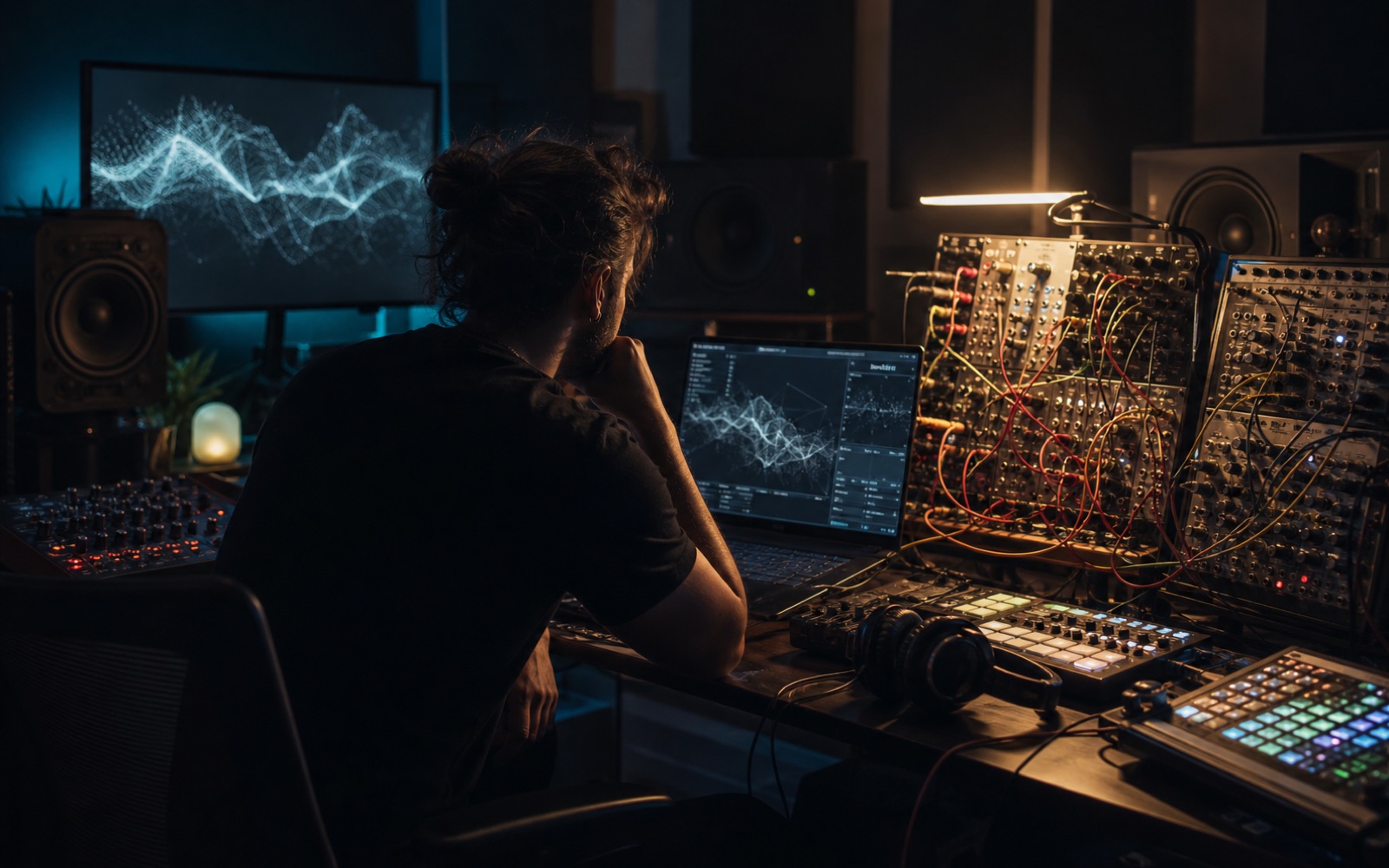
Picture the modern festival version of loneliness: a field full of people, a phone in every hand, a clip already on the feed before the bass has finished shaking the barricade. That is the strange room Skrillex walked into with his 2026 AI comments. The debate is usually framed as artists versus machines, which is tidy and mostly boring. The harder question is whether a record can still make a person feel seen when the sound arrives stripped of risk, biography, and accountability. Skrillex has spent his public life making machine music feel oddly personal: damaged vocals, bass pressure, little cuts of silence before impact, hooks that sound like they were rescued from a power surge. So when Sonny Moore talks about AI, the story is not a celebrity opinion pasted onto a trend. It is a producer with a long memory asking what happens when speed and imitation get easier than care. The stakes are intimate before they are technical: a dance record either gives a crowd somewhere to put its feeling, or it becomes expensive air.
What 032c And DJ Mag Actually Reported
The facts are specific enough to matter. DJ Mag reported in July 2026 that Skrillex gave his first formal interview in a decade to Berlin culture magazine 032c. The 032c product page identifies the issue as Issue #49, Summer 2026: Skrillex. DJ Mag and EDM.com both framed the interview as a rare public conversation, with British-Swedish artist Ecco2K speaking with Moore about AI, humanity in art, early risk, rave culture, and the spaces where music still has to be felt together. The central line concerned AI songs going viral without giving listeners the deeper feeling of a human on the other side. That phrase matters because it moves the conversation away from novelty and toward recognition. A viral song can be everywhere and still feel like nobody knows you. A stranger's record can hit once and feel like it found the ugly little room in your chest that you forgot to dust. Distribution can measure reach, but it cannot prove that anyone was brave, vulnerable, or awake while making the thing.
A Career Built Inside The Word Fake
Skrillex is a sharp messenger because his career has been a long walk through other people's suspicion. In From First to Last, Moore came out of the MySpace-era post-hardcore world, where sincerity and style were constantly cross-examined. DJ Mag's coverage notes that he remembered resistance from that period: the band was too glossy for one crowd, too aggressive for another, and visually too strange for people who wanted their categories to behave. Then Skrillex arrived and bass music had to survive a public argument about whether it had been saved, ruined, commercialized, mutated, or simply made louder. The funny part is that every panic eventually becomes somebody's nostalgia. The harder part is that living through the panic leaves a producer with scar tissue. Moore's AI comments carry that history. He knows what it feels like to be called artificial by humans before the machines even got invited. That makes his caution less moralistic and more weathered: he has already watched a new sound become a public trial.
The Studio Path Is The Evidence
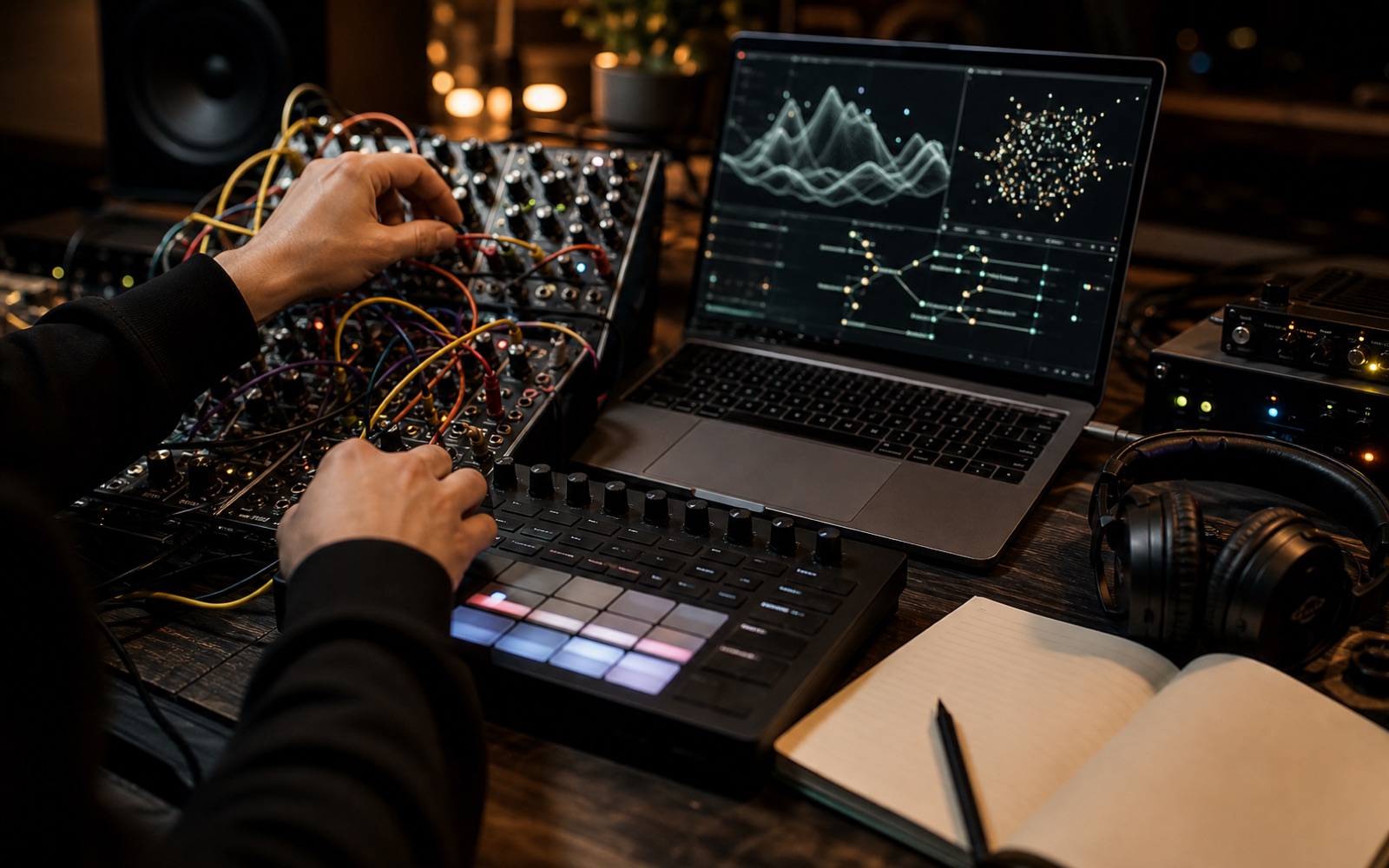
The strongest reporting detail is not the AI quote. It is the path of making. DJ Mag reported that Moore talked about the stretch between From First to Last and Skrillex, including work with Atticus Ross and Noisia, and recalled making the 2009 Sonny track Mora in GarageBand before moving into Pro Tools and Ableton. Those names turn the AI debate from philosophy into craft. GarageBand is a humble place to start; plenty of producers know the little thrill of hearing a loop sound almost like a life decision. Pro Tools and Ableton widened the room. Atticus Ross and Noisia point toward discipline, texture, and pressure. Then came Scary Monsters and Nice Sprites, the 2010 EP DJ Mag notes had a $2,000 marketing budget. That number is almost comic now. The record's reach made the budget look like a paper cup trying to hold a weather system. The lesson is not that cheap tools create truth by themselves. It is that limitation can force taste to show its fingerprints.
The Sound Of A Person Making Decisions
Skrillex's best-known sound is often remembered as brute force, but the more interesting fingerprint is selection. Vocal fragments become percussion. A synth growl arrives with a tiny theatrical sneer. Silence lands right before a drop so the body has half a second to panic. Drums stumble, recover, and make the crowd feel as if the machine is breathing too hard. Justice, Daft Punk, and Metallica came up in the reported interview as references for music that hits because it feels familiar and new at once. That is the territory AI has to earn. The surface is learnable: bass texture, riser shape, snare placement, arrangement math, hook timing. The harder part is taste under pressure. A person decides when to make a sound uglier because beauty would be too polite. A person decides when the drop should wait because trust has more voltage than speed. The best electronic records often feel edited by nerves as much as ears, and that nervous system is the part a dataset can describe more easily than it can inhabit.
CONTRA Turned The Argument Into A Room
The Berlin chapter gives the interview weight because it puts the AI question back into a physical room. DJ Mag reported that Skrillex discussed CONTRA, his two-day event at Kraftwerk Berlin, held at the end of May with Ecco2K, Bladee, Blawan, Knock2, and Skrillex himself on the bill. That lineup matters. It pulls internet-native pop oddity, hard club pressure, bass-music muscle, and rave architecture into one setting. Kraftwerk Berlin matters too: a building that can make production feel less like decoration and more like weather. Moore framed the event around presence at a time when AI and smartphones make attention feel fragile. That is the part festival culture should hear clearly. If a record can be generated anywhere and a clip can be flattened into eight seconds, then a room has to offer what a feed cannot: trust, risk, shared volume, vulnerable bodies, and memory. The room becomes the fact-check: either people are present with each other, or the production is merely expensive wallpaper. That is why events like CONTRA matter beyond their poster value: they test whether a producer's argument can survive contact with sweat, sound, door times, tired legs, and strangers choosing to stay.
What AI Can Copy, And What It Cannot Own Yet
AI can copy a huge amount of the visible recipe. It can learn that a vocal chop should twitch before the bass opens. It can learn that a festival drop wants a clean runway. It can imitate the muscular confidence of EDM even when nobody in the chain has stood in a crowd and felt the kick drum make their ribs negotiate. That does not make AI useless or evil. Electronic music has always been a pact with tools, and pretending otherwise is historical amnesia with a merch table. The issue is accountability. Who is responsible for the feeling? Who carries the risk if the song is empty? Who can explain why the ugly sound stayed ugly, why the hook needed that much longing, why the silence before the drop felt like loneliness rather than dead air? Authorship in dance music is not purity. It is care made audible. That care can include machines, but it cannot outsource the final burden of meaning. Someone still has to decide what the track is willing to reveal.
How Festival Fans Should Read The Next Year
The practical takeaway is not a purity test. Watch the credits. Watch how artists describe samples, edits, visuals, live systems, and AI tools. Listen for unreleased IDs that feel like choices rather than empty slots. Notice whether a festival set uses technology to deepen the room or to distract from a thin center. Ask whether the artist seems accountable for the emotional result. Those questions will matter more as AI enters sketching, vocal treatment, metadata, marketing copy, visuals, and maybe full songs. Fans do not need to become copyright lawyers at the rail, which is good because nobody has ever looked cool yelling about metadata near a fog cannon. They do need better ears. The next era of EDM will reward listeners who can hear the difference between impressive assembly and a record that knows what it is risking. A useful fan question is simple: after the shock fades, does the track leave a memory, or merely the memory of being shocked? Another one is even harsher: would this still matter if the clip never found the algorithm? Great sets usually answer before the listener finishes asking.
The Human On The Other Side
The reason Skrillex's interview keeps echoing is that it treats electronic music as a human problem first. Machines have always helped dance music find new bodies. The Roland boxes, samplers, laptops, CDJs, plug-ins, and cracked bedroom software all mattered because people bent them toward hunger, style, escape, grief, pleasure, and recognition. AI belongs in that lineage only if it serves the same fragile contract. A song does not need a tragic backstory to matter. It does need some trace of intention, some pressure from a person who cared enough to choose this sound over the easier one. Skrillex's point is less anti-AI than pro-presence. The drop can be huge. The clip can go viral. The stage can look expensive enough to frighten an accountant. Without a human feeling on the other side, though, the whole thing becomes weather with no one standing in it. The best dance music never promised to make us smarter. It promised, for a few minutes, that our private weirdness could move in public. That promise is still worth defending, even when the machines get better at faking the invitation.
Quick FAQ
What did Skrillex say about AI music in 2026?
In the 032c Summer 2026 interview covered by DJ Mag and EDM.com, Skrillex argued that AI-made songs may become viral, but the deeper value of music is whether a listener feels seen by a human creator.
Who interviewed Skrillex for 032c?
032c's Summer 2026 Skrillex issue featured a conversation with Ecco2K, with DJ Mag identifying it as Skrillex's first formal interview in a decade.
Why does this matter for EDM fans?
It gives fans a practical way to judge the AI era: listen for accountable taste, specific sound choices, credits, live-room intent, and whether a track or set creates a human feeling beyond viral recognition.