Artists & DJs
Larry Levan: Paradise Garage, Saturday Mass, And The DJ Booth As A Weather System
Larry Levan told through Paradise Garage, 84 King Street, Saturday Mass, West End Records, WBLS, club-to-chart power, and what festival DJs still borrow from the room.
Direct answer
Larry Levan matters because Paradise Garage made DJing feel like total room design: sound system, record selection, lights, ritual, community, and timing working as one instrument. NYU's Larry Levan and Mel Cheren Collection places the club at 84 King Street from 1977 to 1987 with Levan as resident DJ, while Red Bull Music Academy and Pitchfork show how Saturday Mass and the WBLS pipeline helped a private dance floor affect pop music far beyond Manhattan.
Watch this topic
Save the related directory search
Track new events, profiles, and calls matching Larry Levan Paradise Garage. The saved watch resolves against the live directory when you open it.
Article-to-directory guide
Keep moving from the article
Use these focused routes to move from the article into live events, talent, and application calls without starting from scratch.
A Garage With An Archive Number
Larry Levan stories can get so mythic that they start floating away from the building. The useful corrective is an archive number. NYU Special Collections houses the Larry Levan and Mel Cheren Collection on the Paradise Garage at Fales Library and Special Collections as MSS.483. That dry catalog fact is oddly thrilling because it tells festival fans that a dance floor can leave evidence: flyers, tickets, images, rule lists, fan mail, press kits, and a club sign. The collection places the Paradise Garage at 84 King Street in the Hudson Square neighborhood and describes the club's life from 1977 to 1987. It also identifies Mel Cheren as both a financial backer and the West End Records figure tied to much of the music orbiting the room. Start there and Levan stops being a vague genius cloud. He becomes a working DJ inside a specific address, archive, business model, crowd, and sound system.
The Club Was Designed For Dancing
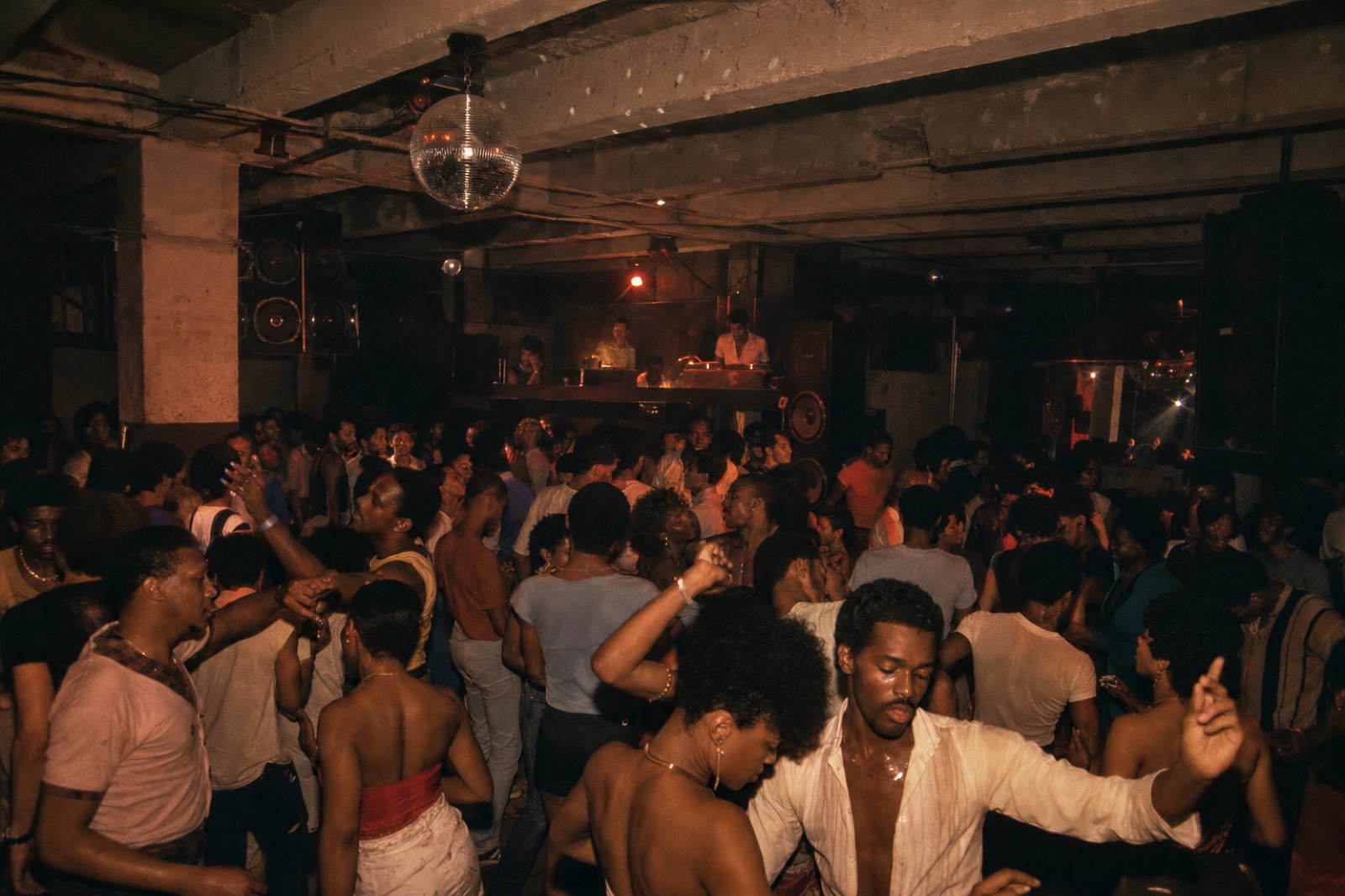
The NYU finding aid makes the club's design feel almost radical by modern nightlife standards. Paradise Garage served no liquor, sold no food or beverages, and was not open to the general public. It focused on dancing, with the DJ as the center of attention. That is the whole operating system. No bottle-service theater, no casual walk-in churn, no side plot where the music competes with a lounge pretending to be a restaurant. The room existed so the floor could work. NYU also notes live performances by Diana Ross and Madonna, which reminds us that the Garage was private and underground without being small-minded. It could host stars while still protecting a dance culture with its own codes. For festival people, that matters because design chooses behavior. A stage with bad sightlines, weak sound, and no room to move teaches one kind of crowd habit. Paradise Garage taught another: arrive for the music, stay for the room, respect the ritual.
Levan Was A Resident, Not A Tourist
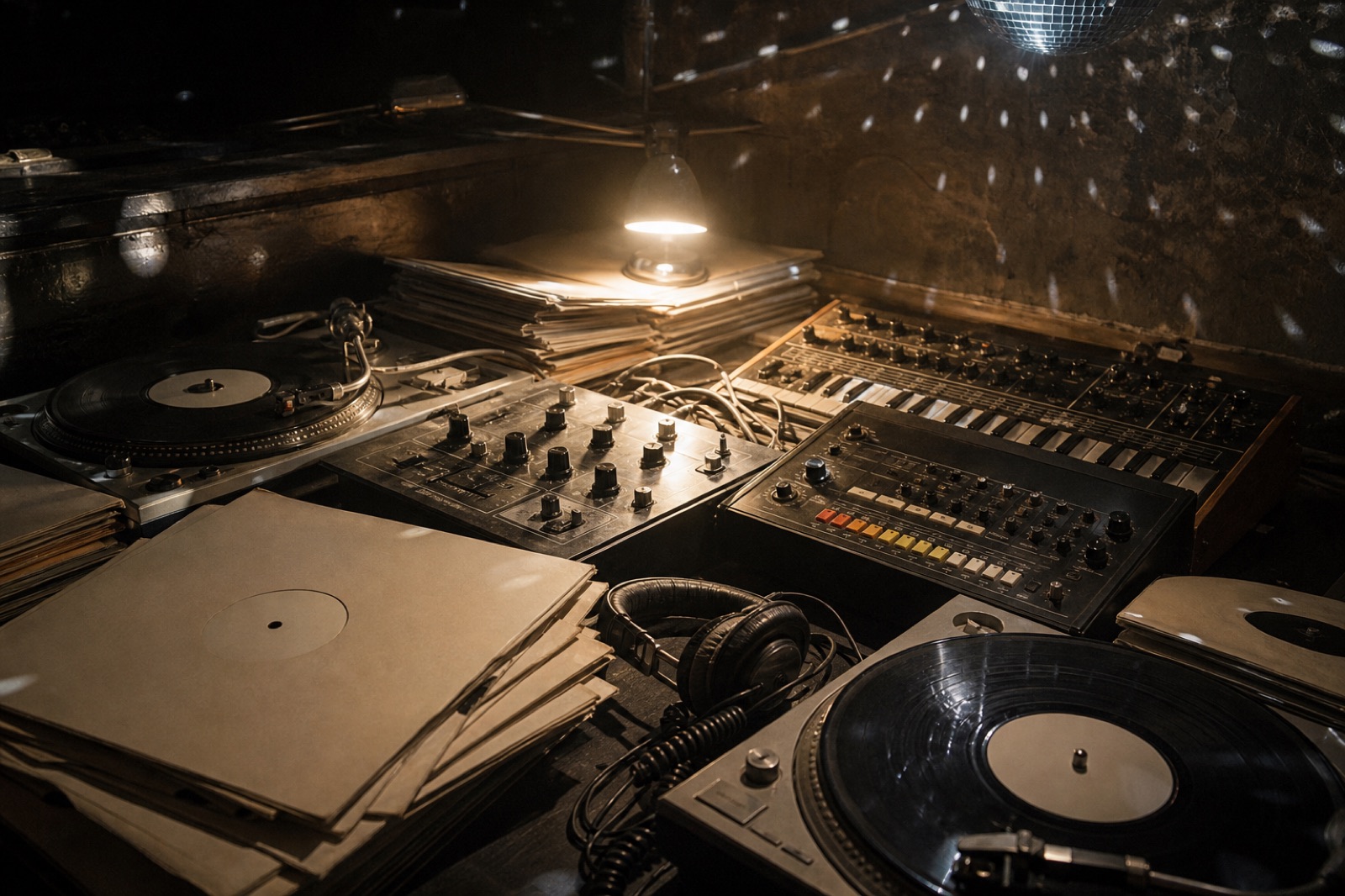
The key word is resident. NYU states that Larry Levan was the resident DJ for the Paradise Garage from 1977 to 1987. A resident DJ has a different job from a festival guest dropping in for ninety minutes and a fireworks cue. A resident learns the crowd's nervous system. He knows what a room can take at 2 a.m., what it needs at sunrise, when a vocal will heal the floor, and when a strange record deserves ten more minutes of trust. The same NYU source says Levan was known for drum machines and synthesizers in productions and live sets, moving from disco toward a house music sound in the late 1970s and 1980s. His late-night sessions became known as Saturday Mass. It also records the hard ending: Levan passed away in 1992 at 38. Those dates keep the reverence honest. The legend was built by regular labor, risk, tools, and a room that kept returning.
Saturday Mass Was Room Care
Red Bull Music Academy Daily's April 22, 2014 feature gives the nickname Saturday Mass its social weight. The Red Bull piece reports that Paradise Garage officially opened in 1978 and closed its doors in the summer of 1987, framing its heyday against New York's gay community, the city's fiscal wounds, violence, drugs, and the AIDS crisis that darkened the decade. That context matters because a club ritual is rarely only entertainment to the people inside it. The Garage gave dancers a place to shed armor and be carried by music when the city outside could be brutal. Red Bull's memorable mirror-ball detail also tells you something useful: Levan cared about the room beyond records. The lights, floors, sound, timing, staff, crowd, and emotional temperature were part of the set. If that sounds excessive, good. Great DJing often looks unreasonable from the outside because the inside has to feel inevitable.
The Lineage Before The Booth
Levan did not appear behind the decks fully formed, wearing mythology like a jacket. Red Bull identifies him as Brooklyn-born Lawrence Philpot, born July 20, 1954, and traces an early path through Harlem's drag ball world, where he met lifelong friend Frankie Knuckles around 1969. The feature also points toward David Mancuso's Loft and Nicky Siano's Gallery as formative rooms. That lineage matters because Levan's DJing was not merely technical. It grew from queer social space, audiophile listening, dance-floor hospitality, theatricality, and the practical art of making outsiders feel the room was built for them. Frankie Knuckles would become central to Chicago house; Levan became inseparable from New York's Paradise Garage story. Festival fans should hear both careers as evidence that modern dance music did not begin with a drop button. It began with people building nights where sound, identity, safety, style, and endurance had to cooperate.
What The Sound Felt Like
The lazy version says Levan played disco. The better version listens for how he made records behave. NYU notes his use of drum machines and synthesizers and his movement from disco toward house. Red Bull emphasizes a DJing philosophy where beat matching was one tool inside party design. The sound could include dub drama, post-disco bass, gospel ache, synth-pop oddness, soul voltage, rock curveballs, and long arcs that asked dancers to trust time. That is why Levan remains useful for festival listeners who never stepped into the Garage. He shows that eclecticism works only when the room understands the emotional grammar. A weird record is not automatically brave. It becomes brave when the DJ has taught the crowd how to receive it. Listen for that in modern sets: variety with a pulse, a reason, and enough patience to let people cross the bridge. The key is whether the surprise deepens the floor instead of scattering it.
The Larry Levan Bump
Pitchfork's August 26, 2015 feature gives Levan's influence a useful media mechanism: the Larry Levan bump. The piece describes a conduit between Levan's Paradise Garage sets and national charts, with legendary WBLS radio figure Frankie "Hollywood" Crocker checking what worked on the dance floor and sometimes bringing those records to the airwaves. That pipeline is the part festival fans should remember. Underground culture does not stay underground simply because it is pure, and pop success does not always arrive from a boardroom guess. Sometimes a private floor tests a song more honestly than any focus group. Pitchfork names records including Taana Gardner's "Heartbeat" and Peech Boys' "Don't Make Me Wait" as part of the Garage orbit. West End Records sits right in that story through Mel Cheren. The lesson is not that the club chased hits. The lesson is that a room could recognize a hit before the industry knew what it had.
Nu Shooz And The Club-To-Chart Machine
Pitchfork's Nu Shooz example makes the club-to-chart machine wonderfully concrete. The feature describes Levan playing "I Can't Wait" repeatedly in early 1986, after which the record climbed as high as number 3 on the U.S. pop chart and stayed in the Top 40 for 15 weeks. That is not a small footnote. It shows how a DJ's patience with a record could turn private dance-floor obsession into national familiarity. It also explains why modern festival DJs still crave the power to break a track in public. The difference is that today's metrics arrive instantly, while the Garage moved through bodies, booths, radio, record stores, and rumor. There is humor in imagining a modern analytics dashboard trying to measure Saturday Mass. Good luck quantifying the moment a crowd decides a synth hook has become part of its bloodstream. The useful point is simpler: watch what a trusted room repeats.
How Festival DJs Borrow The Lesson
A festival DJ cannot recreate Paradise Garage by placing a mirror ball over a field and hoping history salutes. The lesson is behavioral. Make the stage feel intentional. Treat the first twenty minutes as trust-building, not throat-clearing. Let a record work past the point where impatient people start checking the schedule. Use lights and volume as emotional tools instead of proof of budget. Give the crowd a reason to turn toward each other. Levan's legacy for festivals is not nostalgia for a room most attendees never saw. It is a standard for hospitality under pressure. The bigger the stage, the easier it is to spray sound at people and call it energy. The Garage lesson asks for more: host the floor, earn the risk, and let the set become a weather system that changes how people move. If the crowd feels cared for, spectacle can become communion instead of decoration.
A Festival Listening Map
Use a simple listening map during any Levan-influenced house, disco, garage, or classic dance set. First, check the room: can people move, hear the bass clearly, and find each other without panic? Second, listen for the record arc. Does the DJ let songs bloom, or are they clipped into proof-of-concept fragments? Third, notice the vocal treatment. A Levan lesson often lives in how long a voice is allowed to ache, tease, command, or hover before the rhythm changes. Fourth, watch the handoff between floor and booth. Are dancers being controlled, entertained, or trusted? Bring earplugs, water, and a little patience. Save track IDs afterward, especially the odd ones that seemed confusing for thirty seconds and then made perfect sense. That is where a festival listener gets the real reward: learning to hear selection as care and pacing as a social contract. If the set changes your posture before it changes your opinion, pay attention.
What The Room Still Asks
Larry Levan's story still asks an uncomfortable question of festival culture: what would change if the DJ treated the whole room as the instrument? That means the USB, the edits, the visuals, the brand slot, the bodies, exits, sound, staff, ritual, weather, and trust all become part of the job. Paradise Garage was private, specific, flawed, beloved, and impossible to copy cleanly. That is why it still teaches. A good set does not need to imitate 84 King Street. It needs to remember that music becomes powerful when people feel the room taking them seriously. Check the sources, learn the records, protect your hearing, and then watch the floor. If strangers start moving like they have been given permission rather than instructions, the old lesson is alive. Saturday Mass becomes less a slogan than a standard: build the room, serve the dancers, and let the record last long enough to tell the truth.
Quick FAQ
Why is Larry Levan associated with Paradise Garage?
NYU's Larry Levan and Mel Cheren Collection identifies Levan as Paradise Garage's resident DJ from 1977 to 1987 at 84 King Street in New York.
What was Saturday Mass?
Saturday Mass was the nickname for Levan's late-night Paradise Garage sessions, where DJing, sound, lights, crowd trust, and ritual became part of the same experience.
How should festival fans listen for Larry Levan's influence?
Listen for long record arcs, vocal patience, room care, dub-influenced drama, disco and house continuity, and whether the DJ makes the crowd feel trusted instead of rushed.