Festival Prep
Desert Heat Festival Prep: The Boring Plan That Gets You To Sunrise
A practical desert-heat EDM festival guide built around National Weather Service heat safety, CDC hearing guidance, Ready.gov kit basics, hydration, shade, timing, and camp decisions.
Direct answer
Desert heat festival prep is about preventing small failures from stacking into heat illness, panic, or a miserable walk back to camp. The National Weather Service Heat Safety Tips and Resources page warns that heat can tax the body, cause heat related illnesses, and worsen existing health conditions; everyone can be vulnerable. A smart EDM festival plan starts with shade, water, electrolytes, sun protection, early chores, hearing protection, and a camp layout that still works when people are tired after midnight.
Watch this topic
Save the related directory search
Track new events, profiles, and calls matching desert heat festival prep. The saved watch resolves against the live directory when you open it.
Article-to-directory guide
Keep moving from the article
Use these focused routes to move from the article into live events, talent, and application calls without starting from scratch.
The Enemy Is Accumulation
Desert heat rarely ruins a festival in one cinematic moment. It stacks. A little too much sun at load-in, a long walk without shade, a skipped meal, one warm water bottle, a dead phone, a dusty mouth, and suddenly the sunset set feels like a court summons. The National Weather Service Heat Safety Tips and Resources page says heat can be taxing on the body, can lead to heat related illnesses, and can make existing health conditions worse. That is the frame. Do not pack for the fantasy version of yourself who makes wise choices after four hours of bass and dust. Pack for the real person who will be tired, underfed, overstimulated, and very confident that a 20-minute walk is "basically right there." Desert prep is humility with a brimmed hat. The goal is not heroic endurance. The goal is arriving at sunrise with enough body left to enjoy it.
Know Who Heat Punishes First
NWS says Everyone can be vulnerable to heat, while some groups are especially at risk: young children and infants, older adults, people with chronic medical conditions, and pregnant women. At a festival, that list becomes practical group care. If your camp includes kids, older ravers, someone on medication, someone pregnant, or someone who tends to push past warning signs, build the plan around them early rather than improvising at peak temperature. Shade should not be a luxury item assigned to whoever brought the nicest canopy. Water should not require a search party. Medication timing should survive set conflicts. The desert does not care who bought VIP, who has the best outfit, or who insists they are "good in heat." A good camp plan checks on people before they look dramatic. The glamorous move is prevention, which is annoying because it works. Make one person responsible for a morning check-in and another for the afternoon field walk, because tired groups forget obvious care.
Cars Are Not Storage Caves
NWS is blunt about vehicles: it is NEVER safe to leave a child, disabled person, or pet locked in a car, and a child can die in 10 minutes. Deaths are reported as early as April and continue into December in southern states. Translate that seriousness to festival logistics. A parked vehicle in desert sun is not a backup lounge, medicine cabinet, snack pantry, or safe place for anything heat-sensitive. Do not leave medication, batteries, aerosol cans, meltable food, or critical water in a car and assume it will be fine. If you are car camping, open the doors carefully after long sun exposure and let heat vent before anyone climbs in. Keep a visible rule in the group chat: no person, pet, medication, or essential water plan lives in the vehicle. The desert turns ordinary storage into a chemistry experiment with seatbelts. In a dusty parking row, that rule is easier to enforce before the first stage run than after midnight.
Build Shade Before The Fun Starts
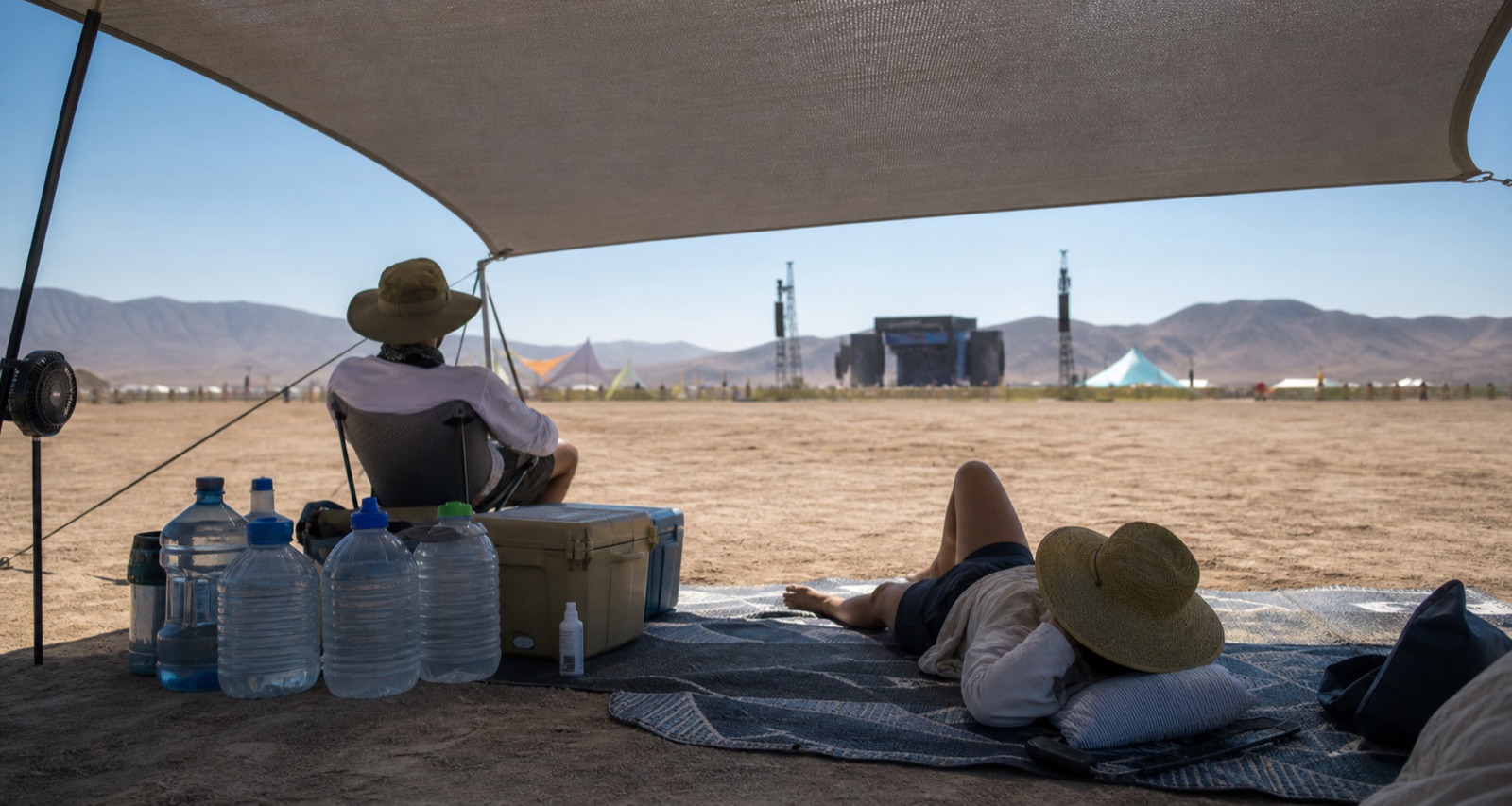
Shade is not decor. It is infrastructure. Build the canopy before the first major set, before the group splits, before the wind starts acting like a promoter with a grudge. Stake it properly, mark guy lines, and place chairs where people can rest without blocking the camp path. Put water in the shade, not in the heroic sunlight where it can become soup. A desert camp should have a morning shade plan and an afternoon shade plan because the sun moves and does not ask permission. Use hats, UPF layers, sunglasses, sunscreen, and a light bandana as mobile shade between stages. The best outfit is the one that still lets you function at 5 p.m. If your look requires ignoring heat safety, it is not fashion; it is a dare issued by fabric. Plan the shade first, then decorate around survival. Walk the campsite at noon and notice where the shade actually lands, because yesterday's perfect chair can become today's skillet.
Water Needs A System
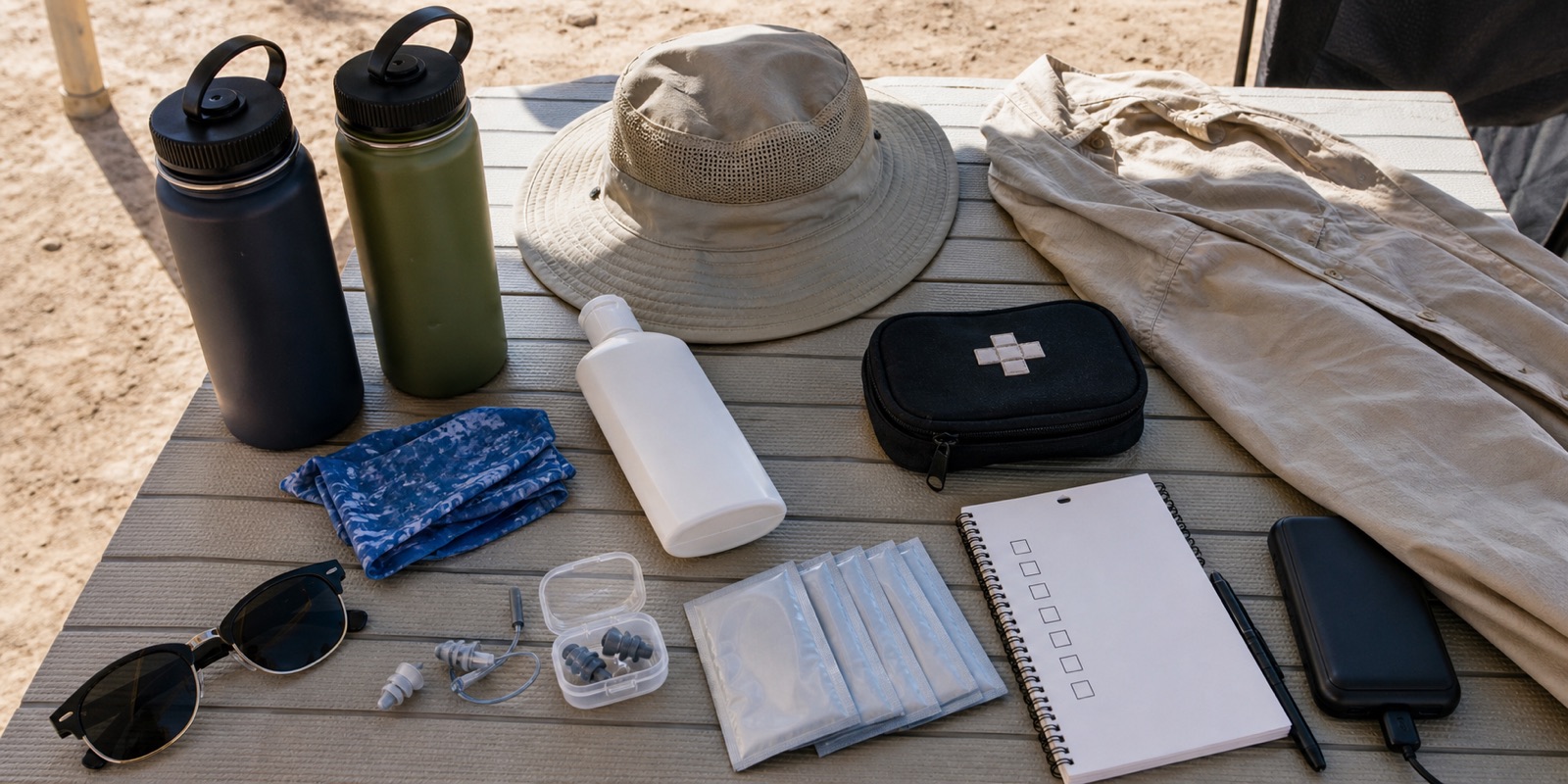
Water is a system, not a vibe. Bring more than one container type: camp jugs for bulk storage, a hydration pack or bottle for walking, and a small backup bottle for the friend who always says they will refill later. Add electrolytes, but do not treat them as magic powder that cancels poor decisions. Eat salty food, real food, and enough carbohydrates to keep the body useful. Place water where tired people can find it in the dark. Agree on refill times before big sets. If security rules limit what enters the grounds, learn the refill locations on day one and mark them mentally before the crowd is thick. Watch for headaches, dizziness, confusion, nausea, dry mouth, and the friend who stops joking. Heat problems often begin quietly. The group that catches them early gets to keep dancing. The group that waits for drama gets a medical-tent plot twist. A refill plan should be visible at camp, not trapped in one person's phone.
Time Chores Around The Sun
Desert festivals punish bad timing. Do heavy camp chores early or after the heat drops: tent fixes, cooler runs, shower attempts, long merch walks, and hauling anything heavier than your remaining patience. Midday is for shade, food, low-stakes wandering, and recovery. If a must-see artist plays during peak heat, build a route with water, shade stops, and an exit plan. Do not drag the whole group across the grounds at 3 p.m. because someone saw a surprise guest rumor with no source. Sunrise and night are gifts, but they are not free. You reach them by managing the hot hours like an adult with snacks. Put the boring tasks on a shared note: refill, eat, sunscreen, medication, battery, meet point, shade check. Then follow the note before anyone is tired enough to negotiate with physics. If the road to the stage has no shade, leave earlier and walk slower. The slower walk is cheaper than losing an hour to recovery.
Dust Changes The Packing List
Desert heat often brings dust, and dust turns small oversights into long irritations. Pack a bandana or mask, saline spray, eye drops, spare contacts or glasses, and a bag that separates clean layers from grit. Closed-toe shoes matter because hot ground, loose rocks, and long walks do not care that sandals looked better at camp. Socks are underrated. Bring extras and change before blisters turn your route home into a morality play. Keep a simple foot-care kit: blister pads, tape, and something to clean skin before applying anything adhesive. Dust also changes electronics. Use zip bags for batteries, charging cables, medication, and earplugs. A desert festival is not the place to discover that every port on your phone now contains half a county. Protect the small tools and the weekend feels much less stupid. After a windy field set, clean your eyes and feet before sleep so morning does not begin with regret.
Protect Hearing In The Heat
Heat safety does not replace sound safety. CDC's Preventing Noise-Induced Hearing Loss page, dated Apr. 13, 2026, says preventing loud sounds is key, and if you can't avoid noise, use adequate hearing protection. It also gives a simple test: if you need to shout to be heard, the sound is too loud and may damage hearing. Desert festivals can make this worse because dehydration, fatigue, and heat can make you less aware of how long you have been standing in punishing volume. Pack earplugs, use them before the headline set, and take breaks from noise. CDC lists insert-type earplugs, Earmuffs, and specially made devices among common hearing protection options. Good earplugs are not anti-fun. They are how you hear the sunrise set and still recognize hi-hats next month. If the speaker stack feels like weather, step back before pride edits your hearing. Put spare earplugs in the same pouch as sunscreen so heat and sound safety stay linked.
Ready.gov Is Boring For A Reason
Ready.gov emergency kit guidance is not written for festival glamour, which is exactly why it helps. Build a compact camp version: water, food, flashlight or headlamp, extra batteries or power bank, first aid basics, medications, copies or photos of IDs, cash backup, sanitation items, and a way to receive weather alerts. A desert festival kit should also include sunscreen, lip balm, cooling towel, hat, electrolyte packets, and a small trash plan. Keep the kit findable, not buried under costume archaeology. Tell the group where it is. If the wind kicks up, the phone network stalls, or someone gets sick, you do not want the only flashlight living in a mystery tote. The best kit is dull, visible, and used before the problem becomes dramatic. That is the whole point of preparedness: it makes chaos less theatrical. Put it near the campsite door or main bin so nobody has to unpack the entire camp.
The Sunrise Test
The real test of desert heat prep is not whether camp looks impressive at arrival. It is whether the group still works at sunrise. Can people find water without asking five times? Does everyone know the meeting point? Are medications cool and reachable? Did someone eat actual food? Are the shade anchors still secure? Does anyone need a quieter route back? Did earplugs survive the night? A desert weekend rewards the crew that treats comfort as safety. That does not mean turning the festival into a spreadsheet retreat. It means making the basic decisions early so the strange, funny, beautiful parts have room to happen. The desert will still be hot, dusty, and occasionally ridiculous. Good prep simply keeps those things from becoming the only story. Pack shade, water, ears, feet, food, and humility. Everything else is choreography. If the morning walk back feels boring, the plan worked. If everyone can find the water, shoes, battery, and exit route without a debate, the crew did the unglamorous job right. Write the plan on paper too, because phones love failing during the exact hour they become essential.
Quick FAQ
What is the most important desert festival prep rule?
Build systems for shade, water, food, hearing protection, and meeting points before the heat and crowd make simple choices harder.
What should I pack for desert heat at an EDM festival?
Pack water storage, electrolyte packets, sunscreen, hat, sunglasses, UPF layers, bandana or dust mask, comfortable closed-toe shoes, extra socks, earplugs, power bank, first aid basics, and medication storage.
How do I avoid heat problems at a desert festival?
Do hard chores early, rest in shade during peak heat, refill water before major sets, eat real food, check on vulnerable friends, and get help early if someone shows signs of heat illness.