Festival Prep
Pacific Northwest Rain Festival Prep: Dry Feet, Flood Sense, And The Set After The Storm
A sourced Pacific Northwest rain guide for flood sense, dry sleep systems, mud paths, cold stress, battery protection, and the set after the storm.
Direct answer
Pacific Northwest rain festival prep is about staying dry enough to think, not pretending rain is scenery. National Weather Service Flood Related Hazards calls flooding a coast-to-coast threat in all months of the year, and Turn Around Don't Drown guidance says 6 inches of fast-moving flood water can knock over an adult. Pack dry sleep layers, waterproof storage, traction, lights, medications, weather alerts, and a no-hero plan for flooded paths.
Watch this topic
Save the related directory search
Track new events, profiles, and calls matching Pacific Northwest rain festival prep. The saved watch resolves against the live directory when you open it.
Article-to-directory guide
Keep moving from the article
Use these focused routes to move from the article into live events, talent, and application calls without starting from scratch.
Rain Is A System, Not A Mood
Pacific Northwest rain has a talent for sounding gentle while slowly auditing every bad camp decision. It seeps into cuffs, turns a field path into pudding, and makes the person who packed one hoodie start bargaining with physics. National Weather Service Flood Related Hazards says flooding is a coast-to-coast threat to the United States and its territories in all months of the year. That matters for a rainy EDM weekend because the problem is wider than getting wet. Water pools faster than camp can handle it, paths change under feet, batteries die in damp pockets, and sleep gear loses its one sacred job. Treat rain as a system. Your plan needs runoff, storage, shoe traction, dry sleep layers, a weather source, and a group rule that nobody walks through mystery water to save five minutes. The goal is keeping enough comfort and safety intact that the music still feels like the reason you came.
Read The Ground Before The Jacket
NWS explains that flooding can happen when prolonged rain falls over several days or when intense rain falls over a short period of time. A Pacific Northwest festival site can combine both: old rain in the soil, new rain in the sky, hills at the edge of camp, and a crowd compressing the same muddy routes. Look past the rain icon. Ask where the water will run, where people will queue, and whether camp sits in a low spot. Put tents away from visible drainage lines and tire ruts. Keep a little slope under tarps so water leaves instead of forming a roof pond with ambition. If the venue map shows creeks, low fields, remote parking, or a long walk to camping, decide the safe route in daylight. Rain planning starts with the ground, not the jacket, because the ground decides whether your great shell becomes a costume in a swamp. Mark that route on a screenshot before the signal and the sky both get moody.
Flash Floods Are Festival Fast
NWS says flash floods generally develop within 6 hours of the immediate cause, and causes include heavy rain, ice or debris jams, and levee or dam failure. The festival translation is simple: do not assume a wet path stays equally wet. A side road can flood between the opener and the headliner. A creek crossing can change while the crowd is inside the venue. A shuttle lot can become a shoe-removal opera by midnight. NWS also says slow-moving or multiple thunderstorms over the same area can cause flash floods, especially when heavy rain falls over steep, hilly, or mountainous terrain. That phrase belongs in a Pacific Northwest guide because slopes, forest roads, ravines, and low bridges are common around regional outdoor sites. If rain intensifies, move early, check official alerts, and treat fast water as a stop sign with no negotiation department. If staff closes a route, treat that as a fact, not a debate prompt. The alternate walk may be annoying, but it is cheaper than guessing wrong around water.
Floodwater Is Not A Shortcut
The National Weather Service Turn Around Don't Drown campaign exists because people routinely underestimate moving water. NWS says more deaths occur due to flooding than from any other thunderstorm related hazard, and that 6 inches of fast-moving flood water can knock over an adult. It also warns that 12 inches of rushing water can carry away most cars and 2 feet of rushing water can carry away SUVs and trucks. For festival campers, the rule is simple: it is NEVER safe to drive or walk into flood waters. Do not cross a flooded access road for a better parking spot. Do not wade through a dark path because the stage is close. Do not send the least worried friend to test depth. Turn around, tell staff, use official routes, and let the set wait. This is also a car-camping rule: keep keys, shoes, and jackets reachable, because a safe reroute is harder when the essentials are buried under wet chairs.
Wet Cold Sneaks In Quietly
Pacific Northwest rain often becomes a cold problem after sunset. National Weather Service Cold Weather Safety warns that brisk winds can produce dangerously cold wind chill values, and that people exposed to extreme cold are susceptible to frostbite and hypothermia. NWS defines hypothermia as what happens when the body loses heat faster than it can produce it. At a festival, that can start with damp socks, a soaked hoodie, skipped dinner, and a long walk back through wind. Protect hands and feet because NWS identifies extremities such as hands and feet as vulnerable. Keep a sealed sleep layer that never visits the stage. Change before shivering becomes the plan. The medical tent is not a character flaw. It is where a wet, cold problem gets handled before the weekend becomes a cautionary group chat. Buddy checks should be plain: dry layer, warm hands, warm feet, clear speech, and enough food to stop the shiver spiral before it becomes a medical visit.
Dry Feet Are A Scheduling Tool
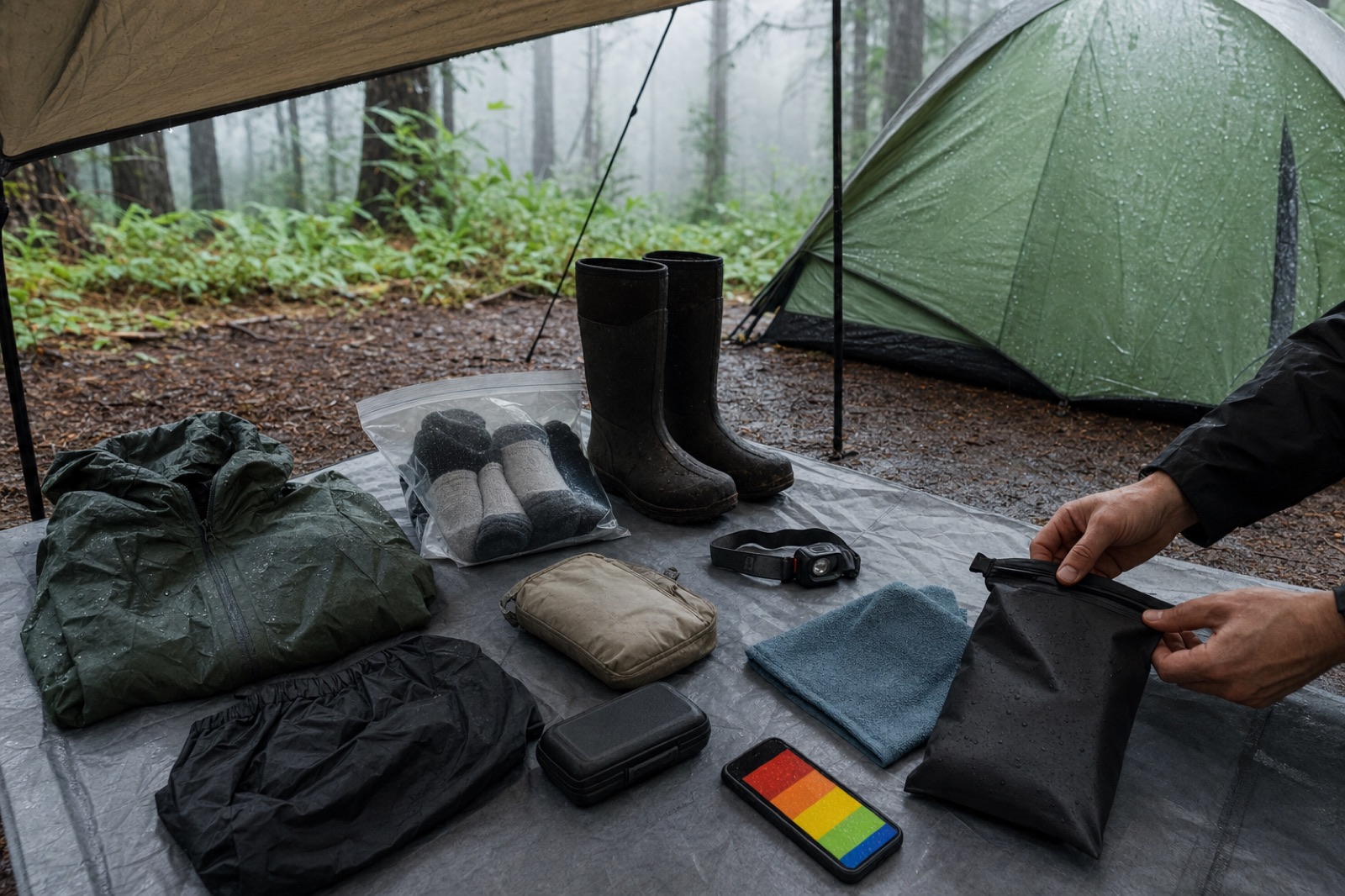
The obvious rain gear is a shell, but the weekend is usually won by feet. Bring more socks than your fashion brain thinks is reasonable. Pack them in small sealed bags so one leak does not ruin the whole economy. Shoes need traction and a plan for mud; flat fashion sneakers become little boats with laces. Camp sandals help around the tent, but they should not be the only thing between you and a gravel walk after midnight. Put one dry foot kit near the sleeping bag: socks, blister care, small towel, and a bag for wet pairs. Dry feet save time because people with dry feet walk sooner, complain less, and make better decisions. They also save joy, which is the part packing lists rarely admit they are protecting. Label the sleep socks and keep them sacred. The person who steals their own sleep socks for a muddy bathroom walk has betrayed morning peace.
Tarps Need Runoff, Not Optimism
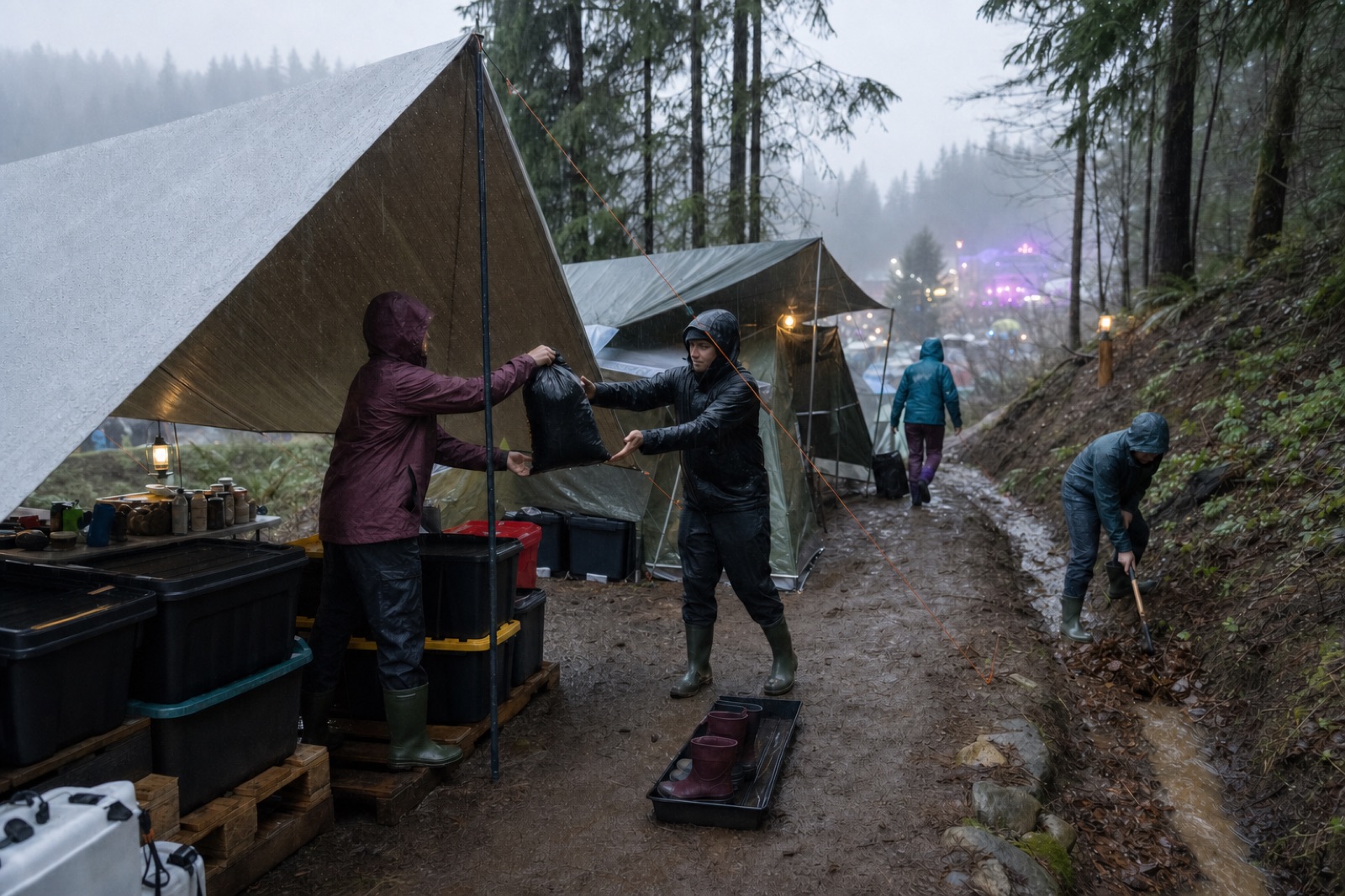
A tarp is useful only when water has somewhere to go. Pitch it with a slope, check the low corner, and keep edges away from tent doors so the entrance does not become a private waterfall. Use bins or dry bags for sleep clothes, medication, batteries, and the clothes meant for the drive home. Put a small mat or trash bag at the tent door for wet layers. Do not store tomorrow's dry socks in the same tote as the rain shell that has been negotiating with a storm for six hours. The camp should have a wet zone and a dry zone, clearly enough that tired people cannot destroy the system by accident. Good tarp work feels boring during the afternoon. At 3 a.m., it feels like someone quietly invented civilization. Check the pitch again after the first shower. Fabric stretches, stakes loosen, and the clever afternoon angle can become a nighttime drip machine.
Do The Wet Jobs Before The Drop
Rain turns small chores into dramatic productions, so do the wet jobs before the set you care about. Refill water while paths still have daylight. Move the cooler before the puddle reaches it. Put batteries in a dry bag before the phone is at nine percent. Eat something with salt before the long walk, because cold rain and hunger make people strange in a way bass cannot fix. Agree on the route home and the meeting point before everyone is under a hood and half deaf from the stage. If the forecast shows a heavier rain band, shift the schedule instead of pretending the group will become more competent in darkness. Timing is the cheapest rain gear. It weighs nothing, fits every campsite, and prevents arguments that no waterproof jacket can solve. The best crew assigns chores before rain arrives: one person watches alerts, one handles lights, one checks dry bins, and one keeps the route plan honest.
The Kit Has To Survive Water
Ready.gov emergency kit guidance is plain on purpose: water, food, flashlight, batteries, first aid, medications, and weather alerts. In a Pacific Northwest rain camp, those items need waterproof homes. A flashlight at the bottom of a damp backpack is a rumor. Loose batteries in a puddled tote are an insult to future you. Medication should be reachable, labeled, and sealed. Keep a small dry note with car location, shuttle stop, medical tent, and an outside contact. Put the weather alert source in writing because low signal, wet screens, and loud stages make improvisation worse. The kit should live where the group can find it without performing a midnight archaeology dig. Preparedness does not make the weekend stiff. It keeps the soft parts, like sleep and trust, from dissolving. Put the kit in a bright bag or bin. In rain, visibility is part of preparedness because everything dark becomes invisible under a canopy.
The Set After The Storm
The best rainy festival plan is measured after the storm, when the stage lights come back, the ground smells like wet cedar and food carts, and everyone decides whether they still have enough body left for the set. If socks are dry, lights work, the route is safe, and nobody walked through floodwater to prove commitment, the music gets a fair chance. If camp is soaked, medication is lost, and the meeting point was a poetic concept, the night becomes logistics with a kick drum. Write down what worked before memory turns heroic. Better stakes, more dry bags, fewer cotton layers, earlier route checks, extra socks, and a stricter floodwater rule are all boring notes that buy future joy. Pacific Northwest rain does not have to ruin an EDM weekend. It only punishes the fantasy that weather is background. The real win is not looking untouched by weather. The win is hearing the next set with warm feet, working gear, and a crew that still trusts the plan.
Quick FAQ
What should I pack for Pacific Northwest rain at an EDM festival?
Pack a waterproof shell, rain pants, dry socks in sealed bags, traction shoes or boots, tarps, dry bins, headlamp, batteries, first aid, medications, food, water, and weather alerts.
What is the biggest rain mistake at festivals?
The biggest mistake is treating rain as a clothing problem only. You also need runoff planning, dry sleep storage, mud routes, flood awareness, cold-stress checks, and protected electronics.
Should I walk or drive through flooded festival roads?
No. NWS Turn Around Don't Drown guidance says it is never safe to drive or walk into flood waters.