Festival Prep
Humid Gulf Coast Festival Camping: Sweat, Storms, Mosquitoes, And The 4 A.M. Plan
A sourced Gulf Coast festival camping guide for humidity, heat index, lightning delays, mosquito prevention, wet gear, and group timing.
Direct answer
Humid Gulf Coast festival camping is a heat, water, bug, and timing problem. National Weather Service Heat Forecast Tools explain that the Heat Index changes when relative humidity is factored into air temperature, and NWS lightning guidance says threatening sky or thunder means getting to a safe place immediately. Add CDC mosquito prevention, dry bins, quick-dry clothing, shade, water, batteries, medications, weather alerts, and a group plan before the swampy hour starts negotiating.
Watch this topic
Save the related directory search
Track new events, profiles, and calls matching humid Gulf Coast festival camping. The saved watch resolves against the live directory when you open it.
Article-to-directory guide
Keep moving from the article
Use these focused routes to move from the article into live events, talent, and application calls without starting from scratch.
Humidity Is The Invisible Headliner
Humid Gulf Coast camping does not always announce itself dramatically. It starts with a shirt that never dries, a pillow that feels lightly cursed, and a friend who says the air has texture. The National Weather Service Heat Forecast Tools page explains the Heat Index as how hot it really feels when relative humidity is factored in with the actual air temperature. That sentence is the whole Gulf Coast festival problem in plain clothes. A forecast can look tolerable until humidity turns walking, dancing, tent setup, and sleep into a slow tax on the body. The job is to build camp for wet air and hot air together. Shade matters. Airflow matters. Dry bins matter. A schedule matters because fatigue stacks faster when nothing evaporates. The best Gulf Coast plan starts early, before the first outfit becomes laundry and before a simple water run feels like a minor expedition. If camp feels sticky by breakfast, assume the afternoon will ask for more water, more patience, and fewer unnecessary errands.
Heat Index Changes The Packing List
NWS gives a useful heat-index example: if the air temperature is 96°F and relative humidity is 65%, the Heat Index can be 121°F. That is not a cute trivia number for a campsite argument. It changes how you pack and when you move. NWS also notes that full sunshine can increase heat index values by up to 15°F, so a humid afternoon line at security can feel worse than the forecast headline. Pack quick-dry clothes, a brimmed hat, sunscreen, electrolyte options, and a water plan that works without hero speeches. Move heavy camp chores into morning or evening. Make shade before people need shade. Put water at the camp entrance and beside the sleep area, because tired people follow the easiest route. If the first major set starts after a wet, hot day, your body is already in the story. Good prep protects the joy by reducing the number of battles the body has to fight before the bass even begins.
Use WBGT Thinking Even Without The Tool
The NWS Heat Forecast Tools page also explains Wet Bulb Globe Temperature, often shortened to WBGT. It uses temperature, humidity, wind, solar radiation, and other weather parameters, and NWS notes it is effective for active populations such as outdoor workers and athletes. Festival people should pay attention because dancing in a crowd is not a passive hobby. You are moving, sweating, standing in radiant heat, and sometimes wearing an outfit designed by optimism. Even if the festival does not publish WBGT, the thinking helps. Ask what the sun is doing, whether wind can reach camp, when the ground will radiate heat, and where rest is possible. Treat the schedule like a work-rest plan: water, shade, food, sit-down time, and a slower walk before the hardest set. Put one low-effort recovery slot on the schedule before the headliner, then defend it from group-chat ambition. That is not boring. That is how you keep the night open.
Rain Is Not The Same As Relief
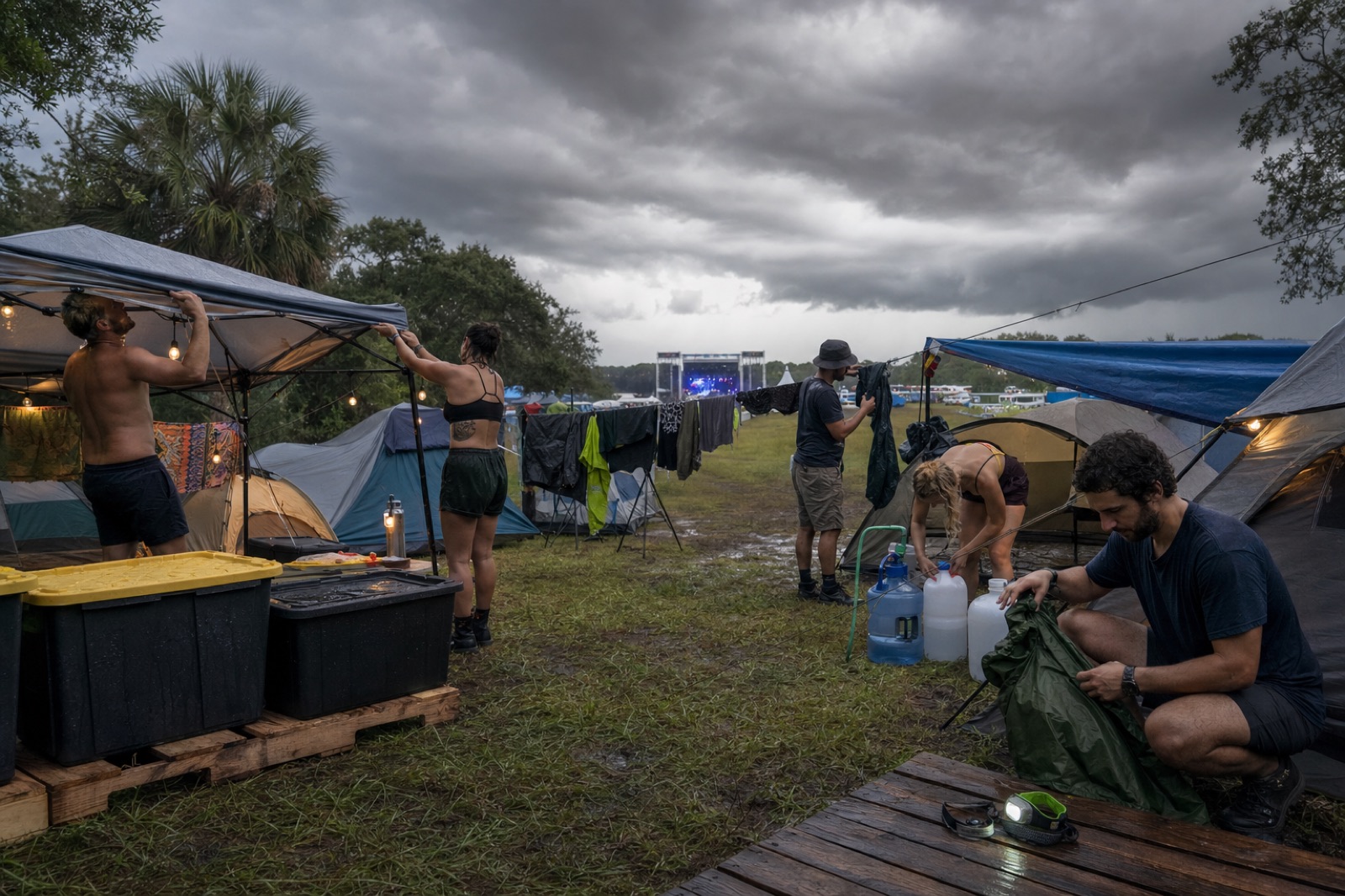
Gulf Coast rain can feel like a rescue for thirty seconds, then turn into steam, mud, and a tent vestibule full of questionable decisions. Pack rain gear, but think about drying systems. Use plastic bins or dry bags for sleep clothes, medication, battery packs, and socks. Hang damp clothes where air can move. Keep a camp towel that is not also your shower towel, dish towel, and emotional support object. Sandals help around camp, but closed shoes still matter for long walks, mud, and night routes. Put a trash bag inside the tent entrance for wet layers. The mistake is assuming water falling from the sky solves heat. Often it raises the humidity and makes the next hour heavier. Bring a small line, a few clips, and a rule that sleep clothes never become rain clothes. Your goal is not to defeat weather. Your goal is to keep one dry layer, one dry sleeping zone, and one clear path back to comfort.
Lightning Changes The Party Math
National Weather Service Lightning Safety guidance is blunt in the useful way. If the sky looks threatening or if you hear thunder, get inside a safe place immediately. NWS identifies substantial buildings and hard-topped vehicles as safe options, and says Rain shelters, small sheds, and open vehicles are not safe. For festivals, that means a canopy is shade, not lightning protection. A vendor tent is not automatically safety. A tree line is not a clever loophole. Know the venue's shelter and evacuation plan before the storm line arrives. If weather pauses the music, do not treat the delay as a social-media inconvenience with clouds. Move early, keep shoes on, grab medication and phone battery if they are nearby, and let staff instructions win over rumor. Count heads before moving, then count again under shelter. Lightning is one of the few festival problems where confidence is actively unhelpful.
The Thirty-Minute Rule Saves Arguments
The same NWS lightning overview tells people to wait 30 minutes after the last lightning or thunder before going back outside. That rule is hard at a festival because the rain may fade, the stage may glow again, and everyone wants the night to resume on their personal timeline. Build the rule into the group plan before anyone is wet, impatient, and bargaining with the sky. Pick a sheltered meeting point. Decide who checks official alerts. Keep a tiny snack and water accessible because storm holds turn cheerful people into courtroom attorneys. The wait is not wasted time. It is the price of not guessing wrong around electricity. Use it to change socks, check the map, message the late friend, and reset the plan. Give each crew one tiny storm job: alerts, headcount, dry bag, lights, or snacks. Small roles keep nervous people useful and keep rumors from becoming leadership. When the all-clear comes, the crew that planned well can return with dry socks, working lights, and less drama. That kind of patience is a quiet form of safety and trust.
Mosquitoes Are A Schedule
CDC's Preventing Mosquito Bites page, dated Aug. 28, 2024, says mosquitoes bite day and night and can spread germs through bites. It recommends EPA-registered insect repellents, loose-fitting, long-sleeved shirts and pants, and clothing and gear treated with permethrin. Gulf Coast campers should treat that as schedule design, not a last-minute spray cloud outside the tent. Apply repellent before dusk, before swampy walks, and before waiting in lines near standing water. Pack breathable long sleeves for evening instead of relying on willpower and complaints. Keep repellent where the group can find it, not buried under the glitter bin. Reapply by label directions after sweat, rain, or long sets, and keep a small bottle with the person who remembers details. Mosquito prevention is social care because one unprepared camper becomes a tiny percussion section of slaps, sighs, and borrowed supplies. The better plan is boring, shared, and repeated.
Permethrin Belongs On Gear, Not Skin
CDC says permethrin is an insecticide that kills or repels mosquitoes and that treated clothing and gear can help prevent mosquito bites. It also says Do not use permethrin products directly on skin. That distinction matters when festival advice gets passed around too casually. Treat boots, socks, pants, tents, or buy treated items, then follow product instructions and timing. Do not improvise with chemicals because a campsite feels like a laboratory with better music. Pair treated gear with EPA-registered repellent for exposed skin and with clothing that still feels wearable in humidity. The practical move is to prep gear before travel, not at midnight in damp grass while everyone waits for you to find the cap. Put treated items in a labeled bag so nobody confuses camp gear with skin products. Mosquito strategy works best when it is finished before the first bite reminds the whole camp that planning had a job and panic had no useful job at all.
Standing Water Is Camp Debt
CDC mosquito guidance says to Stop mosquitoes from laying eggs in or near water, and to empty and scrub, turn over, cover, or throw out items that hold water. A festival camp cannot control the whole site, but it can control its little disaster museum. Tip the chair cup holders. Cover bins. Do not leave a cooler lid making a bathtub for insects. Dump the tarp sag after rain. Keep trash bags tied and away from sleep areas. Do a two-minute puddle walk before dusk, when the whole camp can still see what needs fixing. The goal is not sterile perfection. The goal is fewer bites, less smell, and a camp that does not become a humid science fair. This is also community etiquette. Your standing water can become your neighbor's problem. Good campground culture is often just practical respect with stakes in the ground and fewer puddles where puddles do not need to be.
The 4 A.M. Gulf Coast Test
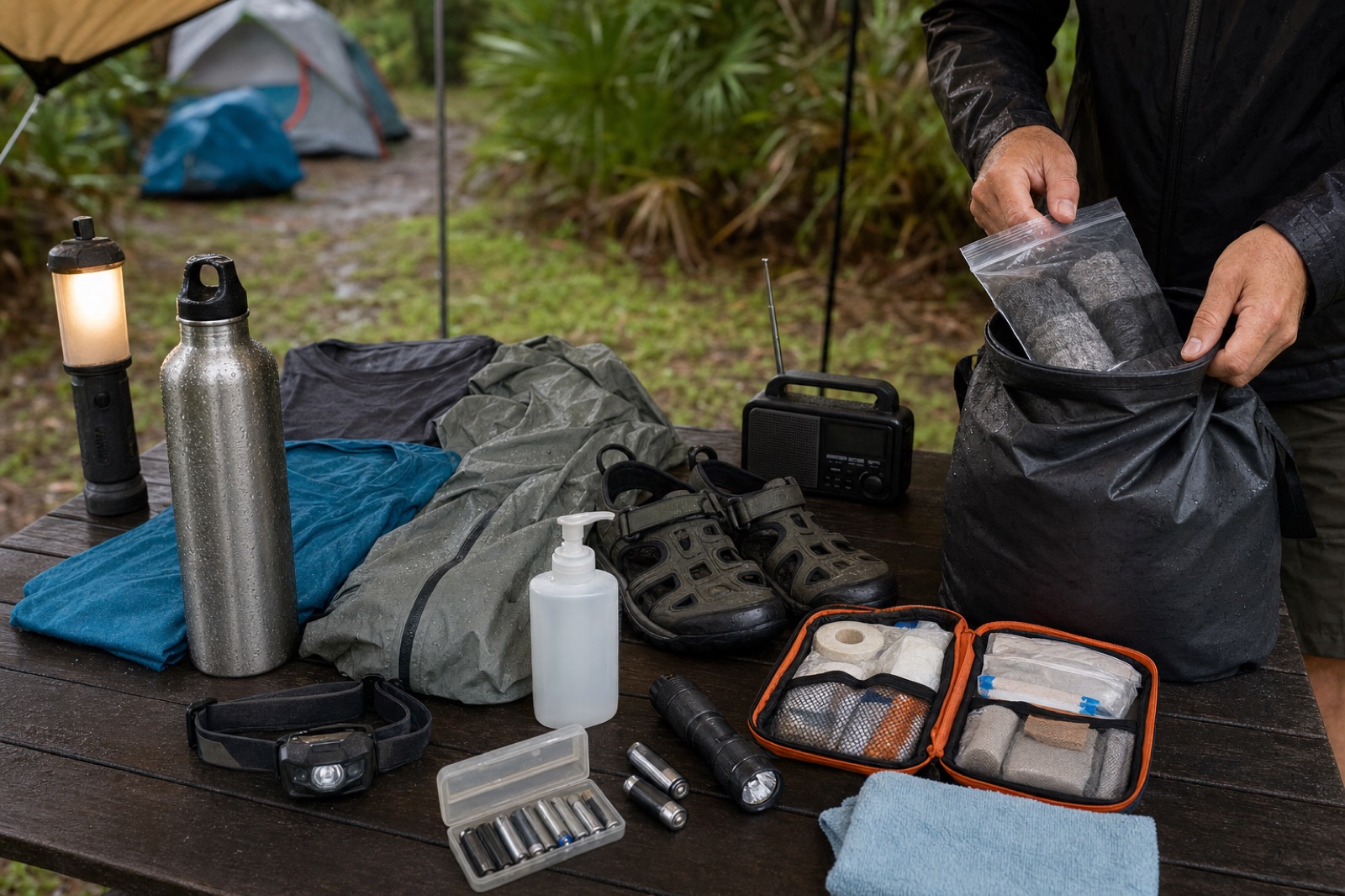
Ready.gov emergency kit guidance gives the boring nouns that matter when a wet festival night gets complicated: water, food, flashlight, batteries, first aid, medications, and weather alerts. Translate that into Gulf Coast camp behavior. Put lights where wet hands can find them. Keep batteries and phones off the tent floor. Store medication in a waterproof bag. Keep food simple enough for tired people. Check official weather alerts before walking to a far stage. Put the meeting point in writing because humidity, bass, and low signal are not a reliable communications strategy. Add a dry note with car location, shuttle stop, medical tent, and one outside contact. The 4 a.m. test is simple: can everyone get dry, see, drink, eat, find medication, avoid mosquitoes, and know whether storms are still a threat? Add the morning test too: is anything mildewing, pooling water, dead on battery, or missing before the next humid round begins? If yes, the weekend has room for joy. If no, the story becomes logistics with a soundtrack.
Quick FAQ
What should I pack for humid Gulf Coast festival camping?
Pack quick-dry clothing, extra socks, rain shell, sandals and closed shoes, dry bags or bins, sunscreen, water plan, electrolytes, EPA-registered repellent, breathable long sleeves, flashlight, batteries, first aid, medications, and weather alerts.
What is the biggest mistake at humid Gulf Coast festivals?
The biggest mistake is treating humidity as normal heat. Heat index, storms, wet gear, mosquitoes, and poor sleep stack together, so the plan needs shade, airflow, dry storage, storm shelter, repellent timing, and group check-ins.
Is a festival canopy safe during lightning?
No. NWS lightning guidance points to substantial buildings and hard-topped vehicles as safe options and warns that rain shelters, small sheds, and open vehicles are not safe.