How to Prepare for Rain at a Festival
To prepare for rain at a festival, pitch your tent on high, well-drained ground with a taut rainfly and a ground sheet tucked fully underneath. Pack a rain shell or poncho, quick-dry layers and a sealed bag of dry clothes, and keep electronics in waterproof bags. When thunder starts, get into a hard-topped vehicle or a building and follow the festival's weather instructions.
Which festivals see the most rain?
Of the festivals in the table, the Midwest and Northeast events see the most wet days: NOAA normals near Elements in the Poconos show measurable precipitation on about 15 days in an average August. The Gorge in central Washington is the driest, at under half an inch in June. Florida's festivals on our calendar skip the June-to-September peak.
The table pairs each festival with a nearby NOAA weather station that publishes 1991–2020 monthly normals, for the month the event is usually held. These are 30-year averages, not forecasts, and each station sits within about a dozen miles of the venue. A day counts as wet once it records 0.01 inch, so a passing shower counts the same as a soaking.
The Pacific Northwest's reputation for rain belongs mostly to its winters. At Arlington, the station nearest Granite Falls, home of Critical Northwest, July averages 1.15 inches of precipitation against 7.15 inches in November. East of the Cascades, the Gorge Amphitheatre sits in dry country: the Quincy station averages about 7.5 inches a year, 0.45 inch of it in June, when Beyond Wonderland at the Gorge is typically held, and 0.12 inch in August, the usual month for Bass Canyon. A dry climate still has storms. FOX 13 Seattle reported that a thunderstorm with high winds ended the second day of Bass Canyon in 2024, and that many campers had to retreat to their cars. More events in the state are on the Washington festival page.
Midwest and Northeast summers are wetter. Electric Forest tells campers in its prep guide that precipitation is expected at least once every year, and the Montague station near the festival averages 3.32 inches across about nine wet days in June. Near Elements at Pocono Raceway, an average August brings about 15 wet days. Keep that in mind when you browse the June festival calendar.
Every Florida festival on our calendar is typically held between October and April, avoiding the June-to-September stretch when Orlando averages between about 6.5 and 8.2 inches of rain a month. Lightning is the bigger worry there. The National Weather Service office in Melbourne says more people die from lightning strikes in Florida every year than in any other state, and that afternoon and evening are prime time for summer thunderstorms. See the Florida festival page for events in the state.
| Festival | Location | Usual month | NOAA station | Average precipitation | Average wet days (0.01 in or more) |
|---|---|---|---|---|---|
| Beyond Wonderland at the Gorge | George, WA | June | Quincy, WA | 0.45 in | 3.7 |
| Bass Canyon | George, WA | August | Quincy, WA | 0.12 in | 1.8 |
| Critical Northwest | Granite Falls, WA | July | Arlington, WA | 1.15 in | 6.3 |
| Electric Forest | Rothbury, MI | June | Montague 4 NW, MI | 3.32 in | 9.4 |
| Infrasound | Clarks Grove, MN | May | Albert Lea 3SE, MN | 4.85 in | 12.9 |
| Elements Music & Arts | Long Pond, PA | August | Mount Pocono airport, PA | 4.64 in | 15.1 |
| Lost Lands | Thornville, OH | September | Buckeye Lake 1 N, OH | 3.89 in | 8.9 |
| Wakaan | Ozark, AR | October | Ozark 2, AR | 4.73 in | 7.7 |
| Suwannee Hulaween | Live Oak, FL | October | Live Oak, FL | 4.04 in | 4.3 |
| EDC Orlando | Orlando, FL | November | Orlando Executive Airport, FL | 1.73 in | 8.0 |
Rainproofing your tent and campsite
Site choice does most of the work. Gore-Tex's camping advice is to pitch well above any streams or bodies of water, on well-drained ground, and away from any spot where water could pool. The Weather Network adds a warning about the bottom of a slope, where running water collects. Where festival camping is first come, first served, walk your spot before you unpack and look for ruts, low patches and old puddle marks.
Pitch the tent so water runs off and away. Scout Life's gear column says the ground cover should fit completely under the tent, because an edge that sticks out catches rain and channels it underneath. Pull the rainfly taut; a reader tip in the same column says it should sound like a drum when tapped, and Gore-Tex notes that a slack fly lets small pools form and weigh it down. Keep clothes and bags off the tent walls, where Scout Life readers say they can let water in.
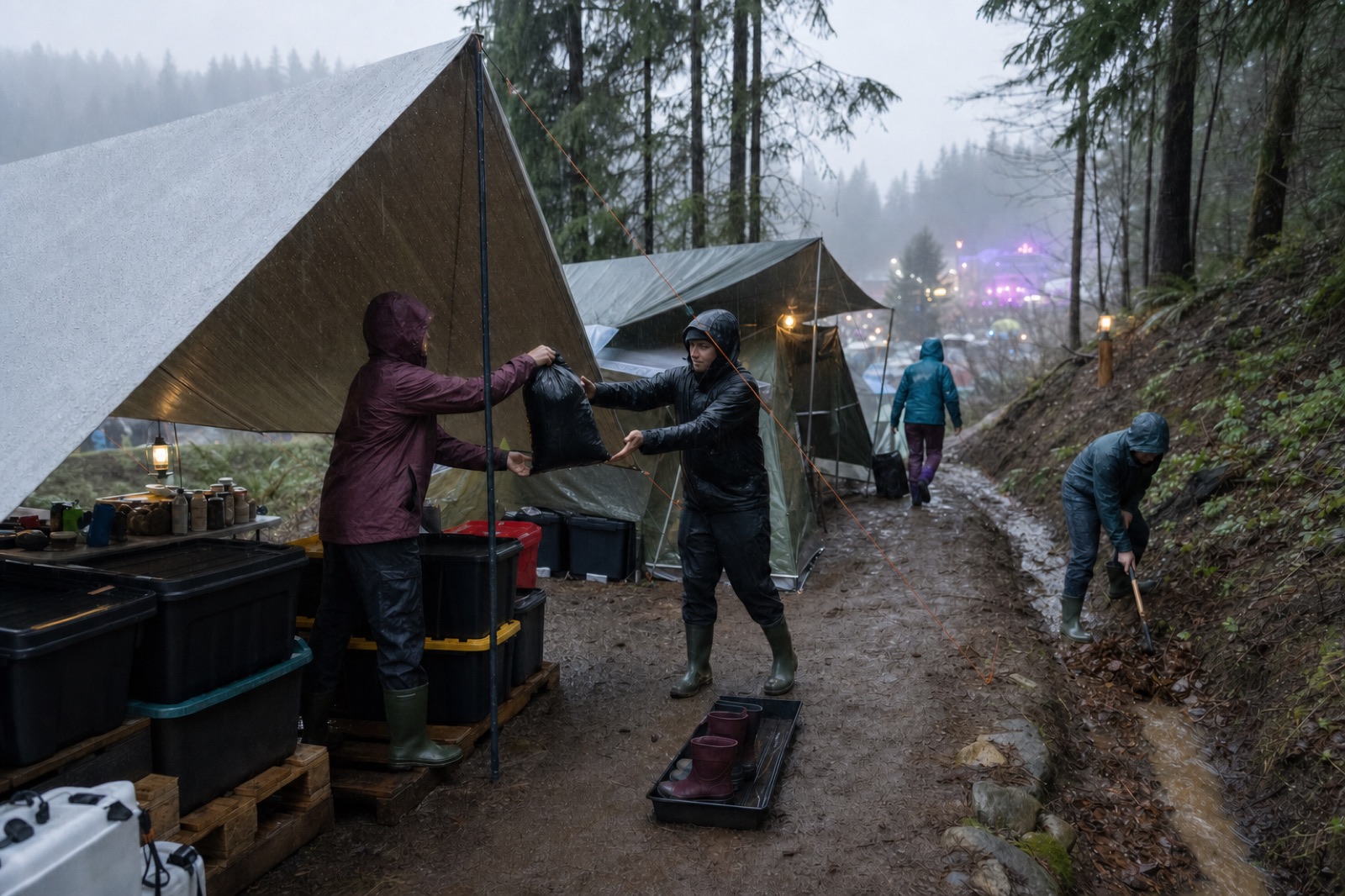
A tarp over your living space gives you somewhere dry to sit, cook and change. Hang it first and pitch the tent underneath, angled so water can't pool on top, as Gore-Tex recommends, and keep the tent well ventilated through the rainfly's vents to cut condensation. Stake and guy out every shelter, since storms bring wind as well as rain, and check your festival's rules on canopies before you buy one.
When a storm is coming, Burning Man's survival guide tells participants to walk back to camp and batten it down, and to move food, medicine, bedding and clothing to a safe, dry, elevated place. That advice works at any campground. The festival camping checklist covers the rest of the shelter kit.
A large trash bag will hold the wet tent on the drive home. Dry it completely as soon as you can, either during a sunny break or right when you get back, as Gore-Tex advises. Our guide to recovering after a festival weekend covers cleaning and storing wet gear.
What to wear when rain is in the forecast
Pack a waterproof shell or a poncho, quick-dry layers and one complete set of dry clothes that never leaves its bag in the rain. The Weather Network's camping advice is to skip cotton and jeans in favor of quick-drying layers and rain gear, and it notes that merino wool base layers dry quickly once the sun returns. Electric Forest's prep guide asks campers to bring waterproof gear plus spare clothes, warm socks included, to change into if theirs get wet.
Choose between a jacket and a poncho by how you'll use it. A hooded rain jacket stays in place when you move and in wind. A poncho packs small, costs little and can cover a backpack or hydration pack too. Check the rules either way: EDC Orlando allows rain ponchos and umbrellas less than 10 inches long when collapsed, while Beyond Wonderland at the Gorge lists large umbrellas among its prohibited items. CDC also advises against carrying metal objects such as umbrellas when lightning is around.
Keep the dry set sealed. Garbage bags or resealable plastic bags, which Gore-Tex recommends for clothes and gear, also keep tomorrow's socks dry overnight. Change into dry clothes before bed. Wet clothing raises the risk of hypothermia even when it isn't freezing, and our guide to staying warm at festivals explains the warning signs.
Wet feet, mud and trench foot
Feet take the worst of a wet weekend. CDC's guidance for outdoor workers says trench foot, an injury caused by prolonged exposure to wet and cold conditions, can occur at temperatures as high as 60°F if the feet are constantly wet. Symptoms include red skin, numbness or tingling pain, leg cramps, swelling and blisters. If you suspect it, CDC advises taking off wet shoes and socks, drying the feet and avoiding walking on them, and getting medical attention right away.
Bring at least two pairs of shoes so one can dry, and more socks than seems reasonable. Change socks whenever they get damp and let your feet air out in the tent at night. Waterproof boots help in mud, though water that pours in over the top stays in, so pair them with rain pants that cover the opening. Our guide to what shoes to wear to a festival compares boots and sneakers by ground type.
Mud also changes how you get around. When the playa gets wet, Burning Man tells participants not to drive or ride bikes, because the mud immediately clogs wheels and gears, and its checklist includes footwear suited to a wet playa. The same guide says to stay off scaffolding, art projects and the tops of vehicles during storms.
Keeping your phone and power bank dry
Treat water resistance as a backup. Apple says splash, water and dust resistance is not permanent and can decrease with normal wear, and that liquid damage isn't covered under its warranty. Keep your phone in a zip-top or dry bag when rain is heavy, and store battery packs, cables and anything paper the same way. Gore-Tex suggests sealing electronics in plastic bags while you sleep.
If an iPhone does get soaked, Apple's advice is to tap it gently against your hand with the connector facing down, leave it to dry somewhere with some airflow, and wait before charging it by cable. Don't dry it with a heat source or compressed air, don't push a cotton swab or paper towel into the port, and don't put it in a bag of rice. Other phone makers publish their own instructions, so look yours up before the trip.
Keep power away from standing water. Burning Man's storm instructions say to stay out of puddles, especially ones with power cords and generators in them, and not to run generators or other electrical equipment that is standing in water.
Lightning: what to do when you hear thunder
The National Weather Service rule is short: when thunder roars, go indoors. NWS says there is no safe place outside when thunderstorms are in the area, that substantial buildings and hard-topped vehicles are the safe options, and that rain shelters, small sheds and open vehicles are not. CDC adds tents, picnic shelters and gazebos to the list of places that offer no protection. At a camping festival, the nearest safe shelter is often your car, with the windows rolled up.
Move before the rain arrives. NOAA notes that lightning can strike more than 10 miles from where rain is falling, and NWS says to wait 30 minutes after the last lightning or thunder before going back outside. CDC points out that the beginning and the end of a storm are the most dangerous times.
If you are caught outside with nowhere to go, NOAA and CDC advise:
- Get away from ponds, lakes and other bodies of water.
- Never shelter under an isolated tree, a cliff or a rocky overhang, and don't lie flat on the ground.
- Stay away from fences, power lines and other objects that conduct electricity.
- Don't carry metal objects such as umbrellas or backpacks with metal frames.
- If you're with friends, spread out, which CDC says reduces injuries if lightning hits the ground.
What festivals do when severe weather hits
The festivals we checked run rain or shine, and it takes lightning or high wind to stop the music. Lost Lands' FAQ calls it a rain or shine event with all sales final, and EDC Orlando and Beyond Wonderland at the Gorge both say they take place rain or shine. Shambhala's FAQ says tickets aren't refunded if the event is canceled because of extreme weather. Read your festival's terms before you buy.
Instructions come fast when storms do hit. During thunderstorms in 2024, Electric Forest told people on site to move to their vehicles, sent anyone without one to the nearest shelter bus and pointed attendees to a local FM station for updates, according to the Oceana County Press. About an hour later it announced that the festival had resumed normal operations.
NOAA's lightning guidance for event organizers explains the urgency: safe locations should be identified in advance, and organizers need to know how long it takes to get people to them, because moving a crowd takes time. So when staff, screens or the festival app tell you to move, go straight away, follow staff directions and take only what you need. On the first day, learn how the festival sends weather alerts, where you would shelter and how long it takes to walk to your car.
Heavy rain can also bring flooding. Burning Flipside's survival guide warns that flash flood conditions are possible and that the river can rise rapidly when there is rain in the area. The National Weather Service's flood rule is Turn Around Don't Drown: 6 inches of fast-moving water can knock over an adult and 12 inches can carry away most cars, so never walk or drive through a flooded road or parking lot on the way out.
Frequently asked questions
Do festivals get canceled because of rain?
Rarely for rain alone. Lost Lands, EDC Orlando and Beyond Wonderland at the Gorge all say they run rain or shine. Lightning and high winds are what pause or end a day, as they did at Electric Forest and Bass Canyon in 2024. Check the refund terms first, since many festivals treat all sales as final.
Is it safe to stay in a tent during a thunderstorm?
No. CDC says tents, picnic shelters and other open shelters do not protect you from lightning, and the National Weather Service lists substantial buildings and hard-topped vehicles as the safe options. Get into a car with the windows rolled up and stay there until 30 minutes after the last thunder.
Should I bring a poncho or a rain jacket to a festival?
Either works. A hooded rain jacket stays put while you move and in wind, while a poncho packs small, costs little and can cover a backpack. Check your festival's rules first: EDC Orlando allows ponchos and small umbrellas, for example, while Beyond Wonderland at the Gorge prohibits large umbrellas.
What should I do if my phone gets wet at a festival?
Let it dry before you charge it. Apple's iPhone advice is to tap the phone gently with the connector facing down, leave it somewhere with airflow, and wait before connecting a cable. Skip heat, compressed air, cotton swabs and the bag of rice, and keep the phone sealed in a bag for the rest of the weekend.
Sources
- National Weather Service: Overview: Lightning SafetyWhen Thunder Roars, Go Indoors; no safe place outside in a thunderstorm; substantial buildings and hard-topped vehicles as safe options; rain shelters, small sheds and open vehicles as unsafe; waiting 30 minutes after the last lightning or thunder.
- CDC: Safety Guidelines: LightningTents, picnic shelters and gazebos offer no protection; hard-top vehicles with windows up as shelter; not carrying metal objects such as umbrellas or metal-framed backpacks; groups separating; the start and end of a storm as the most dangerous times.
- NOAA JetStream: Lightning SafetyLightning striking more than 10 miles from rainfall; staying sheltered 30 minutes after the last thunder; event organizers identifying safe locations and knowing how long it takes to move people; avoiding water, isolated trees, overhangs, fences and power lines, and not lying flat.
- National Weather Service Melbourne: Lightning RulesMore people die from lightning strikes in Florida each year than in any other state; afternoon and evening as prime time for summer thunderstorms.
- National Weather Service: Turn Around Don't DrownSix inches of fast-moving water can knock over an adult and 12 inches can carry away most cars; never drive or walk into flood waters.
- CDC NIOSH: Cold-related Illnesses in WorkersTrench foot definition, occurrence at temperatures as high as 60°F when feet are constantly wet, symptoms, and first aid.
- CDC: Preventing Trench Foot or Immersion FootSeeking medical attention right away for suspected trench foot.
- NOAA NCEI: 1991–2020 monthly normals, Quincy, WA (USC00456880)June (0.45 in, 3.7 wet days) and August (0.12 in, 1.8 wet days) precipitation and an annual total of about 7.5 inches near the Gorge Amphitheatre.
- NOAA NCEI: 1991–2020 monthly normals, Arlington, WA (USC00450257)July (1.15 in, 6.3 wet days) and November (7.15 in) precipitation near Granite Falls.
- NOAA NCEI: 1991–2020 monthly normals, Montague 4 NW, MI (USC00205567)June precipitation of 3.32 in over 9.4 wet days near Rothbury.
- NOAA NCEI: 1991–2020 monthly normals, Albert Lea 3SE, MN (USC00210075)May precipitation of 4.85 in over 12.9 wet days near Clarks Grove.
- NOAA NCEI: 1991–2020 monthly normals, Mount Pocono airport, PA (USW00054789)August precipitation of 4.64 in over 15.1 wet days near Pocono Raceway.
- NOAA NCEI: 1991–2020 monthly normals, Buckeye Lake 1 N, OH (USC00331057)September precipitation of 3.89 in over 8.9 wet days near Thornville.
- NOAA NCEI: 1991–2020 monthly normals, Ozark 2, AR (USC00035512)October precipitation of 4.73 in over 7.7 wet days near Ozark.
- NOAA NCEI: 1991–2020 monthly normals, Live Oak, FL (USC00085099)October precipitation of 4.04 in over 4.3 wet days near Live Oak.
- NOAA NCEI: 1991–2020 monthly normals, Orlando Executive Airport, FL (USW00012841)November precipitation of 1.73 in over 8.0 wet days, and June to September averages of 6.55 to 8.17 inches.
- Gore-Tex: Camping in the Rain TipsCamping above streams on well-drained ground, a taut rainfly, hanging a tarp first at an incline, ventilating against condensation, bagging clothes and electronics, and drying the tent as soon as possible.
- Scout Life: How to Stop a Tent From LeakingGround cover fitting completely under the tent, a rainfly taut enough to sound like a drum, and gear against tent walls letting water in.
- Scout Life: How Do You Use a Tent Footprint?Folding a ground tarp under the tent so exposed edges don't collect rain and run it underneath.
- The Weather Network: How to deal with camping in the rainPitching on high ground and avoiding the bottom of slopes, and skipping cotton and jeans for quick-drying layers such as merino.
- Apple Support: About splash, water, and dust resistance of iPhoneWater resistance is not permanent and can decrease with wear; liquid damage isn't covered under warranty; drying with airflow, no heat source or foreign objects.
- Apple Support: If you see a liquid-detection alert on your iPhoneTapping out liquid with the connector down, waiting before charging, and avoiding heat, compressed air, cotton swabs and rice.
- Electric Forest: Forest Prep GuidePrecipitation expected at least once every year; waterproof gear and spare clothes including warm socks.
- Oceana County Press: Electric Forest urges attendees to stay inside vehicles during storms2024 instruction to move to vehicles or the nearest shelter bus, radio updates, and the resumption about an hour later.
- FOX 13 Seattle: Gorge Amphitheatre hit by thunderstorm, Bass Canyon day two canceledA 2024 thunderstorm with high winds ending Bass Canyon's second day, with many campers returning to their cars.
- Burning Man Survival Guide: SurvivalStorm instructions: walk back to camp, don't drive or bike in playa mud, move supplies somewhere dry and elevated, avoid puddles with power cords, stay off structures and vehicle tops, and footwear for a wet playa.
- Burning Flipside: Survival GuidePossible flash flood conditions and a river that can rise rapidly when it rains.
- Lost Lands: FAQRain or shine event; all sales final.
- EDC Orlando: Venue & HoursRain or shine; rain ponchos and umbrellas under 10 inches collapsed allowed.
- Beyond Wonderland at the Gorge: Venue & HoursRain or shine; large umbrellas prohibited.
- Shambhala Music Festival: FAQsNo refunds if the event is canceled because of extreme weather.
Written and checked by the EDMber editors. Festival dates come from official festival sites and are re-checked monthly. How we research and correct articles.