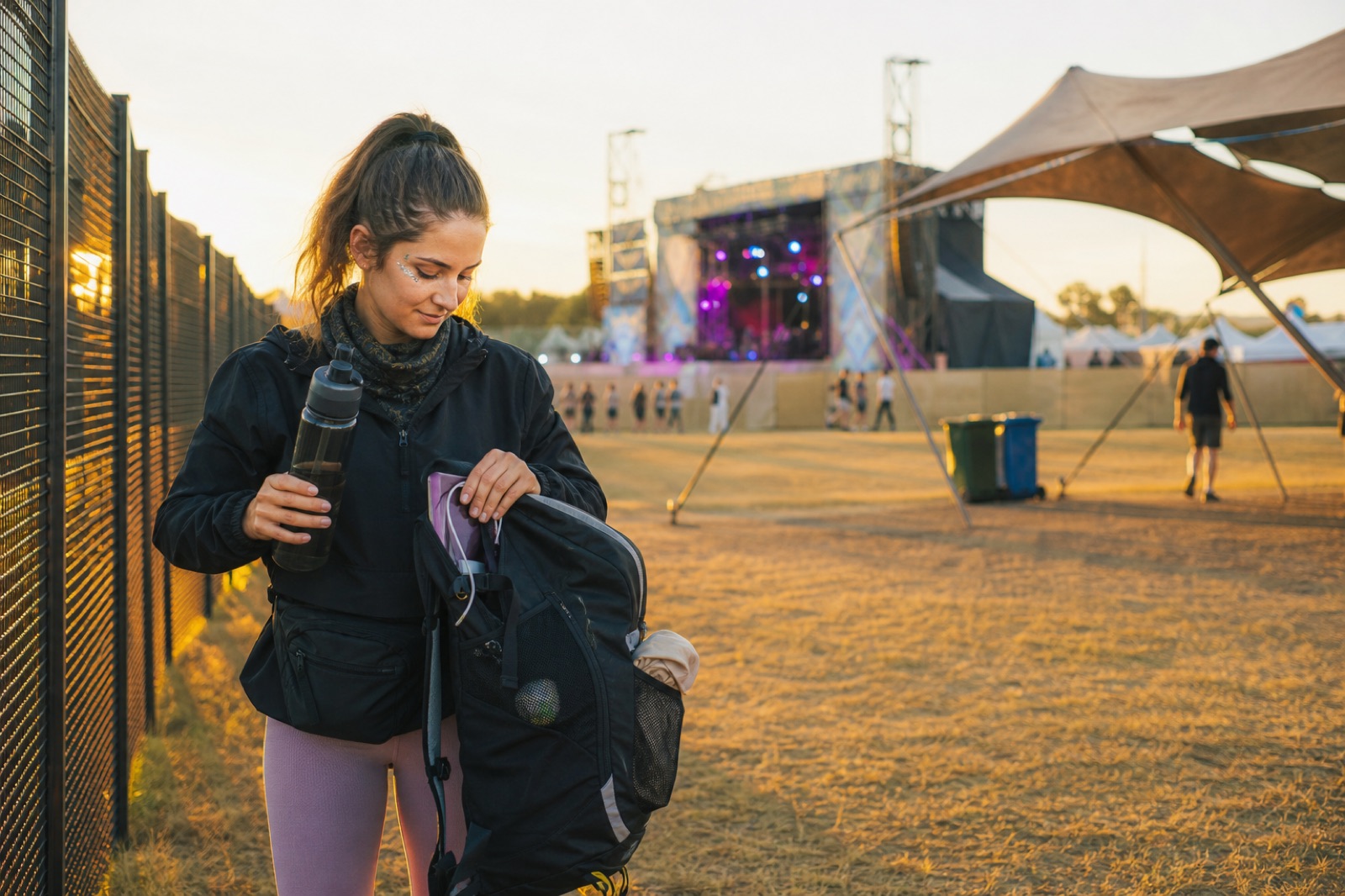
Going to a Festival Alone: A Solo Guide
Going to a festival alone works best with a little structure. Pick a format that suits a solo trip, such as a city festival or a small camping event with a strong community. Share your plans and check-in times with someone at home, find the festival's help points on arrival, meet people through your campsite or a camp, and book your ride home before you go.
Is it safe to go to a festival alone?
It can be, with more planning than a group trip. Festivals staff medical teams and roaming support crews you can reach on your own, so the gaps to fill are the ones friends usually cover: someone who knows where you are, a quick way to get help, and a ride home that's settled before you arrive.
Find the help points on the map as soon as you arrive. At Insomniac festivals, Ground Control team members in purple shirts roam the grounds, and Insomniac says to ask them if you need help, a friend or just someone to talk to; the team's Oasis is a dedicated safe space at its major events. EDC's health page reminds attendees that medical care is free and that no one gets in trouble for seeking medical help. Shambhala runs 24-hour medical services, a roaming Outreach team, and the Sanctuary, a 24-hour space for mental health and crisis support staffed by experienced professionals.
Friends in a group watch out for each other without thinking about it. Alone, you build that on purpose. Tell a neighbor or a new friend where your camp is, keep your phone charged, and trust your instincts. If a situation feels wrong, walk toward staff, security or a medical tent, and if someone near you needs help, flag down staff instead of handling it alone.
Choosing a festival that suits a solo trip
Format matters more than size. City festivals let you sleep in a hotel or at home, leave when you're tired and come back fresh the next day. Movement fills Hart Plaza in downtown Detroit, and ARC takes over Chicago's Union Park. A camping festival keeps you on site all weekend, which makes meeting people easier and logistics harder, because nobody shares the setup with you.
Small participatory events are another strong option. Regional Burning Man events build community into the format, and Burning Man's principle of Radical Inclusion says it plainly: “We welcome and respect the stranger.” Critical Northwest counted about 1,200 participants in its 2024 census, and Element 11 in Utah describes an event city of about 1,800. More events like these are on the transformational festivals page.
The table compares a few festivals from our listings on the details that matter most when you travel alone. Check each festival's page for its current rules before you buy.
| Festival | Where | Format | Camping | Ages | Worth knowing alone |
|---|---|---|---|---|---|
| Movement | Detroit, MI | City festival at Hart Plaza | No | GA all ages; VIP 21+ | Downtown site, so you sleep off site and can leave anytime |
| ARC Music Festival | Chicago, IL | City festival in Union Park | No | 18+ | Cash-free with no ATMs, so carry a card |
| Critical Northwest | Granite Falls, WA | Regional Burning Man event | Yes, week-long | All ages with a minor form | About 1,200 participants in 2024; adults must be Ignition Northwest members |
| Element 11 | Snowville, UT | Regional Burning Man event | Yes | All ages; minors stay with a named adult | Event city of about 1,800 on a high-desert ranch |
| Shambhala Music Festival | Salmo, BC | Camping music festival | Tent camping included with GA | 19+ | 24-hour Sanctuary, medical services and roaming Outreach team |
| Bass Coast | Merritt, BC | Camping music festival | Included with GA | 19+ | Leave No Trace event with reserved sites and bell tents also offered |
Staying in touch when the network is busy
Texts are the best check-in tool in a crowd. Ready.gov notes that mobile networks can become overwhelmed during emergencies, and that text messages need less bandwidth, so they go through more reliably when many people are using their phones at once. A festival packs thousands of phones into one field, so agree on check-ins by text instead of calls.
Ready.gov also suggests a group chat for quick updates and keeping a portable charger or other backup power on hand. Put your trusted contact and anyone you plan to meet in one thread, charge your battery pack every night, and turn on low-power mode before the evening sets. Our first festival guide covers meeting spots and backups that don't depend on signal at all.
Meeting up with friends already on site takes some coordination. Lost Lands' FAQ advises attendees arriving after their friends to confirm where the friends' site is before entering, or to set a time for them to come and meet. Sort that out before you lose signal in the parking lot.
How to meet people at a festival on your own
Your campsite neighbors are the easiest place to start. Electric Forest's prep guide encourages campers to introduce themselves to their neighbors, describing them as your closest eyes and ears, and adds that you might expand your Forest Family and make lifelong friends. Say hello on arrival day, offer a hand with a canopy, and learn names.
Theme camps and volunteer shifts are built for meeting people. Burning Flipside's survival guide says theme camps are a great way to meet people, and it points anyone who wants to get involved toward volunteering. Burning Man's First-Timer's Guide lists creating or joining a camp among the ways to participate, and the guide's Hive section describes a Matchmaker Group that connects new Burners with existing camps.
On the dance floor, kandi trading and the habits of PLUR give strangers an easy opener; our explainer on what PLUR means covers the etiquette. Online fan groups can help you find people before you go, but keep money out of it. Lost Lands, which has no official ticket exchange, warns that any third-party Facebook group or anyone claiming to be official is a scammer, so never buy a ticket or a camping spot from someone you met in a group.
Camping on your own
Solo camping means carrying and pitching everything yourself, so pack for one trip from the car and practice setting up your tent at home. Arrive with daylight to spare, pick a spot you can find again by landmark, and save your camp's location in your phone and on paper.
Some activities shouldn't be done alone at all. Shambhala asks people to pair up for river activities so no one is alone in an emergency, and Burning Flipside's guide tells participants not to swim alone. Ask a neighbor to come along, or skip it.
The festival camping checklist covers the core gear. For a solo trip, add:
- A lock box or locking bag for valuables, since nobody minds camp while you're out.
- A headlamp, plus a flag or light on your tent so you can spot it at night.
- An extra battery pack, because your phone is your check-in line.
- Simple food that needs no stove, so meals don't depend on a group kitchen.
Budgeting a festival trip for one
When camping is priced per site, a solo traveler pays the whole fee. Electric Forest sells car camping passes per vehicle, and its pass page notes that a single admission pass doesn't include a campsite. For its 2026 edition, the GA tent camping package listed $700 for one person and $2,500 for four, which works out to $625 each. At Coachella, a 30-by-10-foot car camping site allows unlimited friends and tents if they fit, which rewards groups, while its pre-set Ready-Set tents hold two people at most.
Festivals that include basic tent camping with the ticket, such as Shambhala and Bass Coast, avoid that penalty. At city festivals the hotel is the big line, and a room for one costs the same as a room for two. Our breakdown of what an EDM festival costs has real ticket, camping and shuttle prices to build a solo budget around.
Getting home safely on your own
Book the way home before the weekend starts. If you use rideshare, Uber's rider tips are to match the license plate, car make and model and driver photo with the app, ask the driver to confirm your name before you get in, share your trip status with someone, sit in the back seat when you ride alone, and wait inside until the app shows the car has arrived.
Driving yourself is riskier alone, because no one can take the wheel. CDC lists frequent yawning or blinking, trouble remembering the last few miles, missing exits, drifting from your lane and hitting a rumble strip as warning signs of drowsy driving, and says tricks such as turning up the radio or opening the window have not been found to work. Its advice is 7 to 9 hours of sleep before driving, so sleep before you leave, and stop somewhere safe if the signs appear.
Text your trusted contact when you leave and again when you're home, so the check-in plan has a clear end. Then rest; our guide to recovering after a festival weekend covers the days after.
Frequently asked questions
Is it weird to go to a festival alone?
No. Festivals are crowds of strangers by design, and regional Burning Man events write welcoming the stranger into their principles. Going solo lets you choose every set and leave when you like. Pick a format that suits you, share your plans with someone at home, and start conversations at camp.
How do you make friends at a festival when you're alone?
Start with your campsite neighbors on arrival day, then join a theme camp or a volunteer shift, which gives you a group with a shared job. Electric Forest's prep guide encourages campers to introduce themselves to neighbors, and Burning Flipside calls theme camps a great way to meet people.
Should I camp alone at a festival?
You can, with a few adjustments. Pack so you can carry everything in one trip, set up before dark, lock up valuables, and introduce yourself to neighbors so someone nearby knows you. If camping alone feels like too much, a city festival lets you sleep in a hotel instead.
What should I tell someone at home before a solo festival?
Give them the festival and venue, where you're sleeping, how you're traveling each way, and a check-in schedule by text. The National Park Service's trip-planning advice is for a trusted contact to call authorities if you aren't back on time, so agree in advance on what a missed check-in means.
Sources
- Insomniac: Ground Control & Headliner ExperienceGround Control team members in purple shirts who check on attendees, the invitation to ask them for help, a friend or someone to talk to, and the Oasis safe space at major festivals.
- EDC Las Vegas: Health & WellnessFree medical care, no trouble for seeking medical help, and the buddy-system reminder to set meeting points.
- Shambhala Music Festival: Health & SafetyThe 24-hour Sanctuary for mental health and crisis support, 24-hour medical services, the roaming Outreach team, and pairing up for river activities.
- National Park Service: Trip Planning GuideTelling a Trusted Contact who isn't on the trip where you're going, what you're doing and when you'll be back, and having them call authorities if you're late.
- Ready.gov: Get Tech ReadyMobile networks becoming overwhelmed, text messages transmitting more reliably because they need less bandwidth, group chats, and backup power.
- Burning Man Project: The 10 PrinciplesRadical Inclusion and its welcome to the stranger.
- Burning Man Project: First-Timer's GuideCreating or joining a camp as a way to participate, and the Hive's Matchmaker Group for connecting new Burners with camps.
- Burning Flipside: Survival GuideTheme camps as a great way to meet people, volunteering, and not swimming alone.
- Electric Forest: Forest Prep GuideIntroducing yourself to neighbors as your closest eyes and ears and making new friends.
- Electric Forest: Passes & PackagesCamping passes sold per vehicle or campsite, a single admission pass excluding a campsite, and 2026 GA tent camping package prices of $700 for one person and $2,500 for four.
- Coachella: CampingCar camping sites of 30 by 10 feet with unlimited friends and tents if they fit, and Ready-Set tent sites limited to two people.
- Lost Lands: FAQNo official ticket exchange, the warning about third-party Facebook groups and anyone claiming to be official, and coordinating friends' campsite locations before entry.
- Uber: Safety Tips for RidersMatching the plate, car and driver photo, confirming your name, sharing trip status, sitting in the back seat when alone, and waiting inside.
- CDC MMWR: Drowsy Driving, 19 States and the District of Columbia, 2009–2010Warning signs of drowsy driving, 7 to 9 hours of sleep before driving, and the ineffectiveness of turning up the radio or opening the window.
- Movement: Start HereGeneral admission is all ages and VIP is 21+.
- ARC Music Festival: FAQs18+ entry and a cash-free site with no ATMs.
- Critical NorthwestWeek-long camping event with about 1,200 participants in the 2024 census, minor registration, and Ignition Northwest membership for adults.
- Element 11: FAQAn event city of about 1,800 participants at Stargazer Ranch, with minors staying with a specified adult.
- Shambhala Music Festival: FAQs19+ entry and free tent camping with general admission.
- Bass Coast: FAQ19+ entry, camping included with general admission, reserved sites and bell tents, and Leave No Trace.
Written and checked by the EDMber editors. Festival dates come from official festival sites and are re-checked monthly. How we research and correct articles.