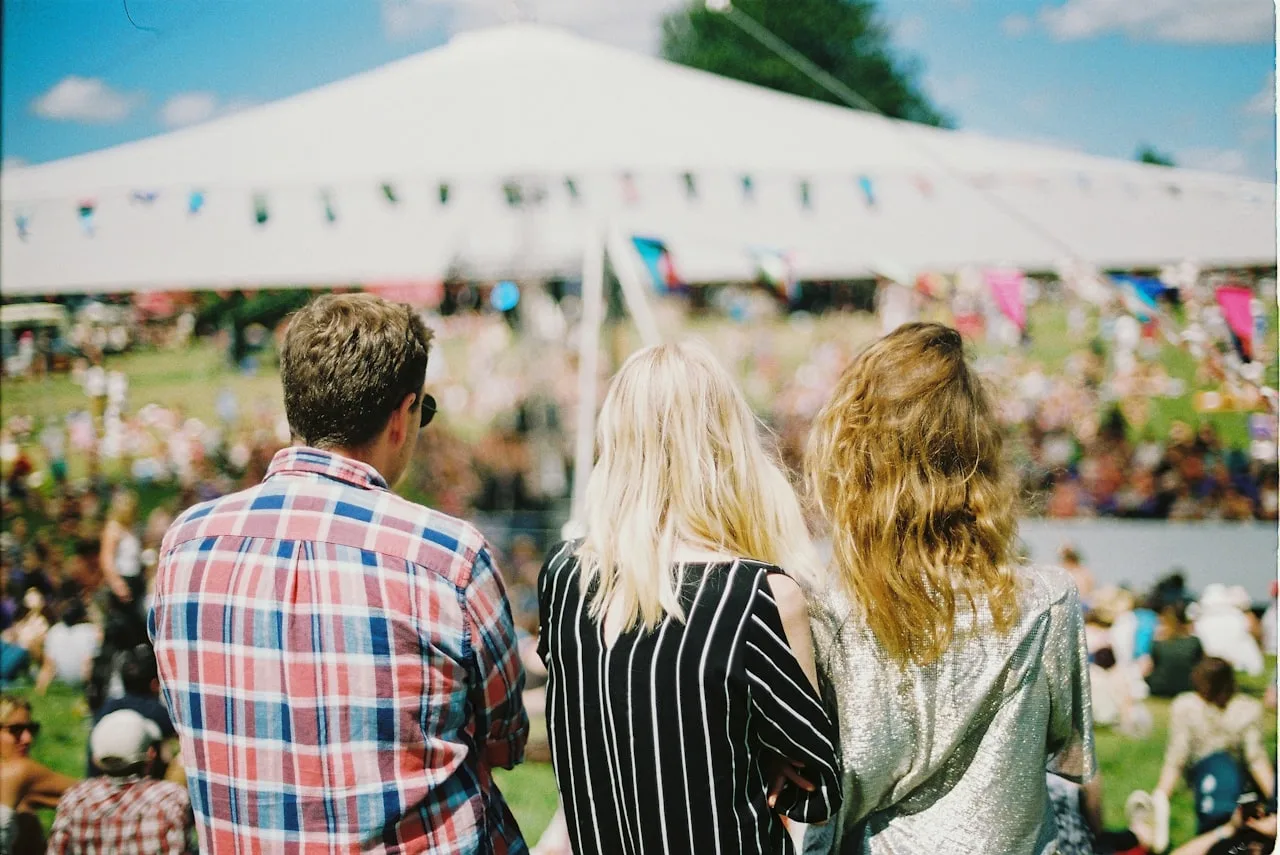
Going to a Rave Sober: A Practical Guide
Going to a rave sober takes a little planning: arrive rested, eat real meals, drink water on a schedule, pace your caffeine and decide in advance how you'll turn down drinks. Festivals increasingly help, with free water stations, non-alcoholic drinks, sober camps such as Electric Forest's Camp Traction and support meetings at Insomniac events like Beyond Wonderland.
Why do people go to raves sober?
People skip alcohol at raves for plenty of reasons: they're in recovery, under 21, pregnant, taking medication that doesn't mix with alcohol, driving home, saving money or simply wanting to remember every set. Whatever the reason, you're far from alone. Gallup's 2026 poll found that only 54 percent of US adults say they drink at all.
That figure ties 2025 as the lowest in Gallup's records, which go back to 1939. Gallup also found that 51 percent of adults now consider one or two drinks a day bad for your health, and that 17 percent had swapped a non-alcoholic beer, wine or spirit for an alcoholic drink at some point in the past year.
The CDC's guidance is plain: you can choose not to drink, and some people shouldn't drink at all, including anyone who is pregnant or might be, anyone younger than 21, people taking medications that interact with alcohol and people recovering from alcohol use disorder.
Dance music's own stars talk about it openly. In March 2025 John Summit, whose early social feeds were full of party antics, announced he had finished his first fully sober tour and said he was proud to perform at his best without relying on alcohol, Billboard reported. Billboard's report also noted that fellow producer Illenium is fully sober.
Sleep, caffeine and energy for a long night
Without alcohol in the picture, your energy for a long night comes down to sleep, food and pacing. Start rested. The CDC says adults 18 to 60 need seven or more hours of sleep a night, and festival weekends rarely allow it, so get full nights before you travel and plan an afternoon rest before late nights when you can.
Staying sober spares you one known sleep problem. NIAAA, the alcohol research institute at the National Institutes of Health, notes that people may fall asleep faster after drinking but sleep in fragments and tend to wake earlier. Camping brings its own challenges, and Burning Man's guide for sober attendees suggests eye shades for the early sun and earplugs for distant sound systems, plus giving yourself permission to take a night off when your body asks for one.
Caffeine is the obvious crutch, so pace it. The FDA says about 400 milligrams a day is an amount not generally associated with negative effects for most adults, and that energy drinks generally carry 54 to 328 milligrams per 16 ounces, so two large cans at the top of that range would put you well past the line. Too much can bring a racing heart, palpitations, jitters, anxiety, nausea and trouble sleeping. Take it early in the night and switch to water as the night goes on.
Food and water when you're not drinking alcohol
Drink water on a schedule instead of waiting for thirst. For moderate activity in the heat, CDC workplace guidance suggests about one cup (8 ounces) every 15 to 20 minutes, no more than six cups an hour, and a sports drink with balanced electrolytes once you've been sweating for several hours. The same guidance says to avoid alcohol and drinks high in caffeine or sugar.
Skipping alcohol already helps. According to NIAAA, alcohol suppresses vasopressin, a hormone that signals the kidneys to hold on to fluid, so drinking increases urination and leaves people mildly dehydrated. Insomniac's health page for EDC Las Vegas makes the same point, warning that alcohol won't cool you off or rehydrate you, and it points fans to free hydration stations marked with water-drop symbols on the festival map.
Eat real meals, too. Burning Man's sober guide warns that many people lose their appetite in the desert and suggests carrying protein bars and eating at set times even when you aren't hungry. A proper meal before you arrive and a snack between sets keep the night from running on caffeine alone. Heading somewhere hot? Our desert festival heat guide covers shade, sun and the warning signs of heat illness.
What non-alcoholic drinks can you get at festivals?
More than you might expect, though it varies by event. Big festivals such as EDC Las Vegas provide free water, concert venues increasingly stock non-alcoholic beer, and some events add zero-proof options to their lounges. Electric Forest's 2026 add-ons included a lounge bar with non-alcoholic offerings, and Shambhala in British Columbia goes further by banning alcohol outright.
The biggest change has come at venues. In February 2025, Pollstar reported, Live Nation made Athletic Brewing the official non-alcoholic beer partner for more than 100 US venues and four festivals, among them the Gorge Amphitheatre in George, Washington, where Bass Canyon and Beyond Wonderland at the Gorge are held. Festival menus can differ from regular concert nights, so check the event's food and drink page. Athletic's beers are always under 0.5 percent alcohol by volume, a trace that matters if you avoid alcohol completely, and they're sold only to adults 21 and over.
At Electric Forest, the 2026 add-ons included the Uplift Lounge, a paid, air-conditioned space by Ranch Arena with a bar serving non-alcoholic drinks alongside specialty cocktails, and a daily brunch with a non-alcoholic drink menu. Shambhala states in its terms and conditions that it is an alcohol-free event and that any alcohol found in searches will be confiscated. Where a bar has no non-alcoholic list, ask what it can make without alcohol, and go easy on sugary and high-caffeine options, which the CDC's heat guidance says to avoid.
Where to find sober community at festivals
Organized sober spaces exist at several big events, usually run by volunteers. Look for a camp, a tent or a yellow balloon. PBS NewsHour traced the balloon to the Wharf Rats, a sober fellowship at Grateful Dead shows, whose symbol was later adopted by groups such as Phish's Phellowship and String Cheese Incident's Jellyfish.
At Electric Forest, Camp Traction is a sober group camp listed among the festival's official add-ons as a homebase for a clean and sober Forest experience. It's free to join, though campers arriving by car need a Camp Traction car camping pass, and it isn't affiliated with any organized recovery group. The 2026 listing showed it as sold out, so sign up early. Insomniac events have their own option: the health page for Beyond Wonderland SoCal describes the Consciousness Group as a space for sober festival-goers to meet, with several scheduled meetings each event day. Insomniac's Ground Control staff, in purple shirts, are also there if you simply need a friend, according to the EDC Las Vegas health page.
Burning Man has the most developed sober network. Its official guide for sober Burners says there are now dozens of 12-step meetings every day in Black Rock City, recommends camping in clean and sober communities such as Anonymous Village and Run Free Camp, and notes that the Yellow Balloon camp hosts a daily meeting. It also suggests watching the Man burn with people you trust to stay sober, since it's easy to get separated once the Man falls.
For support beyond the event, SAMHSA's National Helpline at 1-800-662-HELP (4357) is free, confidential and open 24 hours a day, every day of the year. It refers callers to local treatment, support groups and community organizations, though it doesn't offer counseling itself.
How to handle pressure to drink
Decide your answer before anyone asks. NIAAA's Rethinking Drinking program separates direct pressure, when someone offers you a drink, from indirect pressure, when you feel tempted just by being around people who are drinking. For the direct kind it recommends a no-thanks that is clear and firm but friendly: answer without hesitating, make eye contact and keep it short, skipping long explanations and vague excuses.
If someone keeps pushing, NIAAA suggests a broken-record approach, repeating the same short reply, and adds that you can always walk away. Its other tips translate well to a festival: keep an alcohol-free drink in your hand, ask friends for support, plan an exit if temptation gets strong and ask people not to pressure you. Burning Man's sober guide adds a planning step, which is to talk with campmates early about expectations, because friends who drink moderately at home may not stay moderate at the event.
Gift economies bring their own offers. Burning Man advises asking whether any food or drink you're handed contains alcohol or anything else, considering the source and using judgment. At any festival, the simplest habit is to drink only what you opened yourself or watched being poured. Friends worth keeping will respect a no, and the PLUR ethos of respect cuts both ways.
Getting home safely when you're the sober one
Being sober doesn't automatically make you fit to drive. CDC guidance on driver fatigue says that after 17 hours awake, impairment is equivalent to a blood alcohol content of 0.05, and after 24 hours it matches 0.10. Someone who woke at 8 a.m. reaches that first mark around 1 a.m.
Plan rest before the drive. If fatigue hits on the road, the CDC says to pull over, drink a cup of coffee and take a 15- to 30-minute nap, but it warns that the effect is only temporary and that sleep is the only real fix. After a camping festival, that usually means a full sleep at camp before you hit the road.
Sobriety often makes you the group's caretaker, so set limits early. Insomniac's health page puts it plainly: drunk people shouldn't be responsible for other drunk people. Know the warning signs of alcohol poisoning, which NIAAA calls alcohol overdose: confusion, trouble staying conscious, vomiting, seizures, trouble breathing, a slow heart rate, clammy skin and very low body temperature. If you see them, call 911 or get to the medical tent right away, and don't leave the person alone. NIAAA warns that cold showers, hot coffee and walking it off won't reverse it.
Agree on a meeting point and a leaving time, and leave with everyone in your crew, as the EDC page advises. Our first EDM festival guide covers shuttles, rides home and finding friends without phone signal, and the festival calendar lists what's coming up next.
Frequently asked questions
Is it weird to go to a rave sober?
Not at all, and it's increasingly common. Gallup's 2026 poll found only 54 percent of US adults drink, a record low, and headliners such as John Summit and Illenium have talked publicly about performing sober. Electric Forest and Burning Man both have dedicated sober camps.
How do you stay awake at a rave without drinking?
Arrive rested, eat real meals and drink water steadily. If you use caffeine, take it early and keep track: the FDA says about 400 milligrams a day is generally fine for most adults, and a 16-ounce energy drink can hold anywhere from 54 to 328 milligrams.
Do festivals sell non-alcoholic drinks?
Some do, and big events such as EDC Las Vegas provide free water. Electric Forest's 2026 Uplift Lounge listed a bar with non-alcoholic offerings, and Live Nation made Athletic Brewing the non-alcoholic beer partner at more than 100 venues. Shambhala in British Columbia is an alcohol-free event.
Are there sober camps at music festivals?
Yes. Electric Forest offers Camp Traction, a free sober group camp, and Burning Man lists clean and sober camps such as Anonymous Village and Run Free Camp, with dozens of daily 12-step meetings. Insomniac's Consciousness Group holds scheduled sober meetings at events like Beyond Wonderland SoCal.
Sources
- Gallup: Americans' Drinking Remains at Record Low (2026)54% of US adults drink, tying the record low in a trend back to 1939; 51% see moderate drinking as bad for health; 17% substituted non-alcoholic beer, wine or spirits in the past year.
- CDC: About Moderate Alcohol UseYou can choose not to drink; people who shouldn't drink at all include those who are pregnant, younger than 21, taking interacting medications or recovering from alcohol use disorder.
- Billboard: John Summit Says He's Completed His 'First Fully Sober Tour' (2025)Summit's March 2025 announcement and statement about performing without relying on alcohol; Illenium is fully sober.
- CDC: About SleepAdults 18 to 60 need 7 or more hours of sleep per night.
- NIAAA (NIH): Hangovers fact sheetAlcohol suppresses vasopressin, increasing urination and causing mild dehydration; sleep after drinking is fragmented with earlier waking.
- FDA: Spilling the Beans: How Much Caffeine Is Too Much?About 400 mg a day not generally associated with negative effects for most adults; energy drinks carry 54-328 mg per 16 oz; symptoms of too much caffeine.
- CDC NIOSH: Heat Stress Workplace RecommendationsOne cup of water every 15-20 minutes for moderate activity in heat, no more than 6 cups an hour; sports drinks with balanced electrolytes after hours of sweating; avoid alcohol and high-caffeine or high-sugar drinks.
- EDC Las Vegas: Health & WellnessFree hydration stations marked on the map; alcohol is not for cooling off or rehydrating; Ground Control staff if you need a friend; drunk people shouldn't be responsible for other drunk people; leave with everyone in your crew.
- Beyond Wonderland SoCal: Health & WellnessThe Consciousness Group as a space for sober festival-goers, with multiple scheduled meetings per event day.
- Pollstar: Live Nation And Athletic Brewing Company Partner To Bring Non-Alcoholic Brews to 100+ Music Venues (2025)Official NA beer partner at 100+ Live Nation venues including the Gorge Amphitheatre, plus four festivals; beers under 0.5% ABV, sold only to adults 21+.
- Electric Forest: Add-Ons2026 Uplift Lounge with a bar offering non-alcoholic drinks; Good Life Brunch non-alcoholic drink menu; Camp Traction sober camp, free to join, car camping pass required, not affiliated with organized recovery groups.
- Shambhala Music Festival: Terms & ConditionsShambhala is an alcohol-free event; alcohol found in searches is confiscated.
- PBS NewsHour: Looking for sober friends at a concert? Find the Deadheads with a yellow balloon (2016)Yellow balloons as the sign of the Wharf Rats and later sober fellowships such as the Phellowship and the Jellyfish.
- Burning Man Project: Sober at Burning ManDozens of daily 12-step meetings; Anonymous Village and Run Free Camp; Yellow Balloon daily meeting; appetite loss and eating regularly; eye shades, earplugs and nights off; discussing expectations with friends; asking about offered food and drink; watching the Burn with trusted sober friends.
- SAMHSA: National Helpline1-800-662-HELP (4357), free, confidential, 24/7, 365 days a year; referrals to treatment, support groups and community organizations; no counseling.
- NIAAA Rethinking Drinking: Building Your Drink Refusal SkillsDirect and indirect social pressure; a clear, firm, friendly no-thanks; eye contact; broken-record strategy; alcohol-free drink in hand, support, an exit plan.
- CDC NIOSH: Driver Fatigue on the Job17 hours awake equals impairment at a 0.05 BAC and 24 hours equals 0.10; pull over, coffee and a 15-30 minute nap are temporary; sleep is the only cure.
- NIAAA (NIH): Understanding the Dangers of Alcohol OverdoseWarning signs of alcohol overdose, also called alcohol poisoning; call 911 immediately; don't leave the person alone; cold showers, hot coffee and walking don't reverse an overdose.
Written and checked by the EDMber editors. Festival dates come from official festival sites and are re-checked monthly. How we research and correct articles.