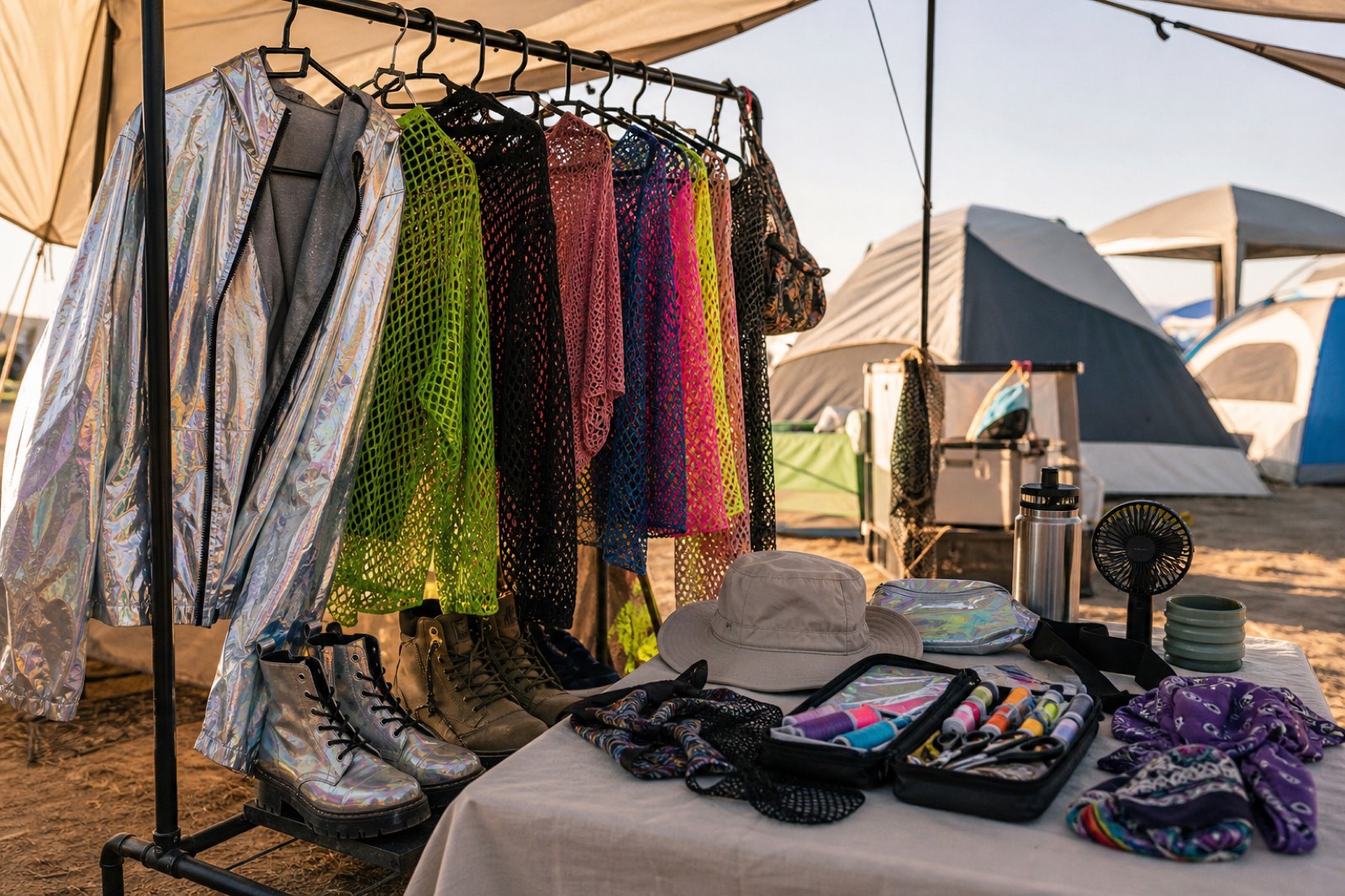
Rave Outfits: How Rave Fashion Has Changed
Rave outfits have always followed the dance floor. Late-1980s acid house crowds wore smiley T-shirts and loose clothes, the 1990s brought wide-leg phat pants, and the US scene added kandi bracelets and furry fluffies. Today's festival outfits keep that color but add practical choices for sun, dust, cold nights, long walks and each festival's own rules.
What do people wear to raves?
Most people wear something they can dance in for hours: comfortable shoes, light or loose clothing, and one or two pieces that express personality, such as bright colors, kandi bracelets, glitter or a statement costume. At outdoor festivals the outfit also has to handle sun, dust, rain or cold, so layers and a hat matter as much as style.
There has never been a single rave uniform. Each era borrowed from the music, the venues and the fashion around it, then adapted it for long nights on a dance floor. Looking at how those looks changed explains a lot about why festival outfits look the way they do now.
Smiley shirts and loose clothes in 1988 and 1989
Britain's acid house boom of 1988 and 1989 had a clear symbol: the yellow smiley face. In Dazed's oral history of UK rave, a veteran DJ recalls acid smiley T-shirts being everywhere in those years, worn alongside French casualwear labels such as Chipie, Naf Naf and Ton Sur Ton.
Clothing tied to the scene itself mattered too. Dazed describes T-shirts from record shops, labels and party promoters, plus parody designs, such as a mock bottled-water logo rewritten to say raving. Dazed frames early rave as a backlash against exclusive clubbing, and the clothes followed: casual pieces you could dance in for hours in a hot warehouse, rather than an outfit built to get past a strict door.
Styles shifted as the music did. The same piece notes that the jungle scene of the early 1990s brought a sharper focus on brands, with Moschino and Versace shirts appearing, and that by 1994 many ravers wore big high-end labels. Rave fashion was already doing what it still does: borrowing from the clothes around it and remixing them.
Phat pants and the wide-leg 1990s
In the US, the defining rave garment of the 1990s was the extremely wide-leg trouser. Mixmag traces the best-known version, JNCO jeans, to brothers Milo and Jacques Yaakov Revah, who moved to Los Angeles in 1985 to start a denim line. Ravers around the world took up the jeans and, according to Mixmag, coined the term phat pants to describe them.
Wide legs made sense on a dance floor. They allowed big movement, hid layers underneath and could be customized with patches or stripes. Mixmag notes the wide-leg look spread from the rave scene into skate and extreme-sports culture and then into department stores in the early 2000s, at which point it stopped feeling like a subculture uniform.
Kandi, fluffies and the candy-colored American look
By the 1990s, American ravers were also trading jewelry. National Geographic traces kandi, bracelets strung from brightly colored plastic beads, to the underground electronic dance music scene of the early 1990s, where swapping them became a social ritual. Kandi is still common at festivals today, and our PLUR explainer covers how trading works and the etiquette around it.
Fluffies arrived from Europe. These faux-fur leg warmers worn over ordinary shoes began in Ibiza's rave scene in the mid-to-late 1990s, when podium dancers wore them during performances, and they became associated with rave and cybergoth fashion. Paired with neon, glitter and kandi up to the elbows, they defined the candy-colored look many people still picture when they hear the word raver.
Light-up accessories, body paint and handmade costumes all grew out of the same idea: an outfit that reads well under black light and strobes, and that invites conversation on the dance floor.
Why festival outfits became practical
The biggest change in rave fashion came when the party moved outdoors for several days at a time. A warehouse outfit only has to survive one night indoors. A camping festival outfit has to work through afternoon sun, a long walk from the campground, dust or rain, and a sharp temperature drop after dark.
Burning Man's survival checklist is a vivid example. It warns that daytime temperatures routinely top 100°F, that skin burns faster at nearly 4,000 feet of elevation, that temperatures can plummet 50 degrees after sunset, and that overnight lows can reach the 40s. It also warns that dust storms can produce instant whiteouts. Its packing list includes a wide-brim hat with a chinstrap, goggles, a dust mask, warm clothing and sunscreen.
Winter events flip the problem. Montreal's Igloofest, held outdoors on the Jacques-Cartier Pier, recommends a very warm windproof coat, snow pants, a beanie, mittens rather than gloves and boots instead of shoes. It even runs Iglooswag, a snowsuit costume contest, which shows how practical and playful can share an outfit.
Hot daytime festivals call for the CDC's basic heat advice: loose, light-colored clothing in a light fabric, a hat and sunscreen. Our guides to desert festival heat, staying warm at festivals and festival shoes go into each problem in detail.
Matching your outfit to the festival
Conditions vary widely between events, so start with the venue and whether you will be camping. The table uses details from our festival pages and each festival's own guidance where noted. Check every festival's rules page before you pack, since policies change from year to year.
| Festival | Venue and location | Camping | Outfit priorities |
|---|---|---|---|
| Burning Man | Black Rock Desert, Nevada | Yes | Wide-brim hat, goggles, dust mask, sunscreen and warm layers for nights in the 40s |
| EDC Las Vegas | Las Vegas Motor Speedway, Nevada | Yes | Shoes you can stand in all night; costumes cannot mimic police, fire, security or medical uniforms |
| Igloofest | Jacques-Cartier Pier, Montreal, Quebec | No | Windproof winter coat, snow pants, boots, mittens and a neck warmer |
| Shambhala Music Festival | Salmo River Ranch, British Columbia | Yes | Camp-ready clothes plus flip-flops for the shower trailers |
| Electric Forest | Double JJ Resort, Michigan | Yes | Closed shoes for wooded paths and a layer for after dark |
| Movement Detroit | Hart Plaza, Detroit, Michigan | No | Supportive shoes for a long day on paved downtown ground |
Costume rules to check before you pack
Large festivals publish rules that affect outfits, and breaking them can mean a confiscated item at the gate. EDC Las Vegas, for example, prohibits costumes that resemble police, fire, security or medical uniforms, including high-visibility vests, and bans gas masks. Its totems are capped at 10 feet and must be made of lightweight material. Entry also includes a search that may involve removing your shoes, so skip complicated lace-up boots if you want to move through the gate quickly.
A few habits help at any event. Break in new shoes before the weekend, bring a warm layer even if the forecast looks hot, and choose a costume you can still sit, walk and use a portable toilet in. Find your next event on the festival calendar, browse mainstage festivals for the biggest costume crowds, or see what is on in Nevada.
Frequently asked questions
What should I wear to my first rave?
Wear comfortable, broken-in shoes, clothes you can move and sweat in, and one piece that feels fun, such as a bright top or a few kandi bracelets. For outdoor festivals, add a hat, sunscreen and a warm layer for night. Check the festival's prohibited items list before you build a costume.
Are kandi bracelets still part of rave outfits?
Yes. Kandi, bracelets made from brightly colored plastic beads, emerged in the early-1990s US rave scene and is still traded at festivals today. Many people make their own. Trading usually follows a few etiquette rules, such as starting with a conversation and not re-trading a piece someone gave you.
What are fluffies?
Fluffies are faux-fur leg warmers worn over ordinary shoes. They started in Ibiza's rave scene in the mid-to-late 1990s, when podium dancers wore them, and became a staple of rave and cybergoth style. They look great under lights but can get hot and dusty at outdoor summer festivals.
Can I wear any costume to EDC Las Vegas?
Most costumes are fine, but EDC Las Vegas prohibits outfits that resemble police, fire, security or medical uniforms, including high-visibility vests, and it bans gas masks. Totems can be up to 10 feet tall and must be lightweight. Read the festival's current hours and info page before you pack.
Sources
- Dazed: Thirty years later and rave still hasn't left the dancefloorAcid smiley T-shirts everywhere in 1988-89, Chipie, Naf Naf and Ton Sur Ton, record-shop, label and promoter shirts and parody designs, early-1990s jungle brand focus with Moschino and Versace, and high-end labels by 1994.
- Mixmag: JNCO Jeans, are you ready for their return?The Revah brothers moving to Los Angeles in 1985, ravers coining the term phat pants, the spread of the wide-leg look across subcultures, and its department-store peak in the early 2000s.
- National Geographic: Unweaving the history of friendship braceletsKandi bracelets emerging from the underground electronic dance music scene in the early 1990s and being swapped as a social ritual.
- Wikipedia: Fluffy (footwear)Fluffies as faux-fur leg warmers worn over shoes, their mid-to-late 1990s origin with Ibiza podium dancers, and their association with rave and cybergoth fashion.
- Burning Man: Personal Survival ChecklistDaytime temperatures over 100°F, faster sunburn at nearly 4,000 feet, 50-degree drops after sunset, overnight lows in the 40s, dust-storm whiteouts, and the hat, goggles, dust mask, warm clothing and sunscreen on the packing list.
- Igloofest: Rules and FAQWindproof winter coat, snow pants, beanie, mittens, boots rather than shoes, neck warmers, and the Iglooswag snowsuit costume contest.
- EDC Las Vegas: Hours & InfoBan on costumes resembling police, fire, security or medical uniforms including high-visibility vests, gas-mask ban, 10-foot lightweight totems, and entry searches that may include removing shoes.
- Shambhala Music Festival: FAQsAdvice to bring flip-flops and a towel for the paid shower trailers.
- CDC: Preventing Heat-Related IllnessLoose, light-colored clothing in a light fabric, a hat and sunscreen in hot weather.
Written and checked by the EDMber editors. Festival dates come from official festival sites and are re-checked monthly. How we research and correct articles.